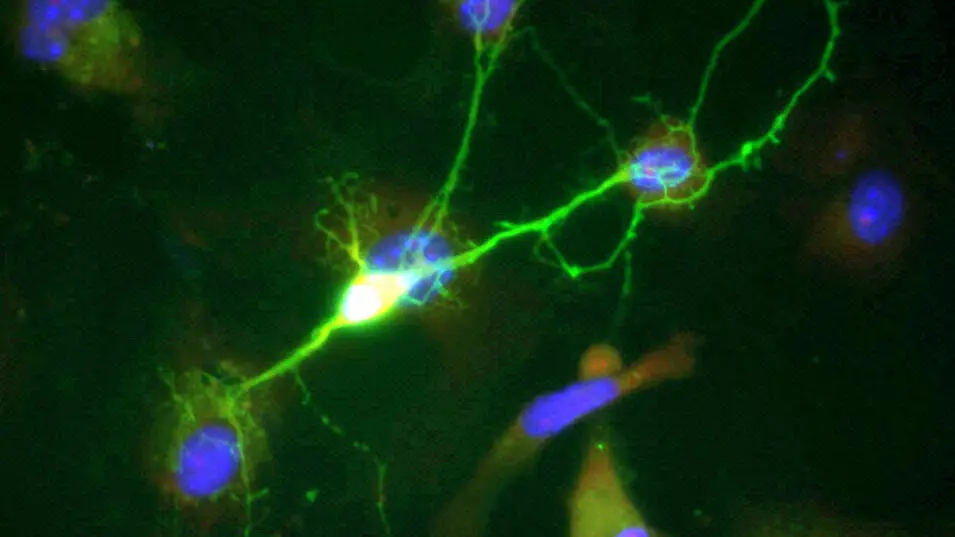
Neuroscientists at King’s College London and colleagues at the Institute of Biomedicine in Valencia and the Institute of Neuroscience in Alicante studied Fezf2’s role in forming connections in mouse brains. The results were published in Nature Neuroscience.
This was reported by the news site Medical Xpress.
The study found that Fezf2 helps certain inhibitory neurons connect with specific excitatory pyramidal neurons. These pyramidal neurons drive electrical activity in brain circuits.
When pyramidal neurons become more active, they increase their expression of Fezf2. This promotes connections with nearby inhibitory neurons, which reduce the activity of those cells.
In the developing brain, excitatory neurons initially predominate, while inhibitory neurons later regulate electrical activity. This balance is important for establishing brain function and behavior.
Using ribosome-associated mRNA profiling, the team searched for genes involved in forming inhibitory synapses when the activity of excitatory cells changes. The researchers identified Cdh22, a gene that helps neurons anchor to one another and form connections.
Fezf2 codes for a transcription factor, a protein that regulates other genes. It was previously linked to determining the fate of excitatory pyramidal neurons during embryonic development.