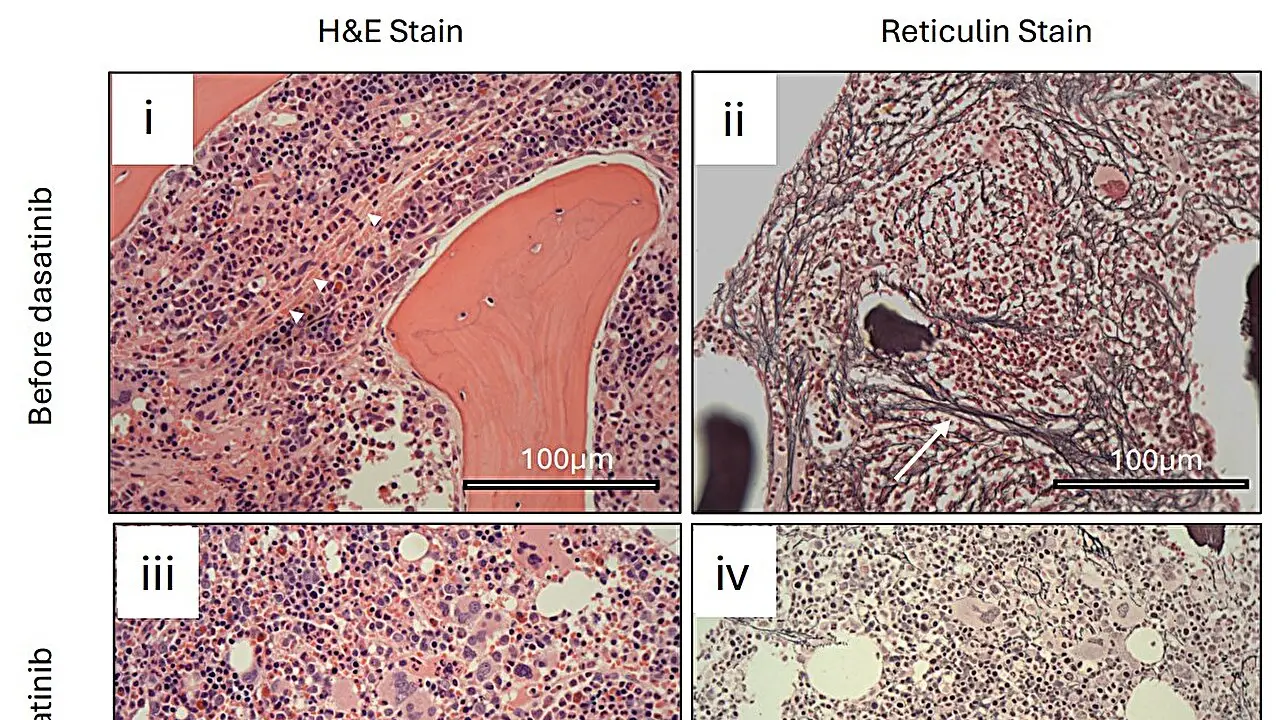
A team from the University of Birmingham and University Hospitals Birmingham studied dasatinib treatment in two adult sisters from the West Midlands. Manjit Kaur began taking the drug about three years ago; the findings were published in Blood.
The information comes from Medical Xpress.
Genomic sequencing helped the team identify the SRC protein as the drug’s target. Dasatinib is used to treat blood cancer. The researchers concluded that the drug may reduce SRC activity and help restore platelet production by returning the bone marrow to a more typical state.
In this disorder, the SRC gene continuously produces a protein involved in platelet production and activation. Patients have low platelet levels; they may also develop an enlarged spleen, immune problems and bone marrow scarring.
Previously, treatment largely involved blood transfusions to raise platelet levels. This meant patients had to travel to the hospital regularly.
Manjit Kaur began taking the drug after her sister responded well to the treatment. Kaur takes a dose adjusted for her Crohn’s disease and has blood tests at the hospital every three months.
Her blood counts have improved, she no longer needs transfusions, and she feels less tired. Kaur continues to work and travel.
Neil Morgan, a professor at the University of Birmingham and the study’s lead author, said genomics could help find new uses for existing drugs to treat rare diseases.