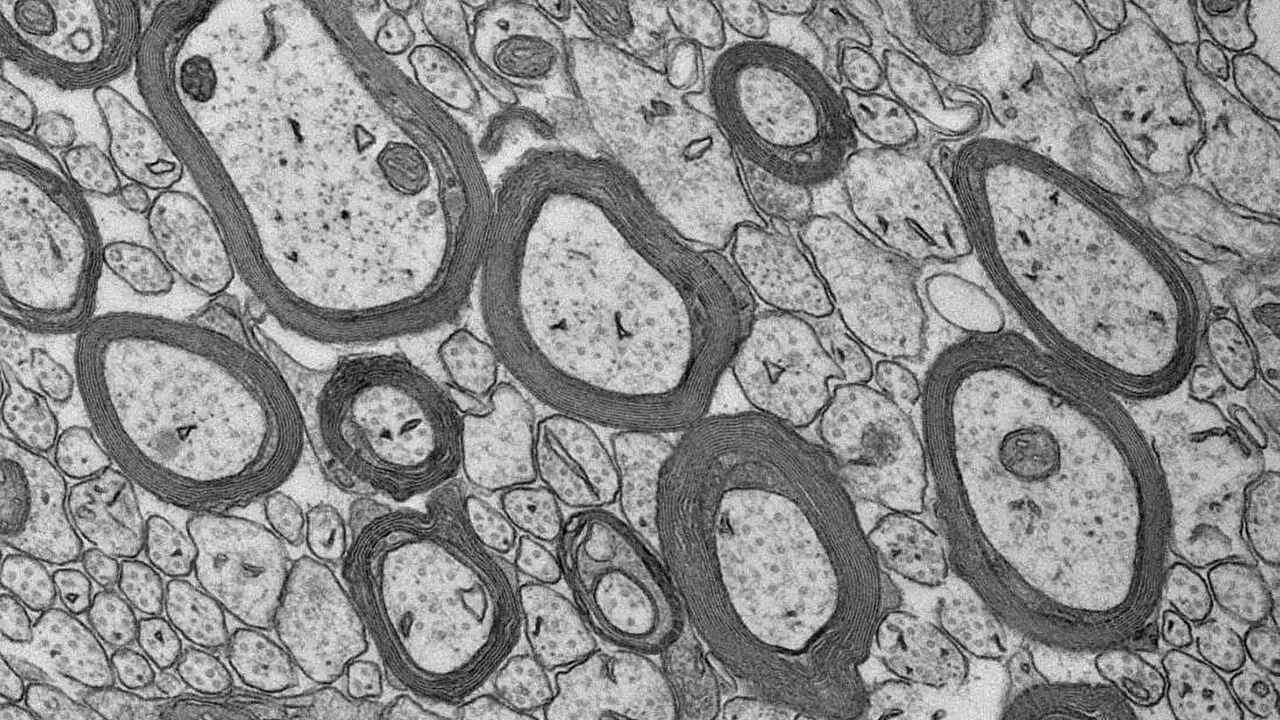
UT Southwestern Medical Center researchers identified a cellular mechanism that restrains excessive myelin production in a mouse study. The findings were published in Science Advances.
This was reported by the news site Medical Xpress.
Myelin is a fatty substance that forms a sheath around nerve fibers and helps signals travel faster. Excessive amounts or an unusual distribution of myelin can alter the function of neural circuits.
The study identified an active form of autophagy in oligodendrocytes — cells in the central nervous system that produce and maintain myelin. Known as ER-phagy, the process selectively breaks down the endoplasmic reticulum, a cell structure involved in producing fats for myelin.
Mice with impaired autophagy had thicker-than-normal myelin sheaths. Researchers also restored normal sheath thickness by genetically reducing the level of an enzyme that synthesizes lipids.
Mice with excess myelin showed altered social behavior in a test that models childhood social deprivation. Their motor function remained normal.
Lu Sun led the study and is an assistant professor of molecular biology and an investigator in the Peter O’Donnell Jr. Brain Institute at UT Southwestern. He said the findings could provide a basis for future research on mental health disorders. Possible implications for clinical care, he said, remain a long-term prospect.