Researchers developed the protein RF-409 and tested it in mice with insulin receptor mutations linked to Donohue syndrome. Blood sugar levels fell during treatment. The findings were published in Science Translational Medicine.
This was reported by the news site Medical Xpress.
Donohue syndrome is a rare genetic disorder in which mutations disrupt insulin receptor function. As a result, the hormone cannot bind to the receptors properly, and standard insulin therapy often does not work.
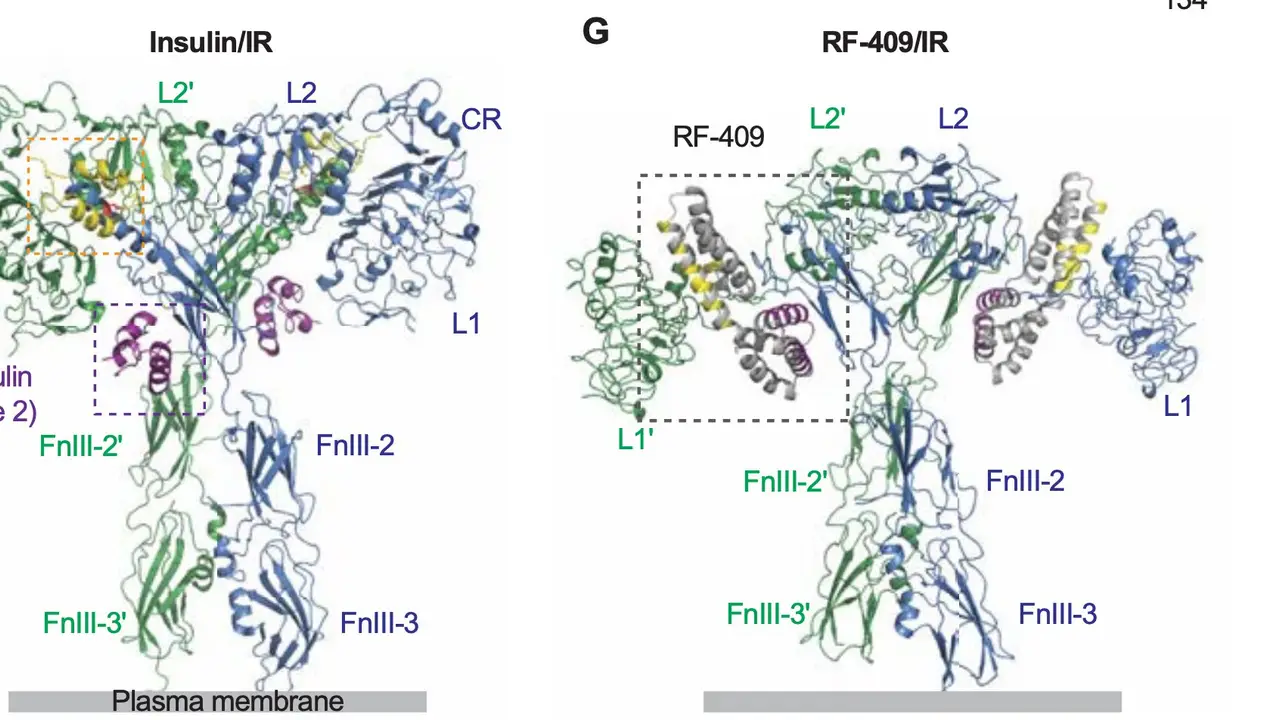
Researchers designed RF-409 using computer modeling and artificial intelligence tools. The protein activated the receptor by binding to it differently than natural insulin does, bypassing the damaged binding site.
Researchers first tested the protein in fat and liver cells, then in a genetically modified mouse model. In animals with severe insulin resistance, long-term RF-409 treatment lowered high blood sugar, while excess insulin in the blood moved closer to normal levels.
The researchers also reported that the protein helped preserve muscle and fat tissue in mice with severe insulin resistance. In healthy animals, repeated RF-409 injections over 14 days lowered blood sugar without liver damage or changes in body composition. In diabetic and insulin-resistant mice, the protein did not cause progressive or severe drops in glucose.
The findings are based on preclinical studies. Further tests will need to examine the protein’s effects on other receptor mutations and determine whether it is safe and effective in people.