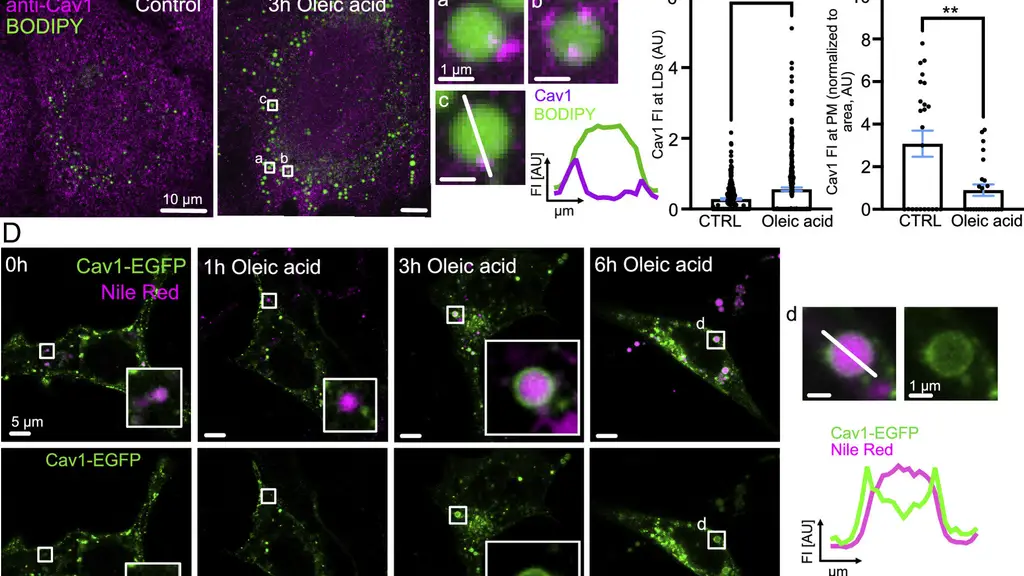
A team from the University of Potsdam and the Leibniz-Forschungsinstitut für Molekulare Pharmakologie found that caveolin-1 plays a key role in lipid droplet growth and lipid storage in cells. The study was published in Proceedings of the National Academy of Sciences.
The report comes from Medical Xpress.
Caveolae are small invaginations in the plasma membrane. The newly identified pathway connects them to lipid droplets via an intracellular sorting station.
We were able to identify a previously unknown transport pathway within the cells that connects caveolae on the plasma membrane to lipid droplets via an intracellular sorting station. Our findings thus provide new insights into the molecular mechanisms of lipid storage and cellular lipid metabolism.
Claudia Matthäus, corresponding author of the study at the Institute of Nutritional Science of the University of Potsdam
Lipodystrophy is a metabolic disease in which fat is stored abnormally in the body. In people with the condition, fat accumulates in the liver, muscles or heart muscle instead of in adipose tissue. This can lead to metabolic consequences, including fatty liver disease or type 2 diabetes.
Caveolae had previously been considered a possible factor in the development of lipodystrophy. Mutations in the Caveolin1 and Cavin1 genes have been found in patients with the disease, although the mechanisms inside cells have remained largely unknown. Researchers say the findings could help clarify caveolin-1’s role in the development of lipodystrophy.