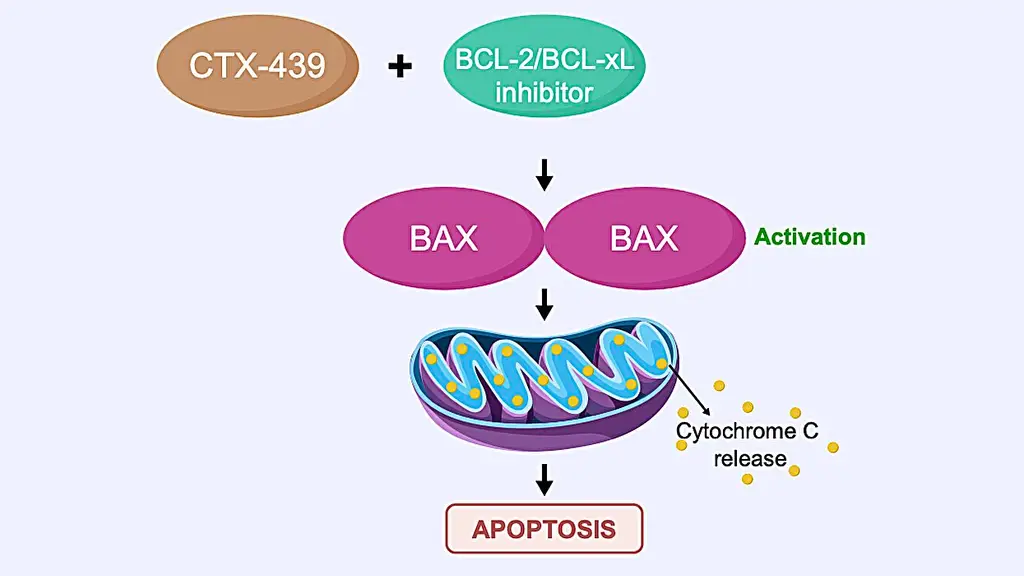
Researchers at Kyoto University and Chordia Therapeutics developed CTX-439 and tested it on cancer cells and in mouse models of breast cancer.
This was reported by the news site Medical Xpress.
The results were published November 25 in EMBO Molecular Medicine. Combined with a BCL-2/BCL-xL inhibitor, CTX-439 enhanced apoptosis compared with either drug alone.
CTX-439 selectively inhibited the CDK12 and CDK13 kinases, which regulate gene transcription. This reduced transcription of genes involved in DNA repair and curbed cancer cell proliferation.
Genetic screening identified BCL-2 and BCL-xL proteins as factors associated with cell resistance to CTX-439. These proteins suppress programmed cell death.
After treatment with CTX-439, the MCL1 protein showed splicing abnormalities and transcriptional read-through beyond its usual termination site. MCL1 transcription increased in the nucleus and decreased in the cytoplasm.
The researchers suggested that less mature messenger RNA (mRNA) reached the cytoplasm. This rapidly reduced MCL1 levels and increased cancer cells’ dependence on BCL-2 and BCL-xL.
Analysis of RNA-sequencing data showed that CTX-439 impairs transcriptional elongation in long genes. At the same time, it promotes transcriptional read-through in short genes, including MCL1.
It’s particularly interesting that we were able to resolve this apparent discrepancy by separately analyzing nuclear and cytoplasmic RNA
Kosuke Yusa, corresponding author, Kyoto University
The team plans to continue preclinical studies of how CTX-439 works and evaluate the combination therapy.