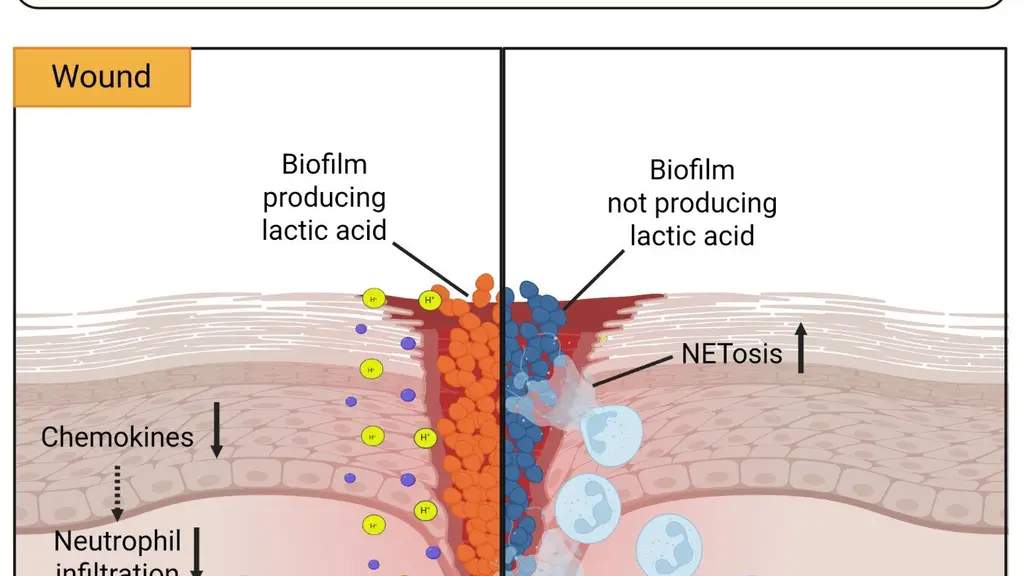
Researchers at Nanyang Technological University, Singapore, found that lactic acid from Enterococcus faecalis biofilms suppresses the activity of human neutrophils. The laboratory and animal-model findings were published in Science Advances.
Medical Xpress reported the news.
In laboratory tests, biofilm secretions made the environment around neutrophils more acidic and lowered the pH inside the cells. This disrupted their metabolism and deprived them of energy needed to fight bacteria.
Bacteria effectively pull the plug on the immune cell’s power supply.
Dr. Haris Antypas, Lead author of the study and senior research fellow at the Singapore Center for Environmental Life Sciences Engineering (SCELSE)
In an animal wound-infection model, researchers compared normal bacteria with genetically modified bacteria that could not produce lactic acid. After seven days, wounds infected with the modified bacteria had more neutrophils and signs that the cells had formed more extracellular traps to capture microbes.
The findings suggest that the machinery bacteria use to produce lactic acid could be a target for future treatments. Such approaches have not yet been tested.
Enterococcus faecalis usually lives harmlessly in the human gut but can cause serious infections, including chronic wound infections. The bacteria form biofilms, communities that are difficult to eliminate.
The research team plans to investigate ways to preserve neutrophils’ metabolic activity and protect them from the effects of biofilms.