Researchers at the National University of Singapore analyzed breast cancer deaths and screening policies in 11 Southeast Asian countries. The modeling study was published November 25 in eClinicalMedicine.
Original source — Medical Xpress.
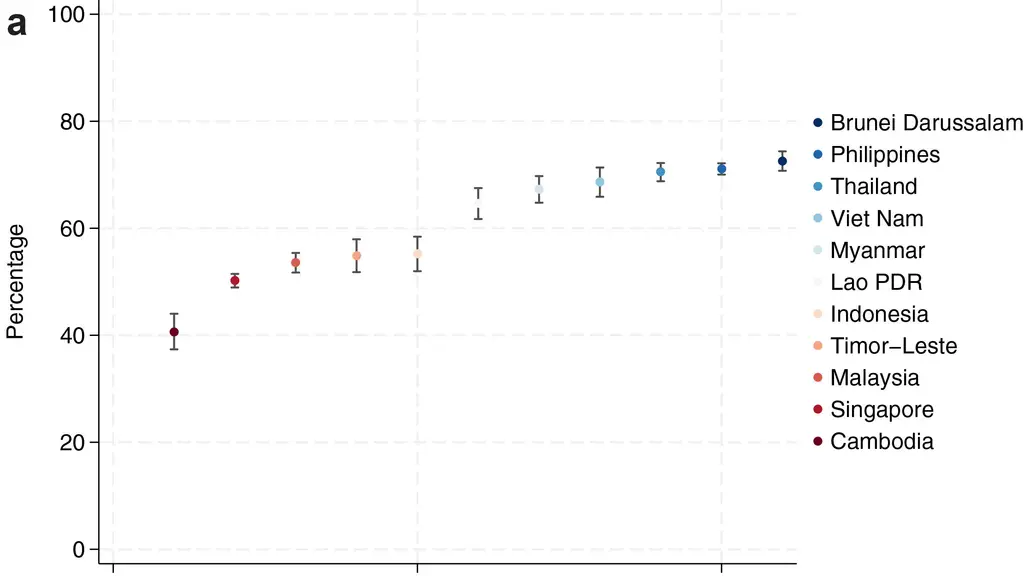
The researchers estimated the share of breast cancer deaths associated with diagnoses made at ages covered by screening. The proportion ranged from 40.6% in Cambodia to 72.6% in Brunei Darussalam.
In Singapore, the share was 50.2%, the second-lowest among the countries studied. The national mammography screening program there covers women ages 50 to 69.
The model estimated that a 5-percentage-point increase in screening attendance could avert about 7,300 deaths in Indonesia and 4,400 in the Philippines between 2026 and 2050.
Raising the upper screening-age limit by five years would produce the largest increases in this share in Cambodia, by 16.4 percentage points, and Indonesia, by 13.5 percentage points. Current programs in those countries cover women ages 15 to 49 and 30 to 50, respectively.
The researchers combined mortality estimates from the 2023 Global Burden of Disease (GBD) study with national screening age ranges and attendance data. The model assessed how age criteria and changes in participation could affect deaths through 2050, accounting for uncertainty in the data and the time between diagnosis and death.
Increasing screening attendance is important, but our findings show that participation alone is not enough. If screening programs do not adequately cover the ages at which breast cancer is commonly diagnosed, their potential impact will remain limited.
Evangelos Kontopantelis, Professor, Department of Medicine, National University of Singapore
The authors said the share of deaths associated with diagnoses at screening ages should not be treated as the share of deaths that screening could prevent. Timely diagnosis, referral and treatment also affect outcomes.