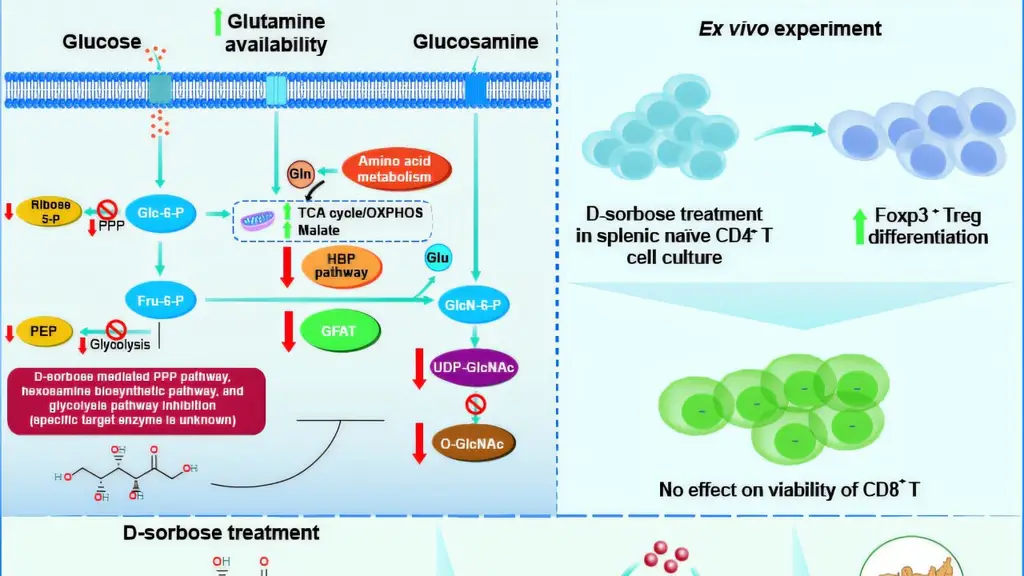
Researchers at Fujita Health University in Japan tested d-sorbose in cultures of mouse naive CD4⁺ T cells and in two mouse disease models. The study was published in The FASEB Journal.
This was reported by Medical Xpress.
In cell cultures, d-sorbose increased the proportion of regulatory T cells, which help restrain excessive immune responses. In a mouse model of allergic inflammation, it increased the proportion of these cells in the lymph nodes and lungs and reduced inflammation. When researchers depleted the T cells, the protective effect disappeared.
In an autoimmune diabetes model, 60% of mice in the control group developed high blood glucose. Mice that received d-sorbose remained normoglycemic throughout the study. Their pancreatic islets had less lymphocyte infiltration, and the tissue structure was better preserved.
Metabolic analysis showed that d-sorbose altered glucose and glutamine metabolism in T cells. Researchers linked these changes to the formation of regulatory T cells; the results point to broader metabolic changes, rather than suppression of a single pathway alone.
The study used mouse cell cultures and mouse models. The effectiveness of d-sorbose, an appropriate amount for consumption and its long-term safety in people have not been established.
The authors also did not identify the enzymes directly affected by the substance. They said further research is needed before d-sorbose can be recommended as a dietary supplement or treatment.