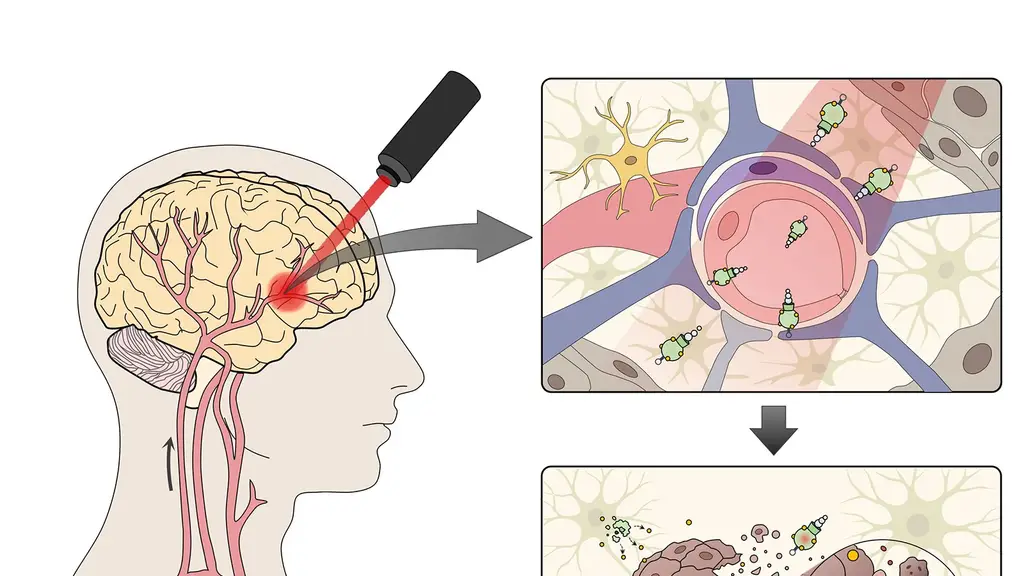
Researchers at the California Institute of Technology tested BrainBots in mouse models of glioblastoma. Activated by near-infrared light, the nanorobots delivered about five times more medication to the brain than inactive ones.
Medical Xpress has the details.
BrainBots delivered doxorubicin, a chemotherapy drug, to the brain. Treatment slowed tumor growth and extended survival in mice without detectable disruption of the blood-brain barrier. Systemic toxicity was lower than with conventional administration of the drug alone.
The nanorobot capsules are about 250 nanometers in size. Near-infrared light heats a temperature-sensitive gate, triggering gas production that propels the nanorobots toward cells lining the barrier.
DNA molecules called aptamers help the nanorobots recognize and bind to cells lining the barrier. The cells take them up and transport them into the brain, where the nanorobots break down and release the medication.
The study was published in Science Robotics. The team plans to improve near-infrared light delivery and assess the nanorobots’ long-term safety, stability and degradation in the body. Further research is needed before studies involving people.