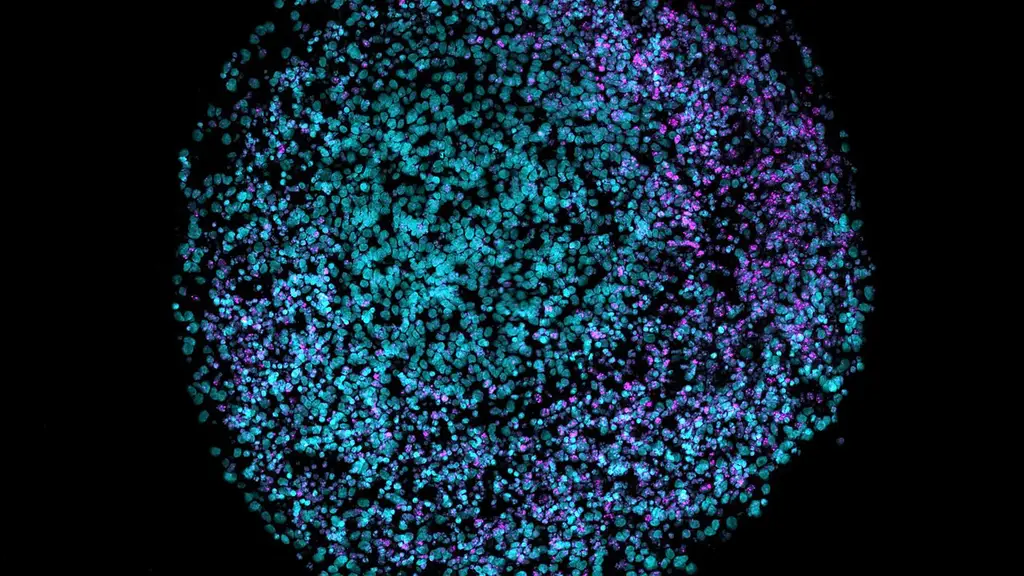
In March 2024, researchers at the University of California San Diego sent brain organoids to the International Space Station. They spent 40 days there. The study was published Nov. 25 in Science Advances.
The report comes from Medical Xpress.
Organoids are small, three-dimensional models of neural tissue grown from stem cells. Some samples carried mutations in APP, PSEN1 or PSEN2, genes linked to rare inherited forms of Alzheimer’s disease. Other organoids, without these mutations, served as controls.
For comparison, researchers kept similar organoids on Earth under nearly identical laboratory conditions.
After the flight, organoids with an APP mutation had increased levels of amyloid-beta 42, a protein fragment that can clump together and form plaques in the brain. Models with a PSEN2 mutation had higher levels of a modified form of tau associated with the disease.
In samples with a PSEN1 mutation, researchers found differences in 7,404 genes between spaceflight and ground-based organoids. In models with a PSEN2 mutation, they found differences in 643 genes.
Researchers also observed changes in genes linked to communication between nerve cells, energy production and the processing of ribonucleic acid (RNA).
Levels of the protein CIRBP, which helps cells respond to stress, increased in all groups after spaceflight. Researchers identified it as a possible shared marker of the stress response for further study.
The authors called the findings preliminary. They hope to determine whether the observed changes can be reproduced on Earth and whether proteins such as CIRBP play a role in Alzheimer’s disease. The research was conducted on organoids, not people.