Medicine & Research

  1. Medicine & Research updated 00:02

    Sanofi to buy Insmed for $41 billion, gaining two approved drugs

    The deal also includes another Insmed drug that is in Phase 3 clinical trials.

    Sanofi to buy Insmed for $41 billion, gaining two approved drugs
    Photo: STAT News

    French pharmaceutical company Sanofi is acquiring New Jersey-based biotech firm Insmed for $41 billion. Sanofi will pay $175 per share using cash and debt financing.

    Source: STAT News. Also reporting: Інтерфакс-Україна.

    Sanofi will gain two of Insmed’s approved drugs. The deal also covers another drug in Phase 3 clinical trials.

    Before Bloomberg reported that a deal was being prepared, Insmed shares were trading at about $120. Their price rose after the report.

    The article links the deal to Sanofi’s need to expand its pipeline as revenue from Dupixent is expected to decline. The drug targets inflammation and is approved for nine indications.

    Sanofi had said it was seeking assets in late-stage development or already on the market, in areas that fit the company’s focus on immunology and rare diseases.

  2. Medicine & Research updated 11:58

    Woman develops glaucoma after being hit by pickleball

    The case involved a player who was not wearing protective eyewear. Doctors highlighted the risk of eye injuries during the game.

    Woman develops glaucoma after being hit by pickleball
    Photo: slvmarketing / Pixabay

    Doctors from UMass Chan Medical School described the case in BMJ Case Reports. The patient was a previously healthy woman in her early 50s who was hit in her left eye by a ball while playing pickleball.

    This was reported by the news site The Guardian.

    Immediately after the impact, she experienced blurred vision, severe pain and extreme sensitivity to light. She was treated in the emergency department and discharged from the hospital, and her symptoms appeared to be improving.

    Several weeks later, the pain and blurred vision worsened. Three months after the injury, doctors found structural damage to her optic nerve and impaired vision, and diagnosed glaucoma.

    This was a single case report. Doctors noted that blunt eye trauma is a known risk factor for glaucoma. They also cited other eye injuries associated with pickleball, including retinal tears and traumatic lens subluxation.

    Doctors cited players’ proximity to the net, ball speed and the pace of play as possible contributors to injuries. They recommended wearing protective eyewear.

  3. Medicine & Research updated 23:56

    University of Glasgow spinout develops ozone device for hospital drains

    The device generates ozone from air and electricity to treat parts of drains that liquid disinfectants cannot reach.

    University of Glasgow spinout develops ozone device for hospital drains
    Photo: Medical Xpress

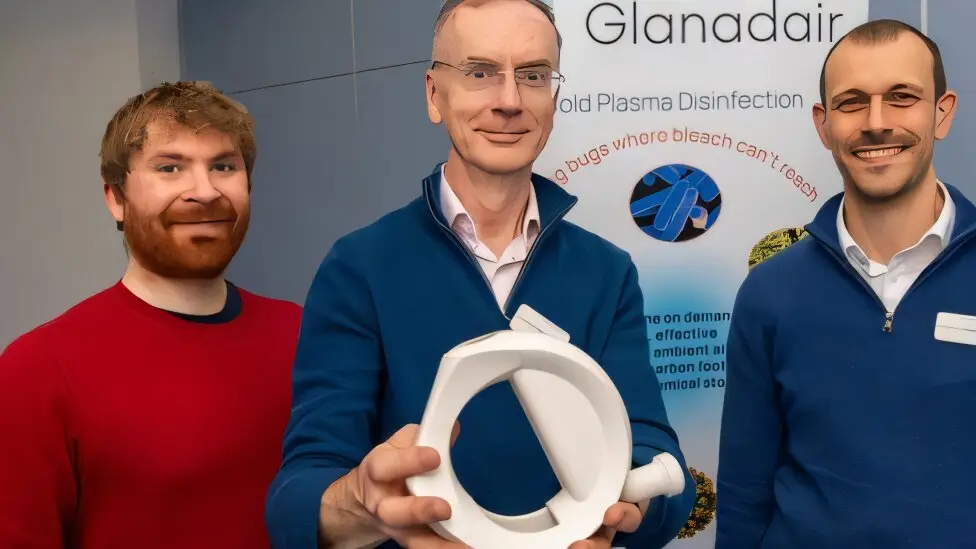
    A University of Glasgow spinout has developed a portable device to treat hospital sink drains, building on more than 15 years of university research. Glanadair is commercializing the technology.

    More details are available from Medical Xpress.

    The device generates ozone from air and electricity inside the drainage system. It is placed over the drain opening. After treatment, any remaining ozone turns into oxygen, leaving no chemical residue.

    Declan Diver, Glanadair co-founder and professor of plasma physics, says ozone can penetrate biofilms containing bacteria. The gas reaches places that liquid disinfectants often cannot.

    A peer-reviewed study published in 2025 in the Journal of Hospital Infection found that plasma-generated ozone significantly reduced bacterial contamination in drains. Researchers also found that ozone did not escape into the surrounding environment.

    The device records when a sink was disinfected and who did it, creating a digital log for hospital staff.

    A patent application for the technology is pending. The system is being prepared for wider deployment and trials in hospital workflows, and hospitals have expressed interest in evaluating the device.

    Glanadair is seeking investment to manufacture the device and has reached the final stages of the Scottish EDGE competition.

  4. Medicine & Research

    Wolbachia mosquito intervention cuts arboviral infections by 68.6% in Brazil trial

    Annual blood tests of participating children detected antibodies to dengue, Zika and chikungunya.

    Wolbachia mosquito intervention cuts arboviral infections by 68.6% in Brazil trial
    Photo: Medical Xpress

    The EVITA trial enrolled 5,757 children ages 6 to 11 in Belo Horizonte, Brazil, from 2020 to 2024. The intervention reduced arboviral infections by 68.6%.

    Medical Xpress has the details.

    EVITA stands for EValuate the efficacy of Wolbachia-InfecTed Aedes aegypti mosquitoes in reducing the incidence of Arboviral infection.

    The cluster-randomized, controlled trial covered 58 school-defined geographic clusters. In 29 clusters, releases of Wolbachia-infected mosquitoes were added to standard vector-control measures. The other 29 received standard measures alone: insecticidal sprays and mosquito source reduction.

    Children provided baseline blood samples in 2020, followed by annual collections through 2024. Samples were tested for antibodies to dengue, Zika and chikungunya viruses. Efficacy was 68.5% against dengue and 73.3% against chikungunya.

    Mosquitoes carrying the wMel strain were released from January 2021 through May 2022. Wolbachia is a naturally occurring bacterium passed from female mosquitoes to their offspring; it reduces Aedes aegypti’s ability to transmit arboviruses.

    Our findings in the EVITA trial show a 68.6% overall efficacy in reducing arboviral infection from this intervention

    Sri Edupuganti, co-principal investigator of the EVITA trial and professor in the Department of Medicine, Division of Infectious Diseases at Emory University School of Medicine

    The results were presented at the American Society of Tropical Medicine & Hygiene annual meeting in National Harbor, Maryland.

  5. Medicine & Research updated 23:56

    CELIA researchers report 38% slowing of decline with 60 mg dose

    Participants received injections twice a year; interim results cover the first two years of the trial.

    CELIA researchers report 38% slowing of decline with 60 mg dose
    Photo: Medical Xpress

    The CELIA team presented interim phase 2 results in Boston at the CTAD 2026 conference. The data cover the first two years of a study involving people with early Alzheimer’s disease. Researchers reported that clinical decline slowed by 38% in the 60 mg group.

    Original source — Medical Xpress.

    At week 96, the 60 mg dose slowed clinical decline by 38% on the Clinical Dementia Rating Sum of Boxes (CDR-SB). The scale assesses cognition and daily function. Researchers compared the result with outcomes among participants who initially received a placebo; at week 76, the slowing was 26%.

    At week 96, researchers also recorded additional improvements on four of the five other measures compared with results from 20 weeks earlier. On the 13-item Alzheimer’s Disease Assessment Scale–Cognitive Subscale (ADAS-Cog-13), the difference corresponded to a 54% improvement.

    Diranersen is an antisense oligonucleotide therapy, or gene-silencing therapy, that targets tau. Tau is one of the two main harmful brain proteins involved in Alzheimer’s disease.

    The scientists say the phase 2 results support continued development of diranersen and its evaluation in a phase 3 trial designed to confirm the drug’s efficacy and safety.