Technology

  1. Technology

    Kagi launches email service with 50 GB of storage

    The service is currently web-only, with native Android and iOS apps planned for the fourth quarter of 2027. Kagi is also rolling out a calendar, and standalone access starts at $9 a month.

    Kagi launches email service with 50 GB of storage
    Photo: Ars Technica

    Palo Alto, California-based Kagi has opened a public beta of Kagi Mail. The paid service includes 50 GB of storage.

    This was reported by Ars Technica.

    Kagi describes its email service as private and ad-free, and says it gives users control over their personal data. Features include unlimited aliases and domains, Sieve rule-based filtering, and a policy against locking users’ data into the service.

    Kagi Mail also offers several optional AI features. They are off by default and include using a chat agent to search email history and setting up filtering rules.

    A calendar is also part of Kagi Mail, but its interface, like the email service, is currently available only on the web. Kagi’s roadmap schedules native Android and iOS apps for the fourth quarter of 2027 and an address book for the first quarter of that year.

    Kagi Mail costs $9 a month or $99 a year. It is also included in the Kagi Ultimate subscription, which costs $25 a month. A 60-day trial is currently available.

  2. Technology updated 00:49

    Cabinet simplifies codification of drones and electronic warfare systems

    After successful testing, electronic warfare systems will be codified within 10 days, and drone makers will no longer have to wait for the military to identify a need.

    Cabinet simplifies codification of drones and electronic warfare systems
    Photo: Радіо Свобода

    Ukraine’s Cabinet of Ministers simplified the codification procedure for unmanned aerial vehicles and electronic warfare (EW) systems on November 25. Codification is the official authorization for new weapons to be used by the military. Prime Minister Serhii Koretskyi announced the changes on social media.

    Original report: Радіо Свобода. Also reporting: Укрінформ.

    According to Koretskyi, manufacturers of unmanned systems can begin codification without waiting for the military to identify a need for their particular model. He said the changes are intended to speed up the delivery of domestically developed defense products to the military.

    EW systems that have successfully passed testing will be codified within 10 days on the basis of a report, without unnecessary paperwork. Manufacturers will be responsible for the accuracy of the information.

    A clear procedure and timeframe for codifying explosives have also been established.

    Koretskyi said the changes are intended to reduce bureaucracy and make the rules clearer for Ukrainian manufacturers. Manufacturers will be able to spend less time on paperwork and more on developing new equipment for the front.

  3. Technology

    WhatsApp rolls out scheduled messages with delivery up to two weeks later

    Users can delete messages before they’re sent. The phone can be off or out of battery when a scheduled message is delivered.

    WhatsApp rolls out scheduled messages with delivery up to two weeks later
    Photo: The Verge

    Meta said WhatsApp is rolling out the feature globally and called it one of the service’s most-requested features. WhatsApp has 3 billion users. People can schedule texts, photos or videos to be sent between 10 minutes and two weeks later.

    The Verge published the report.

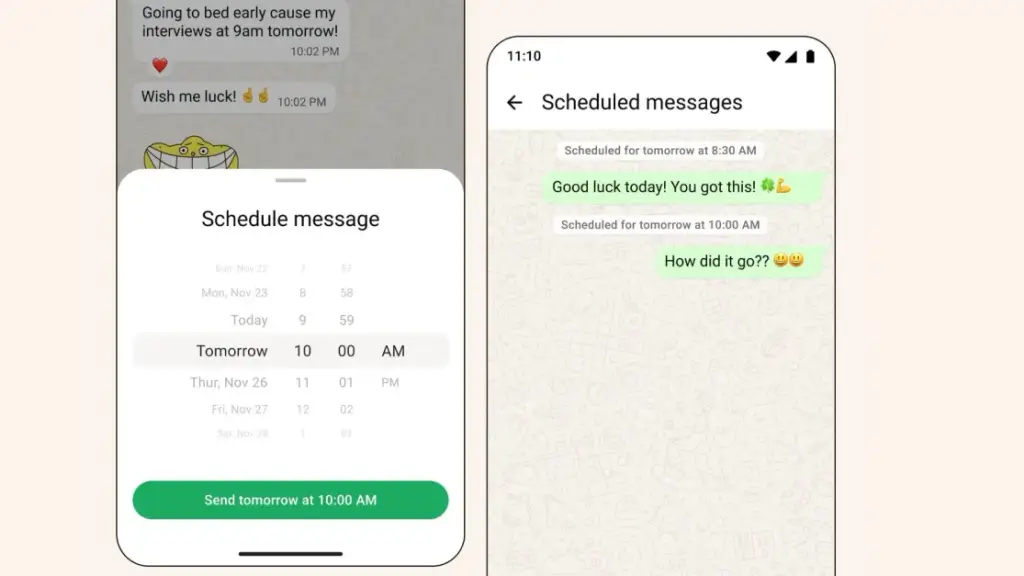
    To schedule a message, users press and hold the send button, then choose when they want it delivered.

    Users will be able to see all their scheduled messages in the app and delete them before the selected time. Recipients will see them like any other message.

    The feature works with text, photos and videos. Meta says messages will arrive at the chosen time even if the phone is off or out of battery. The company says messages will remain end-to-end encrypted, so no one can read them, including Meta.

  4. Technology updated 21:54

    Anthropic CEO opposes handing control to AI

    Dario Amodei says some tasks, including driving and developing cancer drugs, could be automated.

    Anthropic CEO opposes handing control to AI
    Photo: Axios

    Anthropic CEO Dario Amodei said people should not give up self-determination by handing control to artificial intelligence.

    Original report: Axios. Also reporting: TechCrunch.

    Amodei distinguished handing control to AI from automating specific tasks. He opposes the former and has mixed views on the latter, depending on the application.

    We should never sacrifice legitimacy or self-determination at the altar of efficiency or security.

    Dario Amodei, Anthropic CEO

    Amodei cited driving a car, developing a cancer drug and writing software end-to-end as examples of automation. In many cases, he said, giving AI systems more agency could be desirable and save many lives.

    Amodei also said some AI deployments may need to be slowed or stopped. He said that could mitigate the technology’s effect on employment and limit AI’s ability to develop more powerful systems autonomously.

    Amodei accused executives at rival companies of commercial and political positioning based on slogans about human control and agency. He said they do not meaningfully differentiate their products or take seriously the difficult questions behind those slogans.

    Amid the debate, Anthropic shares fell below their price on the day of the company’s initial public offering.

  5. Technology updated 22:31

    1Password says customer data was stolen, but vault passwords remain safe

    The company said its apps and extensions were unaffected by the breach.

    1Password says customer data was stolen, but vault passwords remain safe
    Photo: TechCrunch

    Password manager maker 1Password said it discovered an intrusion into its internal systems on November 19. An attacker accessed an employee’s corporate GitHub account and downloaded some customer data.

    Source: TechCrunch. Also reporting: The Verge, Engadget.

    Using the employee’s access, the attacker placed malicious code on the company’s internal servers. The code enabled the attacker to obtain customers’ names, sign-in email addresses, and the dates their accounts were created and last accessed.

    The company said customer password vaults were never accessible to the attacker. 1Password also cannot access account passwords or secret keys, which are used to encrypt passwords so the company cannot see them.

    1Password did not say whether it had notified customers whose data was accessed, or how many people were affected.

    The company says millions of customers and more than 200,000 businesses use its password manager.