Technology

  1. Technology

    Microsoft says Windows 11 saves more than 860 MB of RAM

    The changes affect Microsoft 365 and background services. Microsoft also shared performance test results for the updated system.

    Microsoft says Windows 11 saves more than 860 MB of RAM
    Photo: Notebookcheck

    At Microsoft Ignite 2026, the company announced optimizations to Windows 11 apps and background services. Microsoft said they cut combined RAM use by more than 860 MB.

    More details are available from Notebookcheck.

    Ian LeGrow, who leads the engineering team responsible for the Windows core operating system, said Microsoft 365 uses 360 MB less memory. Microsoft Defender, Purview and OneDrive background services save more than half a gigabyte combined. Microsoft did not break down that figure by service.

    In Microsoft’s test, a PC running a newer build completed a simulated workload about 21% faster than a device on the January 2026 update. The test included a simulated Teams call, 4K video, 20 Edge tabs, Outlook and large Microsoft 365 files. LeGrow said the reported result was based on a 30-second segment of longer tests.

    Microsoft separately said Office apps run about 10% faster on devices with 8 GB of RAM. Robin Seiler, who leads Microsoft’s Windows commercial engagement team, said work for those PCs also benefits devices with more memory.

    Windows Latest tested the changes on an 8 GB laptop, upgrading it from Windows 11 25H2 to 26H2. After a restart, memory use fell from 5 GB to 3.3 GB, while available memory rose from 2.9 GB to 4.6 GB, before Chrome was opened.

    The changes require Windows 11 version 26H2, build 26300.9818 or later. Current versions of Edge, Microsoft 365 and Teams are also required.

    On November 18, Microsoft began gradually delivering 26H2 automatically to unmanaged PCs running versions 24H2 and 25H2. Users can enable the relevant setting in Windows Update to get the update sooner.

    The setting is called "Get the latest updates as soon as they’re available." Users can then check for updates.

  2. Technology updated 08:13

    New York governor signs five-year moratorium on AI toy production and sales

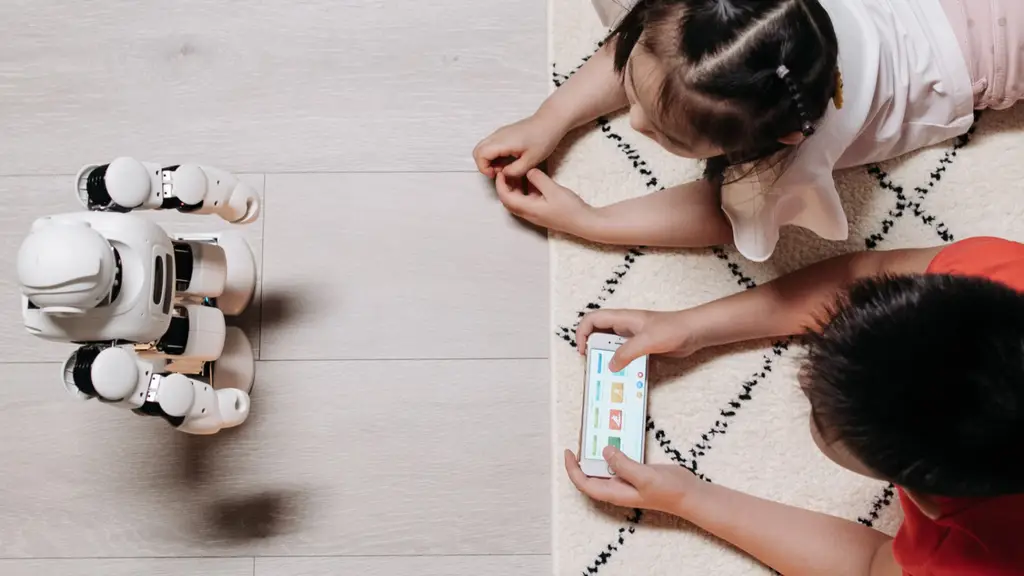
    The restriction covers toys with chatbots that can hold extended conversations with children. Owners can continue using toys they have already bought.

    New York governor signs five-year moratorium on AI toy production and sales
    Photo: Notebookcheck

    New York Gov. Kathy Hochul signed a law on November 24 imposing a five-year moratorium on the manufacture, distribution and sale of toys with artificial intelligence chatbots. It will take effect 90 days after signing.

    The information comes from Notebookcheck. Also reporting: Інтерфакс-Україна, TechCrunch, Engadget.

    The law covers toys designed for children 12 and younger, including stuffed animals, dolls and robots that communicate with children online. It applies to devices with an AI companion capable of forming a sustained, human-like relationship: remembering previous conversations, asking unprompted emotional questions and discussing a child’s personal life.

    Owning and using these toys will remain legal. The state Attorney General will enforce the moratorium. Violations carry civil penalties of up to $15,000 per violation per day.

    Hochul cited testing of toys marketed to children ages 3 to 12 by a national consumer watchdog. She said some toys discussed sexually explicit topics, told children where to find matches at home or acted upset when a child wanted to end a conversation.

    Most had few or no parental controls. Safety limits weakened as conversations continued, and some toys could record a child’s voice or scan their face.

    The bill, S.9408A/A.11144B, was sponsored by State Senator Andrew Gounardes and Assemblymember Rebecca Kassay. New York is the second U.S. state, after California, to enact such a ban.

    Until the moratorium takes effect, Hochul urged parents to consider safety and privacy risks before buying children AI-powered toys.

  3. Technology

    WhatsApp tests sound stickers in Android beta

    Users can add audio from a video, record a voice note or choose an audio file saved on their phone.

    WhatsApp tests sound stickers in Android beta
    Photo: Engadget

    Sound stickers are being tested in the public beta of WhatsApp for Android. According to WABetaInfo, the feature is included in update 2.26.41.3. The sound plays when someone taps the sticker.

    Engadget has the details.

    To create a sticker, open a chat, tap the sticker icon and select “Create sticker.” Then choose a video from your phone’s library, and WhatsApp will automatically turn it into a sticker.

    A sound icon appears in the top menu while creating a sticker. Tapping it opens the screen for adding audio. You can keep the video’s original sound, record a voice note or another sound, or choose an audio file saved on your phone.

    You can save the finished sound sticker and send it to other users. To try the app’s beta version, you can apply through Google Play.

    The feature is experimental, so it may not be available even to beta testers. WhatsApp has not yet announced whether sound stickers will become available to all users.

  4. Technology updated 11:59

    Most smartphone makers cut 2027 shipment targets

    Rising memory costs are squeezing margins and demand, while Honor is expected to keep its target at about 50 million smartphones.

    Most smartphone makers cut 2027 shipment targets
    Photo: geralt / Pixabay

    According to unnamed supply-chain sources, most of the world’s leading smartphone makers have already lowered their shipment targets for 2027. Honor is keeping its target at about 50 million devices.

    This was reported by Notebookcheck.

    Xiaomi lowered its 2027 target to about 90 million smartphones, from about 120 million in 2026, a 25% decline. Lenovo, primarily through its Motorola business, cut its target from about 50 million units in 2026 to 40 million in 2027, or 20%.

    Vivo lowered its target from 85 million units in 2026 to 60 million in 2027, a 29% decline. Apple plans to reduce its target from about 233 million iPhones to 220 million, or 5.6%. Samsung cut its target from 232 million to 210 million smartphones, or 9.5%.

    Oppo lowered its target from 105 million smartphones in 2026 to 90 million in 2027, a 14% decline. Transsion’s target fell from 66 million to 58 million units, or 12%. Huawei reduced its target from about 60 million in 2026 to fewer than 50 million in 2027, a drop of more than 16%.

    Demand from AI data centers is absorbing a growing share of dynamic random-access memory (DRAM) supplies, driving up prices. That is putting pressure on smartphone makers’ margins and demand.

    Honor CEO Li Jian said some manufacturers are making trade-offs, including lowering chip, camera and memory specifications, to keep prices in check.

  5. Technology

    Shinji Mikami says he sometimes wishes AI would disappear

    At his studio, AI turns a 2D character sketch into a 3D preview that can be evaluated in about 20 minutes. Modeling previously could take nearly a month.

    Shinji Mikami says he sometimes wishes AI would disappear
    Photo: Notebookcheck

    At G-CON in Busan on November 19-20, Resident Evil creator Shinji Mikami said his studio uses AI to preview 3D characters. The visualization can be evaluated in about 20 minutes.

    Original source — Notebookcheck.

    Artists first create a character in 2D, then AI turns it into a 3D preview in the game. If the preview matches the 2D design, modelers create the final asset. Previously, the team could spend nearly a month modeling a character, only to find it did not fit the 2D art and have to start over.

    Mikami said using AI well can help achieve higher quality within the same budget. At the same time, he sometimes wishes the technology would disappear not just from games, but from the world. Nobody can predict what the next five or 10 years will bring, he said, including whether developers will lose their jobs to AI.

    Shift Up CEO Kim Hyung-tae called AI essential to game development, including programming, quality assurance, code review and debugging. He said people lay the creative foundation and refine the final result, while AI handles intermediate tasks. Kim ruled out using AI to write stories.

    G-CON was held as part of G-STAR 2026 in Busan, which ran from November 19 to 22. The conference also discussed the use of generative AI in game development.

    Kim expects AI-generated games to flood the market in 2027. In his view, low-quality releases will fade on their own, while handcrafted games will gain value.

    Mikami predicted that games will eventually feature AI characters capable of conversation. He said they may initially be introduced for more casual characters.