Technology

  1. Technology

    Walmart lets Meta’s Muse shop on its website

    Users can set spending limits, approve purchases and review the agent’s order history.

    Walmart lets Meta’s Muse shop on its website
    Photo: The Verge

    Walmart has enabled Meta’s AI agent Muse to find and buy products on its website, including Black Friday deals.

    The Verge published the report.

    Walmart says its Agent Gateway helps AI agents find relevant products without sharing a user’s purchase history.

    Muse shops through Agent Profiles in a customer’s Walmart account. Users can set spending limits, approve purchases and review orders made by the agent.

    To get started, users tell Muse what they’re looking for. They can ask it to find a good deal on a TV or show Walmart deals available for delivery.

    The first time a user adds an item to the cart, they set up an Agent Profile in their Walmart account and choose a spending limit.

    Users can complete a purchase in the conversation with a card saved in their Walmart account. Prices match those on Walmart.com, and the company’s return policy applies.

    Walmart called its support for Muse just the beginning, saying more shopping experiences involving AI agents and apps are coming.


  2. Technology updated 11:51

    Google marked West Bank zones on Maps but not checkpoints

    Maps now alerts drivers on routes between Israeli cities that cross the West Bank and identifies Area C, but does not show permanent checkpoints.

    Google marked West Bank zones on Maps but not checkpoints
    Photo: geralt / Pixabay

    In 2025, Google updated its West Bank map, marking administrative areas and activating alerts for routes that cross borders, but it did not show permanent checkpoints.

    The story was published by the news site Wired.

    Rubén Lozano, a Google Maps product manager, worked on the project for more than six years. He left the company in March 2025.

    Lozano compiled a list of permanent checkpoints in the West Bank and developed a way to mark them and route drivers through them. He also planned to display checkpoints using a system Google had developed for COVID-19 pandemic checkpoints.

    Lozano’s former colleagues considered his work thorough. A former Google manager familiar with the project called the update a qualified success: the checkpoints did not appear on the map.

    Google spokesperson Caroline Bourdeau said the company had faced challenges obtaining comprehensive and reliable data in the complex region. Google also said it had previously solicited feedback on its West Bank map from employees familiar with the region.

    Lozano took on the project in 2019 after reading a report by 7amleh, an organization that advocates for Palestinian digital rights. The report alleged that Google Maps did not show movement restrictions in the West Bank.

  3. Technology

    Insider accuses Rockstar of limiting GTA 6 to 30 FPS

    Moore’s Law Is Dead says the game could support 40 FPS, 48 FPS with VRR or 60 FPS on consoles.

    Insider accuses Rockstar of limiting GTA 6 to 30 FPS
    Photo: Notebookcheck

    Hardware insider Moore’s Law Is Dead accused Rockstar of artificially restricting GTA 6 to 30 FPS on consoles. The claim followed the appearance online of footage showing the game running above 40 FPS.

    The report comes from Notebookcheck.

    The insider said the 30 FPS limit was a choice rather than a technical necessity. In his view, Rockstar could offer 40 FPS, 48 FPS with VRR or 60 FPS modes.

    A post on X claimed that a build of GTA 6 for Xbox Series X was reportedly running at 40 to 60 FPS.

    Digital Foundry believes GTA 6 puts too much strain on the CPU for current consoles to run it above 30 FPS. On Xbox Series S, the frame rate falls to around 20 FPS in some scenes.

    Article author Fawad Murtaza says it remains to be seen whether Rockstar will improve GTA 6 performance on consoles and PC. If the insider’s claim proves accurate and fan backlash is substantial, the company could release a post-launch patch to boost performance.

  4. Technology

    Outpost VFX hires Andy McNamara as director of creative innovation

    In the role, he will work with educators on curricula focused on artificial intelligence.

    Outpost VFX hires Andy McNamara as director of creative innovation
    Photo: Deadline

    Outpost VFX has hired Andy McNamara as director of creative innovation.

    Deadline has the details.

    He previously led AI innovation initiatives at Cinesite.

    Before joining Cinesite, McNamara was director of CGI and innovation at Publicis Production. He also holds advisory roles at the London College of Communication and the National Film and Television School.

    McNamara was appointed visiting professor for design and AI at York St. John University. At Outpost VFX, he will work with educators on AI-focused curricula.

    It’s an exciting time for the industry

    Andy McNamara, Director of Creative Innovation at Outpost VFX

    Outpost VFX founder and CEO Duncan McWilliam said the company is already in discussions with major studios about its approach to emerging creative technology. He said Outpost’s infrastructure enables it to adopt new tools responsibly and faster than the traditional VFX model allows.

    Outpost VFX is headquartered in the UK and has studios in Stuttgart, Montreal and Mumbai.

  5. Technology

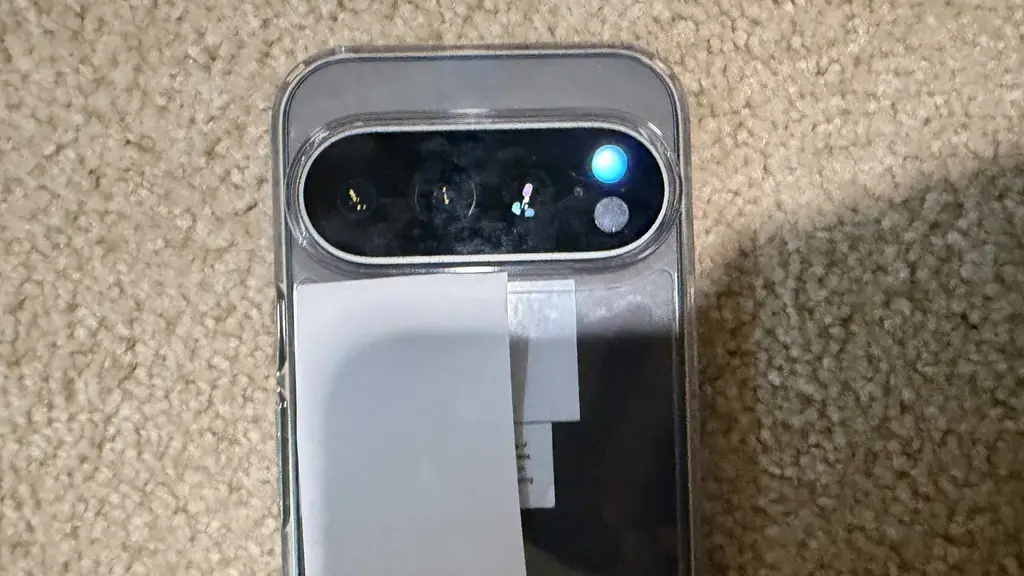
    Pixel 11 Pro prototype shows HiLight, but app reports unavailable sensor

    The Thermometer app opens and advises contacting Google, but does not say why the sensor is unavailable.

    Pixel 11 Pro prototype shows HiLight, but app reports unavailable sensor
    Photo: Notebookcheck

    The owner of a Pixel 11 Pro XL prototype shared photos of a working Pixel 11 Pro sample. The phone’s settings list the model as Pixel 11 Pro, hardware version EVT1.0 and manufacturing year 2025.

    Original source — Notebookcheck.

    A circular window sits below the LED flash, where the Pixel 10 Pro has its infrared temperature sensor. The Pixel 11 Pro XL prototype has the same window.

    In one photo, the flash window glows blue beside the sensor window. This indicates that HiLight’s red, green and blue LEDs were already installed and working at the EVT stage.

    The Thermometer app opens on the prototype but reports that the temperature sensor is unavailable and advises contacting Google. The reason for the message could not be determined.

    EVT, or engineering validation test, is the first stage of hardware prototyping. It is followed by DVT (design validation test) and PVT (production validation test).

    Computer-aided design (CAD) renders did not show a sensor window. Google has not explained why it dropped it.

    Google said it aims to make Pixel “helpful to as many people as possible.”

    An engineering sample’s hardware and software may differ from retail devices. The Pixel 11 Pro is available on Amazon for $999.