Technology

  1. Technology

    WSJ: Nvidia asks partners to pause server shipments to 4 Asian countries

    The pause will last for an unspecified period as the company checks whether regional partners are complying with U.S. export requirements.

    WSJ: Nvidia asks partners to pause server shipments to 4 Asian countries
    Photo: TechCrunch

    Nvidia has asked manufacturing partners, including Dell and Super Micro, to pause server shipments to Malaysia, Singapore, Thailand and Indonesia for an unspecified period, according to the Wall Street Journal. The company is checking whether its regional partners are complying with U.S. export requirements.

    This was reported by TechCrunch.

    Chinese companies had accessed Nvidia chips remotely through data centers in those countries. The U.S. Commerce Department has closed off that option, according to the Journal.

    The Institute for Progress think tank estimates that remote data centers of this kind provide about 24% of China’s computing power for artificial intelligence.

  2. Technology updated 20:30

    Estonia to test EE-ALARM audio alerts on December 1

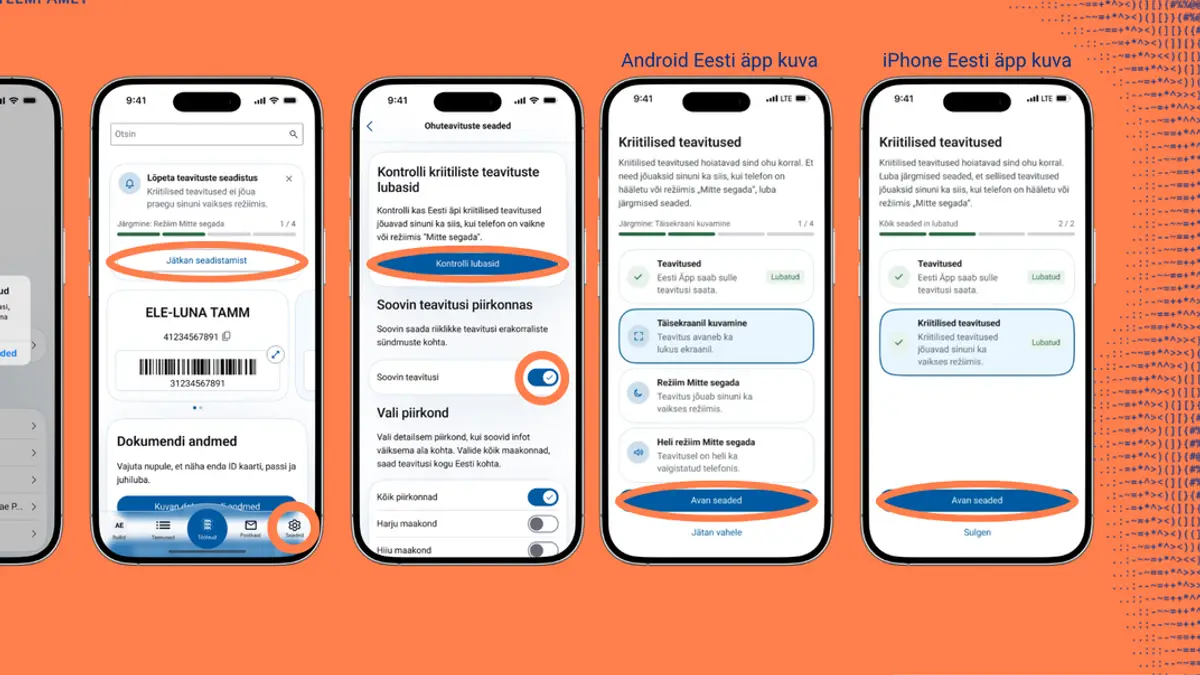
    Critical alerts will be accompanied by a loud sound and vibration, even if a phone is in silent mode.

    Estonia to test EE-ALARM audio alerts on December 1
    Photo: Європейська правда

    Estonia will test the EE-ALARM system’s audio alert on December 1. According to ERR, when a critical alert is received, a phone will sound loudly and vibrate for 10 seconds, even in silent mode.

    Details were published by Європейська правда. Also reporting: Українська правда.

    The sound will be activated only for critical alerts about a serious threat, such as an imminent air threat or a bomb threat. In these cases, people need to act immediately, including by moving to a shelter.

    Users need to allow critical alerts in their phone settings for the government’s Eesti äpp app. If these alerts are not allowed, they will be delivered according to regular notification settings, provided that danger alerts are enabled on the phone.

    For other EE-ALARM alerts, the sound depends on the user’s settings.

    Test alerts will be sent through the Eesti äpp and Ole valmis! apps. EE-ALARM also uses short message service (SMS) texts, a siren network and alerts from Estonian National Broadcasting.

  3. Technology

    Microsoft says Windows updates may disrupt NTLM sign-ins

    The issue affects some third-party proxies, single sign-on tools and application packaging software. A temporary workaround disables new relay-attack protections.

    Microsoft says Windows updates may disrupt NTLM sign-ins
    Photo: Notebookcheck

    Microsoft confirmed that Windows security updates released November 10 may disrupt NTLM authentication in some third-party apps and devices.

    More details are available from Notebookcheck.

    Affected products include authentication proxies, single sign-on tools and application packaging software.

    Microsoft added the known issue to support article KB5135557, which covers the new NTLM message-signing requirements included in the November updates.

    Microsoft says the failure usually occurs when a device or app sets the TARGET_INFO flag in an NTLM challenge message but sends an empty or incomplete TargetInfo field. For NTLMv2 with signing, Windows requires the MsvAvNbComputerName and MsvAvNbDomainName values. If either is missing, the system rejects the sign-in.

    As a temporary workaround, Microsoft advises administrators to set the ClientAllowUnsignedNtlm REG_DWORD value to 1 under HKEY_LOCAL_MACHINE\SYSTEM\CurrentControlSet\Control\Lsa\MSV1_0. This prevents the client from offering signing and disables the new relay-attack protection.

    Microsoft has not announced a Windows fix. The company recommends switching to Kerberos where possible or asking vendors for updates that comply with the NTLM specification. Kerberos is not affected.

    In the second phase, scheduled for May 2027, Windows servers will require signing by default and reject clients that do not offer it. Microsoft also warns it may remove these registry settings in the future. Once the second phase begins, servers requiring signing will reject computers still using the workaround.
  4. Technology

    GCS says it has supplied Ukraine with about 100 demining machines

    Its service system includes a spare parts warehouse, a technical center and a mobile repair team; the company has also trained 226 mechanics.

    GCS says it has supplied Ukraine with about 100 demining machines
    Photo: Інтерфакс-Україна

    Swiss-German company Global Clearance Solutions (GCS) said that during its four years of operations in Ukraine, it had supplied about 100 demining machines and established infrastructure to maintain them.

    The report comes from Інтерфакс-Україна.

    The infrastructure includes a central spare parts warehouse, a service and technical center, and a mobile repair team that operates at demining sites. It supports about 100 GCS machines supplied to Ukraine.

    GCS’s Ukrainian office has become an accredited mine action operator. It conducts demining operations and teaches communities how to prevent risks related to explosive ordnance.

    GCS has trained more than 200 Ukrainian machine operators and 226 mechanics. In its own operations, its team surveyed and returned 921,000 square meters of land to communities and landowners.

    The GCS-100 and GCS-200 machines are used by Ukraine’s State Emergency Service, the State Special Transport Service and the Support Forces of the Armed Forces of Ukraine. They are also used by the National Police, international organizations and private companies. All GCS machines in Ukraine and about 80% of their spare parts were purchased with funding from international donors.

    GCS is headquartered in Switzerland and operates in more than 30 countries. In Ukraine, the company’s staff has grown from 7 to 40 specialists over four years, including 11 women and 8 veterans.

  5. Technology

    National Council adds KinoKlaSs.net to list of aggressor state’s services

    The regulator also added a total of 58 websites to the lists for previously banned KINOGO and viks.tv.

    National Council adds KinoKlaSs.net to list of aggressor state’s services
    Photo: Інтерфакс-Україна

    At a meeting on November 26, the National Council of Television and Radio Broadcasting of Ukraine added KinoKlaSs.net to its list of media services of the aggressor state. The regulator also updated the lists of websites for previously banned KINOGO and viks.tv, adding a total of 58 sites.

    This was reported by Інтерфакс-Україна.

    The public union Clean Sky Initiative provided the National Council with information about efforts to block the service’s operations. The regulator said it had established, after reviewing the materials and conducting its own research, that KinoKlaSs.net was fully or predominantly oriented toward the territory and audience of the aggressor state.

    Among the grounds for its decision, the National Council cited a Russian-language interface by default and programs featuring people who pose a threat to national security. The regulator also said the service had streamed films banned in Ukraine under the Law on Cinematography and provided Ukrainian users with access to them.

    Within three business days of the decision, the National Council must inform the National Commission for the State Regulation of Electronic Communications, Radio Frequency Spectrum and Postal Services. The notification will concern the restriction of access to the resources by providers of electronic communications services.