War

  1. War

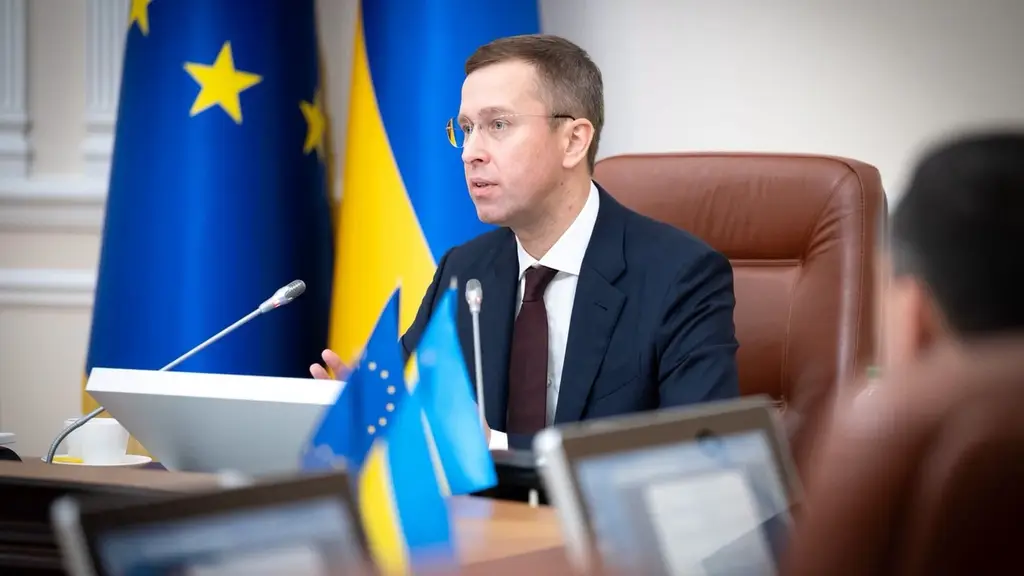
    Ukraine’s Foreign Ministry: Betza urges Britain to increase PURL contribution

    Betza thanked Britain for additional aid worth more than £10 billion, including support to strengthen Ukraine’s air defenses ahead of winter.

    Ukraine’s Foreign Ministry: Betza urges Britain to increase PURL contribution
    Photo: Укрінформ

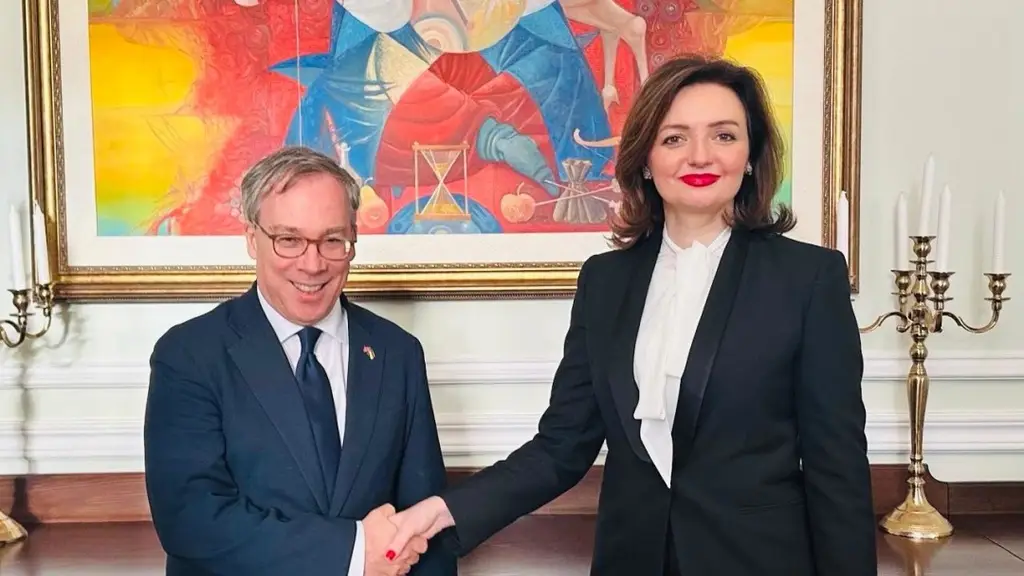
    Ukraine’s Foreign Ministry said Deputy Foreign Minister Mariana Betza urged Britain on November 25 to increase its contribution to the PURL initiative. She made the call at a meeting with Lord Edward Llewellyn, director general of the Political Directorate at the British Foreign Office.

    More details are available from Укрінформ.

    Betza thanked Britain for the additional aid announced by London. The package is worth more than £10 billion and includes, among other things, support to strengthen Ukraine’s air defense capabilities ahead of winter.

    Betza separately urged Britain to increase aid for the recovery and protection of Ukraine’s energy infrastructure.

    The meeting also addressed the development of cooperation under the Ukraine-UK 100-Year Partnership Agreement. Other topics included sanctions policy, efforts to counter Russia’s “shadow fleet” and the circumvention of international restrictions.

    The sides discussed Britain’s upcoming presidencies of the Group of 20 (G20) and the Group of Seven (G7). They also discussed the participation of British representatives in international events in Ukraine and preparations for the Parliamentary Summit of the International Crimea Platform. The summit is to be held in London in December.

    Llewellyn reaffirmed Britain’s unwavering support for Ukraine and its readiness to deepen the strategic partnership.
  2. War

    PABSEC calls for sanctions over violations of Ukrainian children’s rights

    The statement calls for support to find, return and reintegrate children, as well as parliamentary oversight of government action.

    PABSEC calls for sanctions over violations of Ukrainian children’s rights
    Photo: Укрінформ

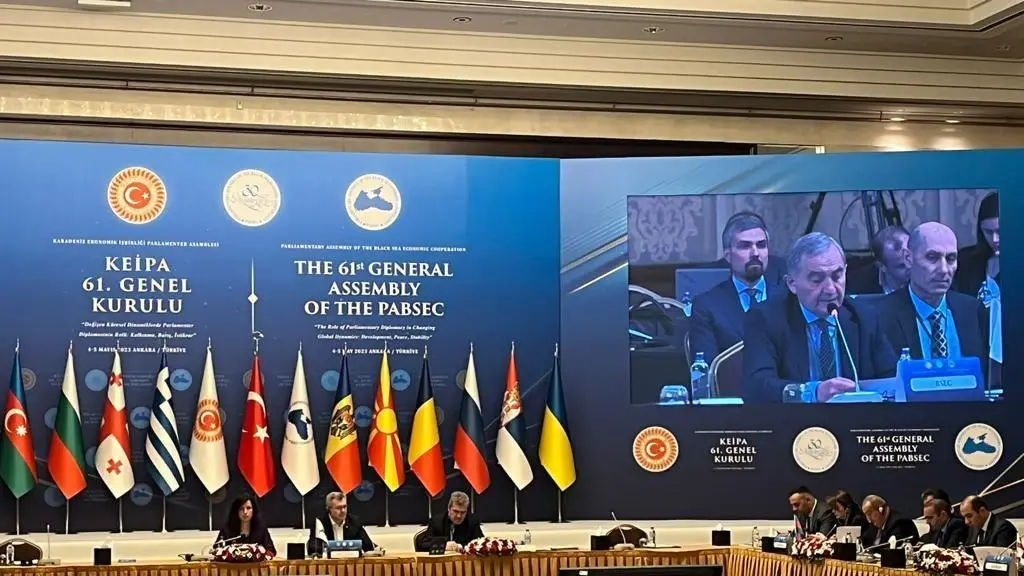
    The Parliamentary Assembly of the Black Sea Economic Cooperation (PABSEC) adopted a joint statement on the return of Ukrainian children and their protection from illegal deportation, forced transfer, ideological indoctrination and militarization. Olena Kondratiuk, deputy speaker of Ukraine’s parliament, announced the adoption of the document.

    The report comes from Укрінформ.

    Kondratiuk said the statement calls on the parliaments of member states to work with their governments. This is intended to help introduce targeted sanctions against individuals and legal entities responsible for violations of children’s rights.

    The statement calls on governments to coordinate with Ukraine and the International Coalition for the Return of Ukrainian Children to support efforts to locate, verify the whereabouts of, mediate the return of, and reintegrate children. This includes diplomatic, technical and financial support.

    The document also calls on the parliaments of member states to hold hearings and regularly oversee government efforts to locate and return children and protect them. It calls for condemning Russia’s policies of militarizing, indoctrinating, deporting and forcibly transferring children. It also calls for efforts to ensure those responsible are held accountable.

    The draft statement was prepared and presented by the Ukrainian parliamentary delegation. Azerbaijan, Albania, Greece, Georgia, Moldova, North Macedonia and Romania supported the document alongside Ukraine.

    In November 2023, the Russian Federation officially ended its participation in PABSEC.

  3. War updated 15:27

    ISW warns security guarantees for Ukraine could be delayed

    The institute says approval by the U.S. Congress and Russia, as well as an agreement on Europe’s broader security architecture, would be needed.

    ISW warns security guarantees for Ukraine could be delayed
    Photo: Радіо Свобода

    The Institute for the Study of War (ISW) said in its latest report that approval of the U.S.-proposed security guarantees for Ukraine could delay or prevent their delivery.

    The information comes from Радіо Свобода. Also reporting: Інтерфакс-Україна.

    Analysts say approval of the guarantees would require the consent of the U.S. Congress and Russia. In the institute’s assessment, U.S. President Donald Trump must ensure the guarantees are not triggered; the parties must also agree on Europe’s postwar security architecture.

    ISW says the positions of U.S. and European negotiators diverge from Moscow’s demands. The institute says the Kremlin rejects effective guarantees for Ukraine, including the deployment of foreign troops on its territory.

    ISW notes that Russia is demanding that NATO withdraw weapons and military personnel from countries that joined the alliance after 1997. Moscow is also demanding that Ukraine withdraw from all of Donbas before a ceasefire and the start of peace talks; Kyiv does not agree.

    ISW says the Russian army is unlikely to capture these territories if Ukraine continues to receive support from its partners at roughly the current level.

    On November 19, U.S. presidential special envoy Jared Kushner said Washington had purportedly persuaded Russia to agree to guarantees for Ukraine. They are to be similar to Article 5 of the North Atlantic Treaty Organization (NATO). The article requires alliance members, in the event of aggression against one of them, to take measures they deem necessary, including the use of armed force.

    Kushner also said U.S. representatives plan to hold consultations with Ukraine, Europe and Russia on the architecture of European security in the near future.

  4. War updated 13:45

    Koretskyi reports attack on Kyiv and seven regions, at least 10 injured

    The prime minister also reported an attack on two foreign civilian vessels near Odesa.

    Koretskyi reports attack on Kyiv and seven regions, at least 10 injured
    Photo: Інтерфакс-Україна

    Ukrainian Prime Minister Serhii Koretskyi said Russia attacked Kyiv and seven regions overnight, injuring at least 10 people.

    This was reported by Інтерфакс-Україна. Also reporting: Радіо Свобода, The Kyiv Independent.

    According to Koretskyi, Russian forces attacked water utility facilities several times overnight in Dnipropetrovsk region. Shopping centers caught fire after strikes in Kryvyi Rih and Pavlohrad.

    This is a deliberate terrorist strike aimed at leaving people without water.

    Serhii Koretskyi, Prime Minister of Ukraine

    In Zaporizhzhia, heating networks were targeted, and a water pipeline was damaged at an industrial facility. In Kharkiv, a drone struck a multistory residential building, while a missile hit civilian infrastructure in Kyiv.

    Koretskyi also said that Russian forces attacked two foreign civilian vessels at sea near Odesa that were carrying more than 100,000 tons of grain.

  5. War

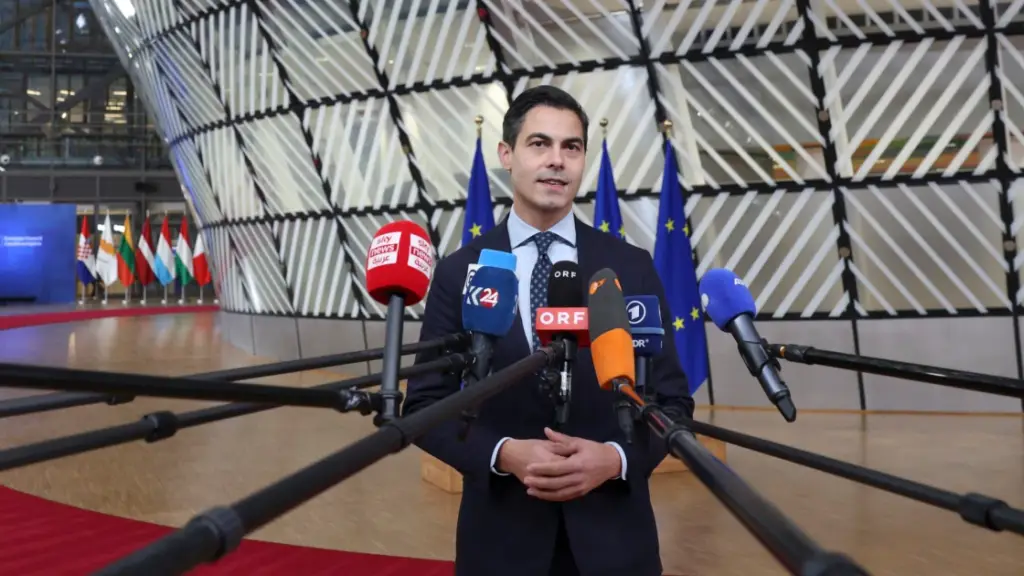
    EU leaders see spring peace talks as more likely

    They insist on continued support for Ukraine; Lithuania’s president warned that a shortage of funds and weapons would strengthen Russia’s position.

    EU leaders see spring peace talks as more likely
    Photo: Радіо Свобода

    Ahead of a summit in Brussels, the leaders of the Netherlands, Romania, Lithuania and Estonia reaffirmed their support for a just peace in Ukraine and voiced doubt that the war would end soon.

    Original report: Радіо Свобода.

    Dutch Prime Minister Rob Jetten said he saw no clear signs that Russia’s president was ready to negotiate. He stressed that support for Ukraine should continue until genuine negotiations begin.

    Romanian President Nicușor Dan said Russia would seek to wage war through the winter, hoping to increase pressure on Ukrainian society and exploit energy difficulties. He said the chances of reaching an agreement in spring 2027 were higher.

    Lithuanian President Gitanas Nausėda said genuine talks on a cease-fire could begin in spring 2027. He warned that if Ukraine lacked funding or weapons, Russia’s negotiating position would become more favorable.

    Estonian Prime Minister Kristen Michal said he saw no signs that Russia was ready for peace and warned against an agreement Ukraine would have to accept. He also stressed the need to resolve funding issues and support Ukraine.

    In an interview with Bloomberg published on November 24, Volodymyr Zelensky said U.S. President Donald Trump’s special envoys, Steve Witkoff and Jared Kushner, were seeking to reach a peace agreement as soon as possible. Their ideal deadline was January 2027. Trump told the New York Post that he had not set a specific deadline for ending the war.