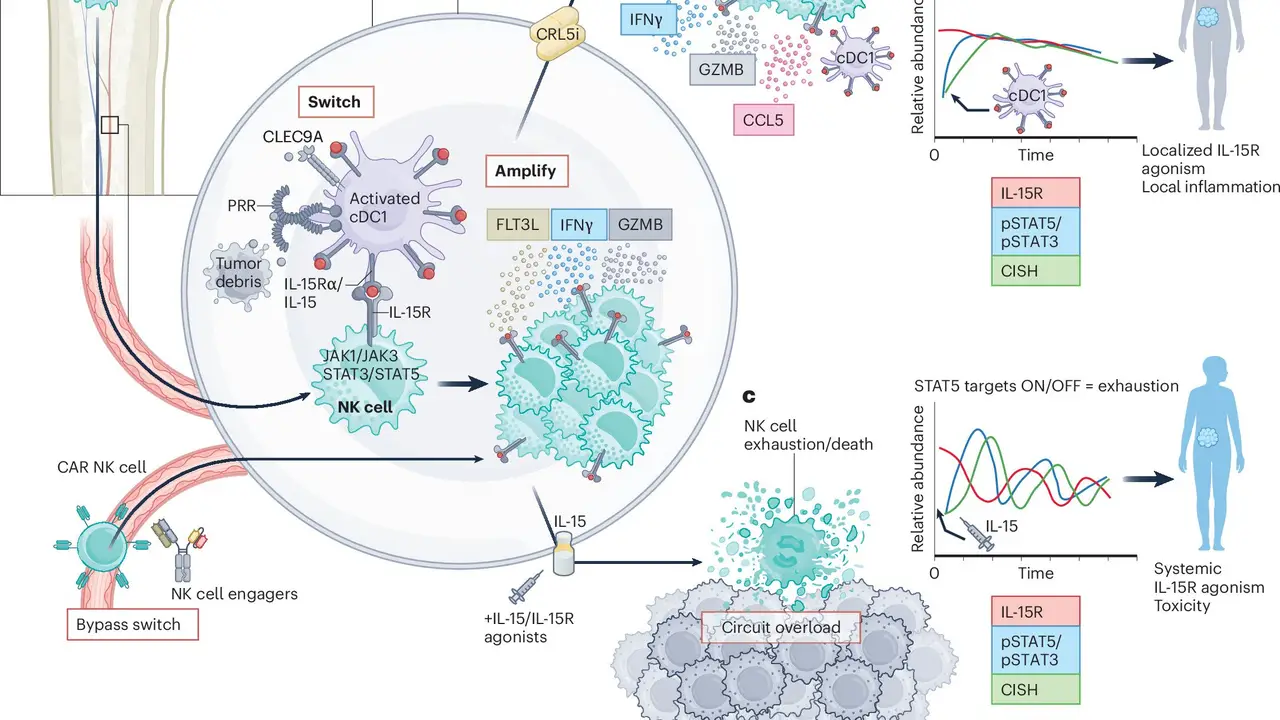
A review by researchers at Monash University and the University of Melbourne in Australia was published Nov. 27 in Nature Cancer. It describes how tumors can disrupt communication between natural killer cells and dendritic cells.
Original source — Medical Xpress.
The review was led by Nicholas D. Huntington. The authors examined the role of natural killer (NK) cells in the early antitumor response. NK cells can kill tumor cells and recruit dendritic cells, which help activate T cells.
The authors say that in established tumors, communication between these cells can be disrupted by metabolic stress and immunosuppressive pathways. Tumors consume much of the available glucose and oxygen and accumulate metabolic byproducts. These conditions can weaken NK cells’ ability to kill tumor cells.
One signal involved in this communication is interleukin-12, produced by activated dendritic cells. It stimulates NK cells to release interferon-gamma. This molecule can strengthen dendritic cell activity and help recruit other immune cells to the tumor.
The review also describes a clinical trial involving patients with advanced melanoma. It combined local delivery of IL-12 gene therapy with an immune checkpoint inhibitor.
The response rate was 41%, with complete responses in 36% of patients. The review described the combination as well tolerated.
The authors suggest that future treatments may coordinate the activity of NK cells, dendritic cells and T cells, rather than targeting each cell type separately.