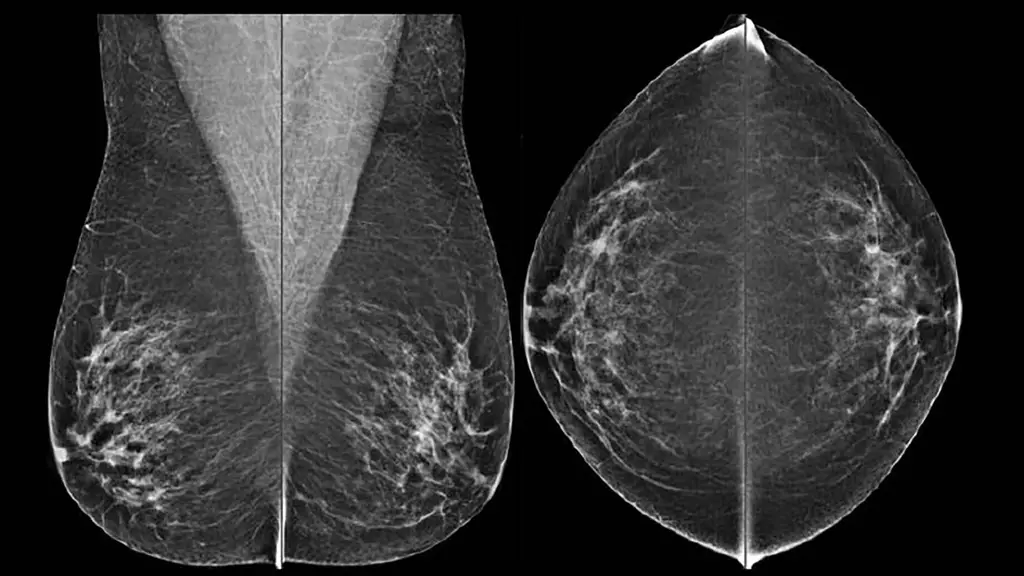
Researchers analyzed mammograms from 107 women ages 34 to 79 who had received glucagon-like peptide-1 (GLP-1) receptor agonist therapy for weight loss for at least a year. The results were presented at the annual meeting of the Radiological Society of North America (RSNA).
Details were published by Medical Xpress.
The retrospective, longitudinal study compared each participant’s mammograms before treatment and after at least a year of therapy. Documented weight loss ranged from 2.7 to 48.5 kilograms, with an average of 18.1 kilograms.
Automated assessment found that breast density increased by at least one category in 65 of 104 women (62.5%). Greater weight loss was associated with a larger increase in density.
After screening, 24 of 107 participants (22.4%) were called back for further evaluation. The average screening recall rate in the U.S. is about 10%.
Doctors recommended four biopsies, and all results were benign. The remaining cases were assessed as negative or benign.
According to study author Eva C. Gombos, M.D., a diagnostic radiologist at Brigham and Women’s Hospital in Boston, disproportionate loss of breast fat may make fibroglandular tissue more visible on mammograms, even when its absolute volume decreases.
Gombos said increased density after weight loss does not necessarily mean that fibroglandular tissue has increased in volume or that breast cancer risk has risen. The long-term risk implications of these changes remain uncertain and require further study.
The authors advise women taking GLP-1 medications to continue routine breast cancer screening according to existing recommendations. Gombos also recommended telling breast imaging teams about use of these medications and significant weight loss.