Researchers at Kanazawa University tested a cocktail of three types of messenger RNA (mRNA) in mice. In a study published November 24 in OncoImmunology, the number of tumor-antigen-specific cytotoxic CD8+ T cells more than doubled compared with using antigen mRNA alone. The cocktail also slowed tumor growth and extended the mice’s survival.
Medical Xpress has the details.
One component encodes a tumor antigen, another encodes CD80, a molecule that provides T cells with an additional activation signal. The third encodes a cytokine anchored to the cell surface.
In another version, the researchers replaced interleukin-2 with interleukin-12 and redesigned the tumor antigen to be presented through major histocompatibility complex class II molecules. This promoted the differentiation of CD4+ helper T cells into Th1 cells. When both versions were administered together, several mice had complete tumor regression and resisted a subsequent tumor challenge.
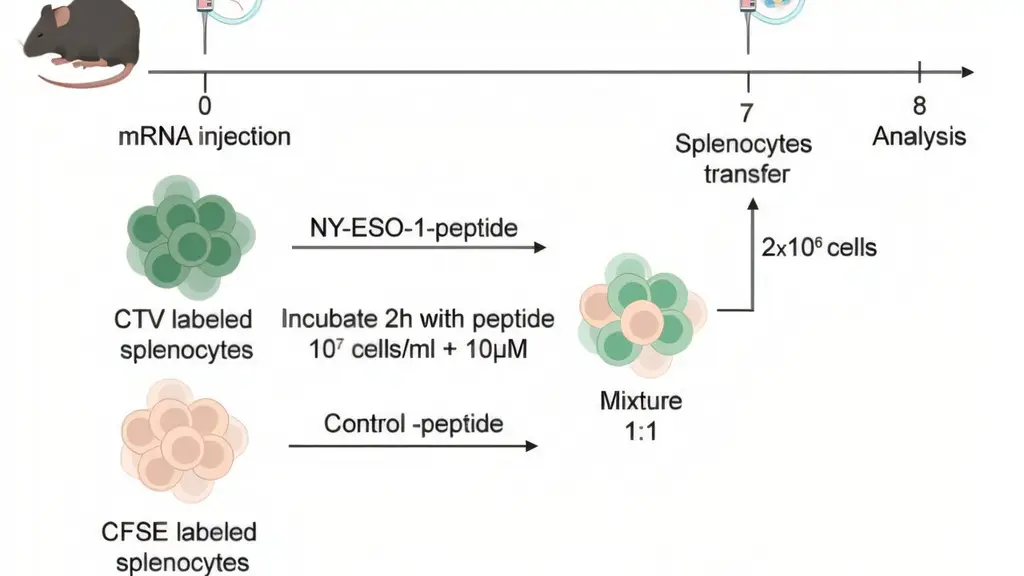
The team also showed that the platform could induce cytotoxic T cells targeting the NY-ESO-1 antigen in transgenic mice expressing the human HLA-A*02:01 molecule.
The researchers say the findings could support future clinical use of the platform and the development of “programmable cancer vaccines” whose composition can be adapted to a patient’s tumor.