Medicine & Research

  1. Medicine & Research updated 23:53

    Better sensing of body signals linked to lower body dissatisfaction

    The association was stronger among girls at later stages of puberty. The study found a link, not a cause-and-effect relationship.

    Better sensing of body signals linked to lower body dissatisfaction
    Photo: Medical Xpress

    Researchers examined the relationship between how accurately girls ages 10 to 14 recognized internal body signals and their dissatisfaction with their bodies. Participants who sensed these signals more accurately reported lower body dissatisfaction.

    The information comes from Medical Xpress.

    The results were published in Philosophical Transactions of the Royal Society B: Biological Sciences. Interoception is how people perceive internal signals, including hunger, changes in body temperature, heartbeats and pain.

    Accuracy was measured using a heartbeat-counting task. Body dissatisfaction was assessed with questionnaires and a computer-based task in which participants adjusted the shape and size of a female figure to show how they thought their body looked and how they would ideally like it to look.

    The computer-based task showed a stronger link between more accurate sensing of internal signals and lower body dissatisfaction among girls at later stages of puberty.

    The study found an association but did not establish cause and effect. The researchers say the next step is to test whether helping girls recognize internal body signals could help them cope with body dissatisfaction during adolescence.

  2. Medicine & Research updated 23:53

    Light-activated nanorobots delivered about five times more drug to mice’s brains

    In mice with glioblastoma, the treatment slowed tumor growth and extended survival without detectable damage to the blood-brain barrier.

    Light-activated nanorobots delivered about five times more drug to mice’s brains
    Photo: Medical Xpress

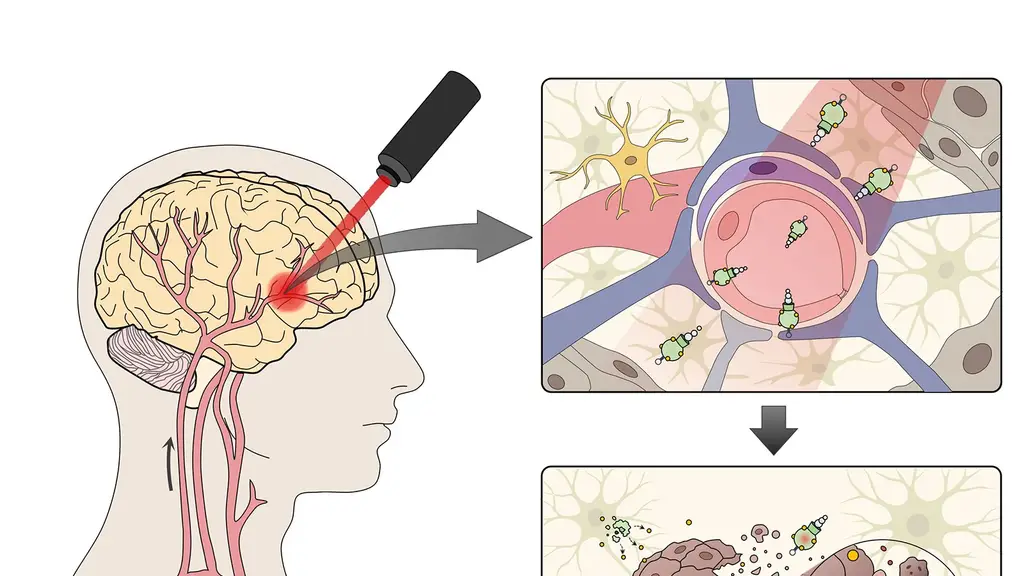
    Researchers at the California Institute of Technology tested BrainBots in mouse models of glioblastoma. Activated by near-infrared light, the nanorobots delivered about five times more medication to the brain than inactive ones.

    Medical Xpress has the details.

    BrainBots delivered doxorubicin, a chemotherapy drug, to the brain. Treatment slowed tumor growth and extended survival in mice without detectable disruption of the blood-brain barrier. Systemic toxicity was lower than with conventional administration of the drug alone.

    The nanorobot capsules are about 250 nanometers in size. Near-infrared light heats a temperature-sensitive gate, triggering gas production that propels the nanorobots toward cells lining the barrier.

    DNA molecules called aptamers help the nanorobots recognize and bind to cells lining the barrier. The cells take them up and transport them into the brain, where the nanorobots break down and release the medication.

    The study was published in Science Robotics. The team plans to improve near-infrared light delivery and assess the nanorobots’ long-term safety, stability and degradation in the body. Further research is needed before studies involving people.

  3. Medicine & Research updated 23:53

    Study finds no benefit to tailoring HIV therapy in Indian patients

    Researchers analyzed blood tests from more than 500 people collected over more than a decade, focusing on CD4 cell counts.

    Study finds no benefit to tailoring HIV therapy in Indian patients
    Photo: Medical Xpress

    A team led by McGill University analyzed data from more than 500 people with HIV in Pune, India, who received the TLD regimen. The blood-test data spanned more than a decade. Researchers found no compelling evidence that tailoring treatment to individuals improved CD4 cell recovery.

    Medical Xpress reported the news.

    The researchers assessed whether patient characteristics, including weight and immune status, affected outcomes. They concluded that TLD remained the preferred option across all the groups studied.

    TLD combines tenofovir, lamivudine and dolutegravir. The World Health Organization recommends it as a first-line treatment.

    The team used two statistical methods to assess the potential benefits of different treatment strategies. They were developed by Chloe Si, the study’s lead author and a Ph.D. student in the Department of Mathematics and Statistics.

    CD4 cell count is one measure of immune-system health. Low CD4 levels increase the risk of opportunistic infections, including tuberculosis, said Erica Moodie, professor in the Department of Epidemiology, Biostatistics, and Occupational Health and the study’s senior author. The findings were published in the American Journal of Epidemiology.

  4. Medicine & Research updated 23:53

    Study in mice: d-sorbose reduced allergic inflammation

    Researchers also observed normal blood glucose in mice in an autoimmune diabetes model. The substance’s effectiveness and safety in people have not been established.

    Study in mice: d-sorbose reduced allergic inflammation
    Photo: Medical Xpress

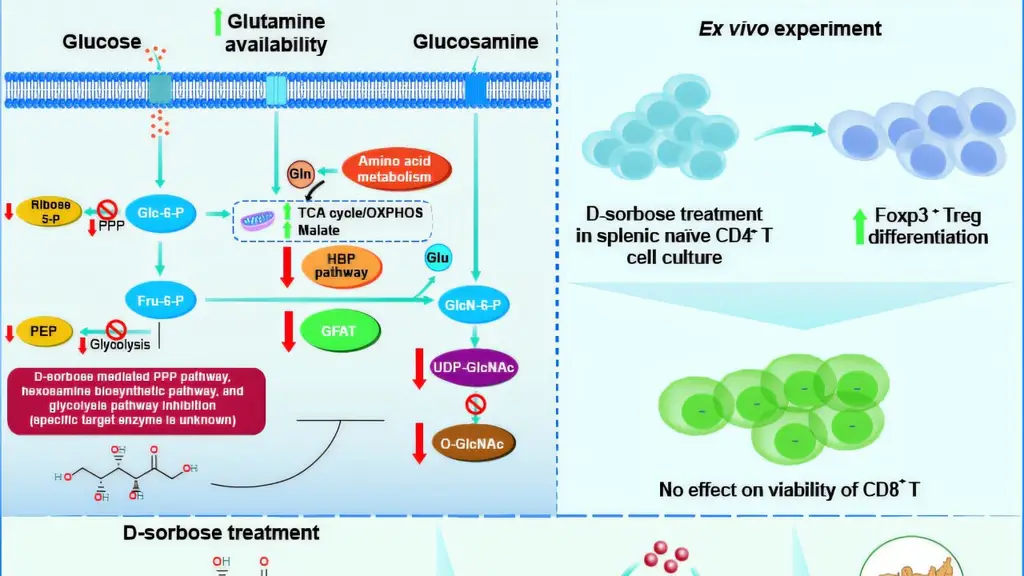
    Researchers at Fujita Health University in Japan tested d-sorbose in cultures of mouse naive CD4⁺ T cells and in two mouse disease models. The study was published in The FASEB Journal.

    This was reported by Medical Xpress.

    In cell cultures, d-sorbose increased the proportion of regulatory T cells, which help restrain excessive immune responses. In a mouse model of allergic inflammation, it increased the proportion of these cells in the lymph nodes and lungs and reduced inflammation. When researchers depleted the T cells, the protective effect disappeared.

    In an autoimmune diabetes model, 60% of mice in the control group developed high blood glucose. Mice that received d-sorbose remained normoglycemic throughout the study. Their pancreatic islets had less lymphocyte infiltration, and the tissue structure was better preserved.

    Metabolic analysis showed that d-sorbose altered glucose and glutamine metabolism in T cells. Researchers linked these changes to the formation of regulatory T cells; the results point to broader metabolic changes, rather than suppression of a single pathway alone.

    The study used mouse cell cultures and mouse models. The effectiveness of d-sorbose, an appropriate amount for consumption and its long-term safety in people have not been established.

    The authors also did not identify the enzymes directly affected by the substance. They said further research is needed before d-sorbose can be recommended as a dietary supplement or treatment.

  5. Medicine & Research updated 23:54

    Study finds gaps in breast cancer screening ages across 11 ASEAN countries

    A model found that raising the upper screening age by five years would have the largest effect on the share of deaths linked to diagnoses within screening ages in Cambodia and Indonesia.

    Study finds gaps in breast cancer screening ages across 11 ASEAN countries
    Photo: Medical Xpress

    Researchers at the National University of Singapore analyzed breast cancer deaths and screening policies in 11 Southeast Asian countries. The modeling study was published November 25 in eClinicalMedicine.

    Original source — Medical Xpress.

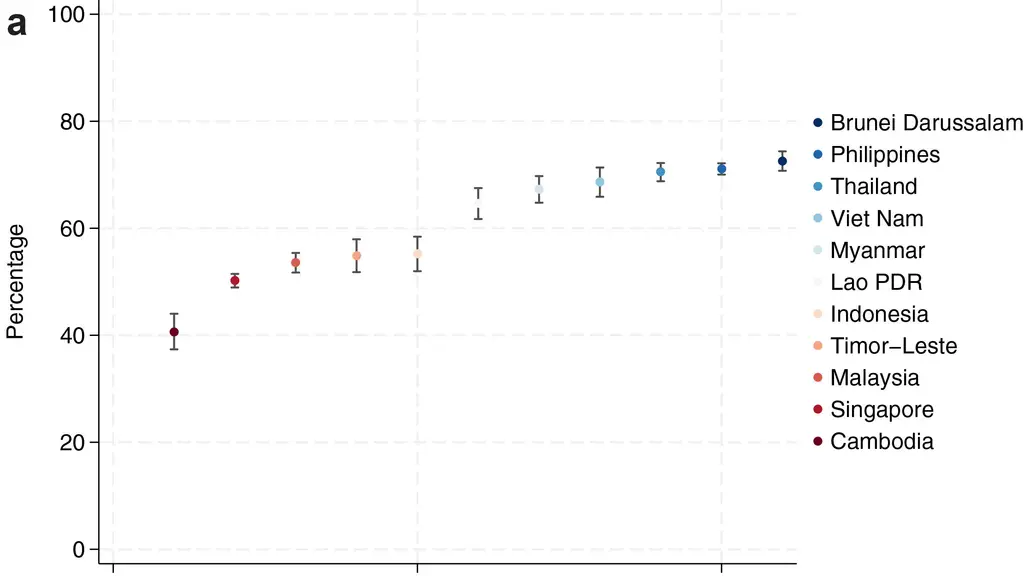
    The researchers estimated the share of breast cancer deaths associated with diagnoses made at ages covered by screening. The proportion ranged from 40.6% in Cambodia to 72.6% in Brunei Darussalam.

    In Singapore, the share was 50.2%, the second-lowest among the countries studied. The national mammography screening program there covers women ages 50 to 69.

    The model estimated that a 5-percentage-point increase in screening attendance could avert about 7,300 deaths in Indonesia and 4,400 in the Philippines between 2026 and 2050.

    Raising the upper screening-age limit by five years would produce the largest increases in this share in Cambodia, by 16.4 percentage points, and Indonesia, by 13.5 percentage points. Current programs in those countries cover women ages 15 to 49 and 30 to 50, respectively.

    The researchers combined mortality estimates from the 2023 Global Burden of Disease (GBD) study with national screening age ranges and attendance data. The model assessed how age criteria and changes in participation could affect deaths through 2050, accounting for uncertainty in the data and the time between diagnosis and death.

    Increasing screening attendance is important, but our findings show that participation alone is not enough. If screening programs do not adequately cover the ages at which breast cancer is commonly diagnosed, their potential impact will remain limited.

    Evangelos Kontopantelis, Professor, Department of Medicine, National University of Singapore

    The authors said the share of deaths associated with diagnoses at screening ages should not be treated as the share of deaths that screening could prevent. Timely diagnosis, referral and treatment also affect outcomes.