Medicine & Research

  1. Medicine & Research

    Exercise improved peripheral airway function in people with COPD

    After 12 weeks of training, impulse oscillometry detected clear changes in several measures, while standard spirometry showed minor changes or none at all.

    Exercise improved peripheral airway function in people with COPD
    Photo: Medical Xpress

    In a study, 62 people with stable chronic obstructive pulmonary disease (COPD) exercised for 12 weeks. Several measures of peripheral airway function improved after the program, according to results published in Respiratory Research.

    More details are available from Medical Xpress.

    Participants trained three times a week: two sessions were held in small groups under the supervision of a physical therapist, and one was done at home. The program combined cardio and strength training and was adapted to each participant’s abilities.

    Lung function was assessed before and after the program, so participants served as their own controls. Impulse oscillometry measures the mechanical properties of the lungs during normal, calm breathing.

    Impulse oscillometry showed clear improvements in several measures of peripheral airway function. Changes measured by spirometry were minor, absent or difficult to detect.

    After the program, participants walked an average of 28 meters farther in six minutes than they had before it. They also completed 2.5 more repetitions in a one-minute sit-to-stand test.

    Symptoms improved most among participants who had more severe symptoms at the start. Researchers also observed individual differences that require further study.

    Gunilla Westergren-Thorsson, professor of lung biology at Lund University, said exercise may change lung biomechanics and how air is distributed in the lungs. The exact mechanism needs further study.

    Researchers are analyzing blood samples collected before and after the training period to find out which biological processes exercise triggers. They will also study the results in a bioreactor, where lung cells in 3D models will undergo mechanical stretching that mimics breathing.

  2. Medicine & Research updated 23:54

    Researchers identify four themes in eating disorder experiences

    Participants linked eating disorder experiences not only to weight or body shape, but also to sensory overwhelm, discrimination and the need for safety.

    Researchers identify four themes in eating disorder experiences
    Photo: Medical Xpress

    Researchers at Cardiff University analyzed responses to an online survey of 260 neurodivergent trans and gender-diverse adults living in the U.K. All had current or past experience of an eating disorder. The findings were published in the Journal of Eating Disorders.

    Medical Xpress has the details.

    The sample included people with formal diagnoses of autism or attention-deficit/hyperactivity disorder (ADHD), as well as people who self-identified as neurodivergent. The study was qualitative.

    Researchers identified four themes of distress. Sensory sensitivities, unpredictable changes and differences in executive functioning could contribute to feelings of overwhelm; researchers said routines around food could provide a sense of control.

    Participants also described distress related to a mismatch between their bodies and gender identities, feelings of isolation and pressure to meet expectations centered on cisgender and neurotypical people. Some linked eating disorder behaviors to fears of being targeted, objectified or harmed, including after traumatic experiences.

    Kai Thomas, a Health and Care Research Wales advanced fellow at Cardiff University’s School of Psychology, said services should consider gender identity and neurodivergence alongside mental health, traumatic experiences and social circumstances.

    Thomas said participants had varied experiences of gender-affirming medical care. For many, access to care reduced body-related distress and supported recovery, but did not resolve symptoms for everyone. Thomas emphasized the importance of psychological and social support alongside and following such care.

    The researchers plan to continue working with neurodivergent and/or trans and gender-diverse people with experience of eating disorders, as well as clinicians in Wales. They aim to develop tools to help make support services more inclusive and responsive to these people’s needs.

  3. Medicine & Research updated 23:54

    Study: Enterococcus faecalis suppresses neutrophils with lactic acid

    In an animal wound-infection model, wounds infected with bacteria unable to produce lactic acid had more neutrophils and signs of increased neutrophil extracellular trap formation after seven days.

    Study: Enterococcus faecalis suppresses neutrophils with lactic acid
    Photo: Medical Xpress

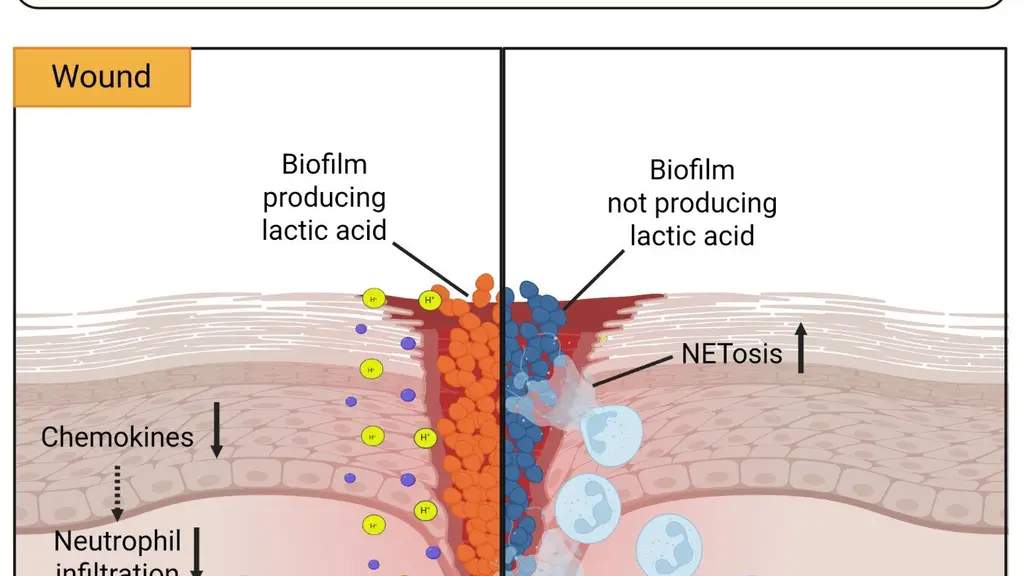
    Researchers at Nanyang Technological University, Singapore, found that lactic acid from Enterococcus faecalis biofilms suppresses the activity of human neutrophils. The laboratory and animal-model findings were published in Science Advances.

    Medical Xpress reported the news.

    In laboratory tests, biofilm secretions made the environment around neutrophils more acidic and lowered the pH inside the cells. This disrupted their metabolism and deprived them of energy needed to fight bacteria.

    Bacteria effectively pull the plug on the immune cell’s power supply.

    Dr. Haris Antypas, Lead author of the study and senior research fellow at the Singapore Center for Environmental Life Sciences Engineering (SCELSE)

    In an animal wound-infection model, researchers compared normal bacteria with genetically modified bacteria that could not produce lactic acid. After seven days, wounds infected with the modified bacteria had more neutrophils and signs that the cells had formed more extracellular traps to capture microbes.

    The findings suggest that the machinery bacteria use to produce lactic acid could be a target for future treatments. Such approaches have not yet been tested.

    Enterococcus faecalis usually lives harmlessly in the human gut but can cause serious infections, including chronic wound infections. The bacteria form biofilms, communities that are difficult to eliminate.

    The research team plans to investigate ways to preserve neutrophils’ metabolic activity and protect them from the effects of biofilms.

  4. Medicine & Research updated 23:54

    GLS2 worsens kidney injury in mice

    Blocking a pathway linked to GLS2 reduced cell death and kidney damage in mice. The findings could inform ways to protect the organ during transplantation and surgery.

    GLS2 worsens kidney injury in mice
    Photo: Medical Xpress

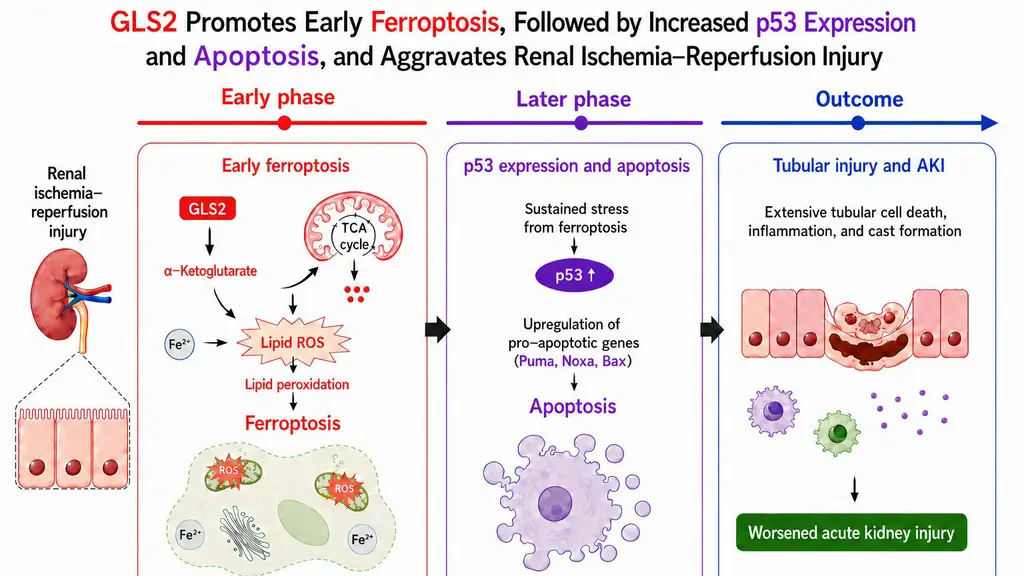
    Researchers at Chiba University in Japan found that the enzyme glutaminase 2 (GLS2) contributes to kidney injury in mice after ischemia–reperfusion. The study was published in Free Radical Biology and Medicine.

    This was reported by Medical Xpress.

    Mice lacking the Gls2 gene had less kidney tubular damage after ischemia–reperfusion than control animals. Treatment with ferroptosis and glutaminase inhibitors also reduced cell death and kidney damage in mice.

    Experiments with cultured kidney cells showed that GLS2 promotes ferroptosis through alpha-ketoglutarate-dependent lipid peroxidation. In this process, reactive oxygen species react with fats in cell membranes and produce lipid peroxides that can damage cells.

    At a later stage, cells with GLS2 showed more apoptosis, or programmed cell death, and higher p53 expression. The researchers concluded that early ferroptosis may contribute to subsequent apoptosis.

    The researchers applied a glutaminase inhibitor to surgical gauze and placed it directly on the kidney during ischemia. They said the method could be adapted for procedures with a foreseeable risk of ischemia–reperfusion, including kidney transplantation.

    In publicly available datasets, the researchers also found increased expression of GLS2 and the PTGS2 gene in human kidney tissue after ischemia–reperfusion. The main experiments were conducted in mice and cultured cells; the approach’s effectiveness and safety in people still need to be assessed.

    Ischemia–reperfusion can occur during kidney transplantation or some surgical procedures. It is a major cause of acute kidney injury and can increase the risk of long-term complications, including chronic kidney disease.

    The researchers plan to develop approaches targeting GLS2 or ferroptosis for procedures in which the risk of kidney injury can be anticipated.

  5. Medicine & Research updated 23:54

    Researchers link genetic variants to coronary artery disease risk

    A genetic map shows how inherited changes in noncoding parts of the genome affect coronary artery cells. Researchers built it by analyzing 44 coronary artery samples.

    Researchers link genetic variants to coronary artery disease risk
    Photo: http://www.scientificanimations.com / Wikimedia Commons, CC BY-SA 4.0

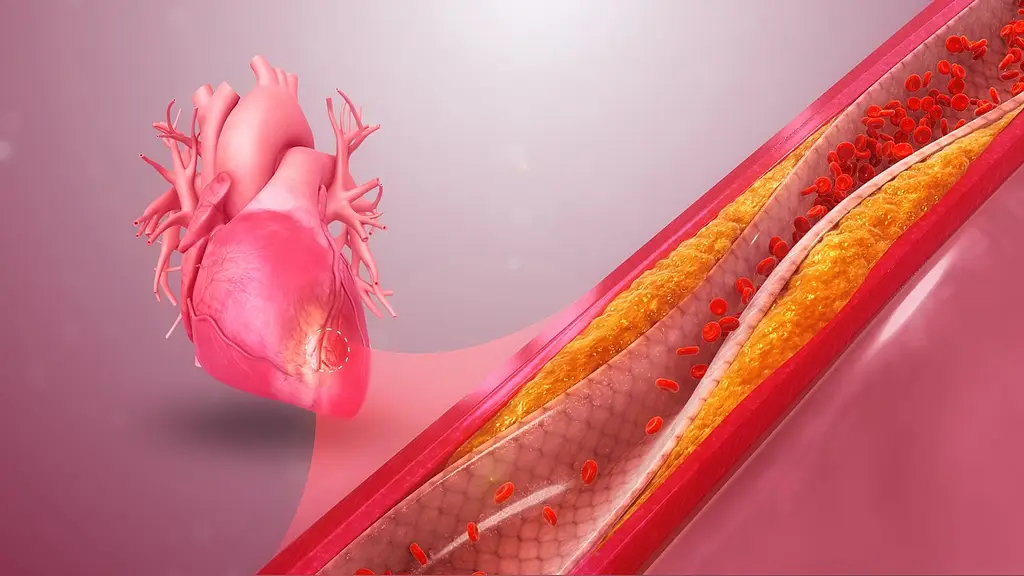
    The study, led by researchers at Washington University School of Medicine in St. Louis, analyzed 44 coronary artery samples. The findings were published in Nature on November 25.

    Original source — Medical Xpress.

    The samples came from patients who received heart transplants because of heart failure. Blocked coronary arteries caused heart failure in about half of the patients; other conditions caused it in the rest.

    Researchers matched variants in noncoding regions of the genome with the genes and cell types they affect. The study examined smooth muscle cells, endothelial cells, fibroblasts and immune cells.

    The analysis found that much of the inherited risk is linked to noncoding variants acting on genes in artery wall cells, especially smooth muscle cells. One variant prompted production of a protein that made these cells less able to contract, stiffer and more prone to inflammation.

    Coronary artery disease develops through the interaction of genetic and environmental factors. Earlier large-scale genetic studies identified more than 350 inherited changes associated with increased disease risk; nearly all are in noncoding parts of the genome.

    Researchers are studying several genes identified in the work to find potential therapeutic targets. They are also examining additional samples of diseased arteries to expand the genetic map.