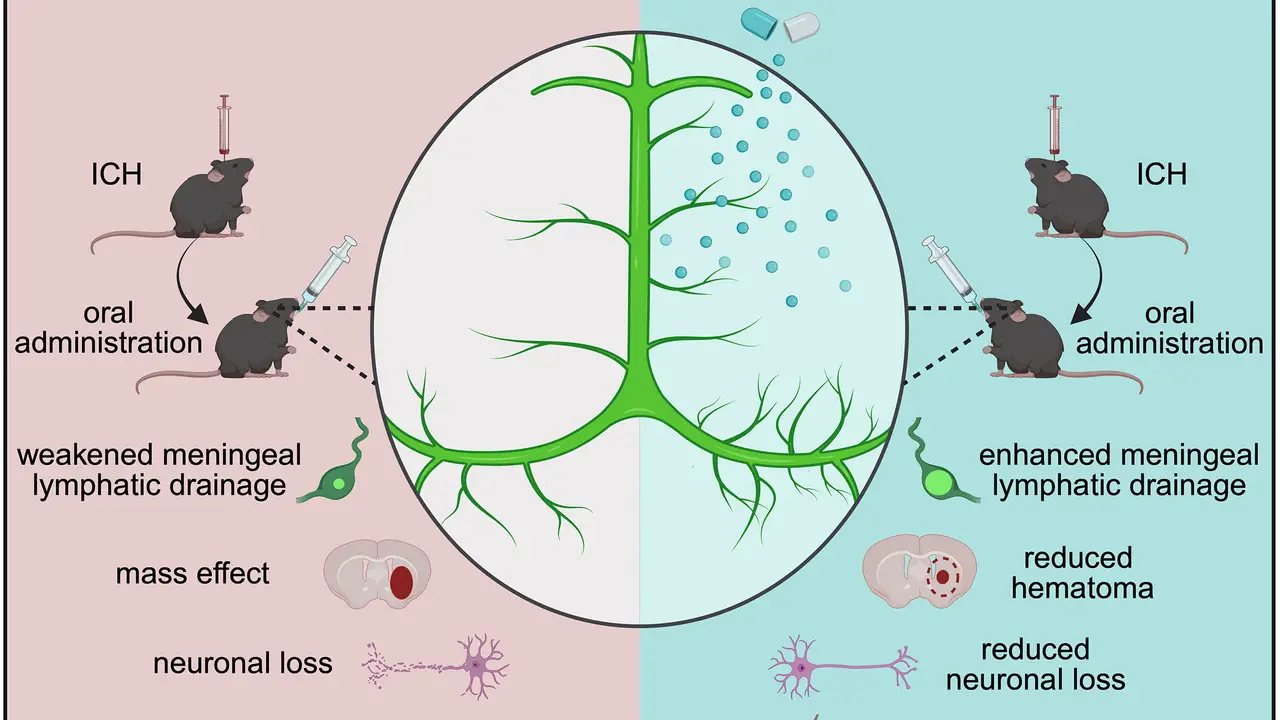
A team led by researchers at National Taiwan University found that cilostazol helped male mice recover from intracerebral hemorrhage. Treatment began three hours after the hemorrhage. The results were published in Stroke.
Original source — Medical Xpress.
The mice received the drug orally. Treatment promoted the growth and branching of lymphatic vessels in the membranes surrounding the brain, which drain fluid and waste to lymph nodes in the neck.
Mice given cilostazol had smaller hematomas and less damage to nerve cells and their connections. They also showed improved motor and neurological function. After a week of treatment, several measures of memory improved nearly a month after the hemorrhage.
Cilostazol reduces the tendency of platelets to clump together, so researchers tested whether it increased bleeding. Under the experimental conditions, mice given the drug before a hemorrhage or starting three days afterward did not develop larger hematomas.
The findings provide a scientific foundation for an ongoing phase 2 randomized clinical trial (NCT06504576) investigating cilostazol for hematoma clearance in patients with intracerebral hemorrhage. The drug’s safety and effectiveness in people have yet to be established.