Researchers at the Sidney Kimmel Comprehensive Cancer Center at Johns Hopkins Medicine studied corin in cell cultures and mice with atypical teratoid/rhabdoid tumors (ATRT). The work was published Nov. 1 in the journal Neuro-Oncology.
This was reported by the news site Medical Xpress.
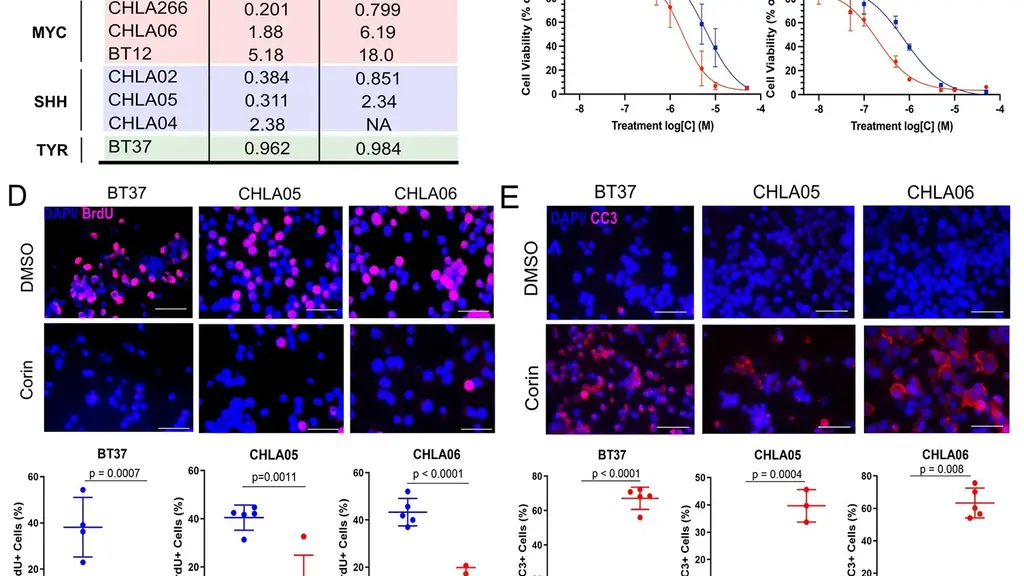
In laboratory cell cultures, corin blocked tumor cell growth and promoted cell death. In mice with ATRT tumors, it slowed tumor growth, promoted cell death and helped embryonic cells mature into brain cells. Mice treated with corin lived longer than untreated mice.
Corin targets a protein that keeps tumor cells immature and promotes their rapid growth. Suppressing expression of the protein RCOR2 produced similar effects, supporting the idea that corin acts on the CoREST epigenetic regulatory complex.
Study co-author Eric Raabe, an associate professor of oncology and pathology at Johns Hopkins Medicine, said that as the cells mature, they produce proteins that suppress tumor growth. This may also make the tumor more vulnerable to chemotherapy.
The team is now testing corin with decitabine in ATRT cells; the drug also affects epigenetic gene regulation. Researchers hope to eventually conduct clinical trials of the combination therapy.
The team devised a dosing strategy using an Ommaya reservoir to deliver drugs directly to the tumor or spinal fluid. The coin-sized device is implanted under the scalp and is already used in clinical practice to deliver anticancer therapies.
More than one-third of infants with ATRT survive after intensive treatment, which may include surgery, chemotherapy, radiation and stem cell transplants. Survivors often experience lifelong complications from treatment.