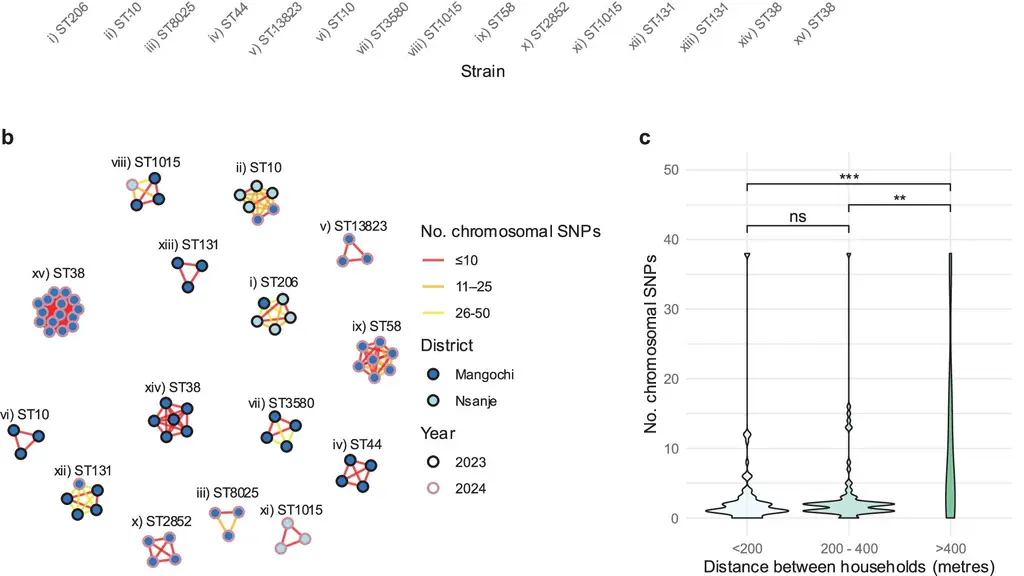
Researchers at Liverpool School of Tropical Medicine studied antibiotic-resistant Escherichia coli in two villages in Malawi. Over one year, they collected stool samples from 211 people and analyzed the bacteria using whole-genome sequencing.
Original report: Medical Xpress.
The study was published in Nature Communications on November 23. To identify possible transmission networks, researchers compared the bacteria’s genetic relatedness and mapped the households.
The networks often connected neighboring households. The researchers could not determine the precise routes of transmission, but said contaminated water sources may play a role. They also found links between strains in rural communities and strains previously detected in cities in Malawi.
The research was part of the Hybridisation in UroGenital Schistosomiasis (HUGS) program, which studied the transmission of the waterborne parasite schistosome in rural Malawi. The authors said a One Health approach could help reduce transmission by combining surveillance of people, animals and the environment with improved sanitation infrastructure.
Professor Janelisa Musaya, associate director at the Malawi Liverpool Wellcome Research Programme (MLW) and the organization’s lead for the HUGS program, said the findings should be turned into coordinated policy and action that benefit the communities most affected.