Researchers at Zhejiang University investigated the role of microglia in the fading of motor memories in mice. They trained the animals for a week to run on an accelerating, rotating rod. The results were published in Nature Neuroscience.
Medical Xpress reported the news.
At different times after training, the researchers placed the mice on the rod again and measured how long they could stay on it. The team also analyzed myelin, the sheath around nerve fibers.
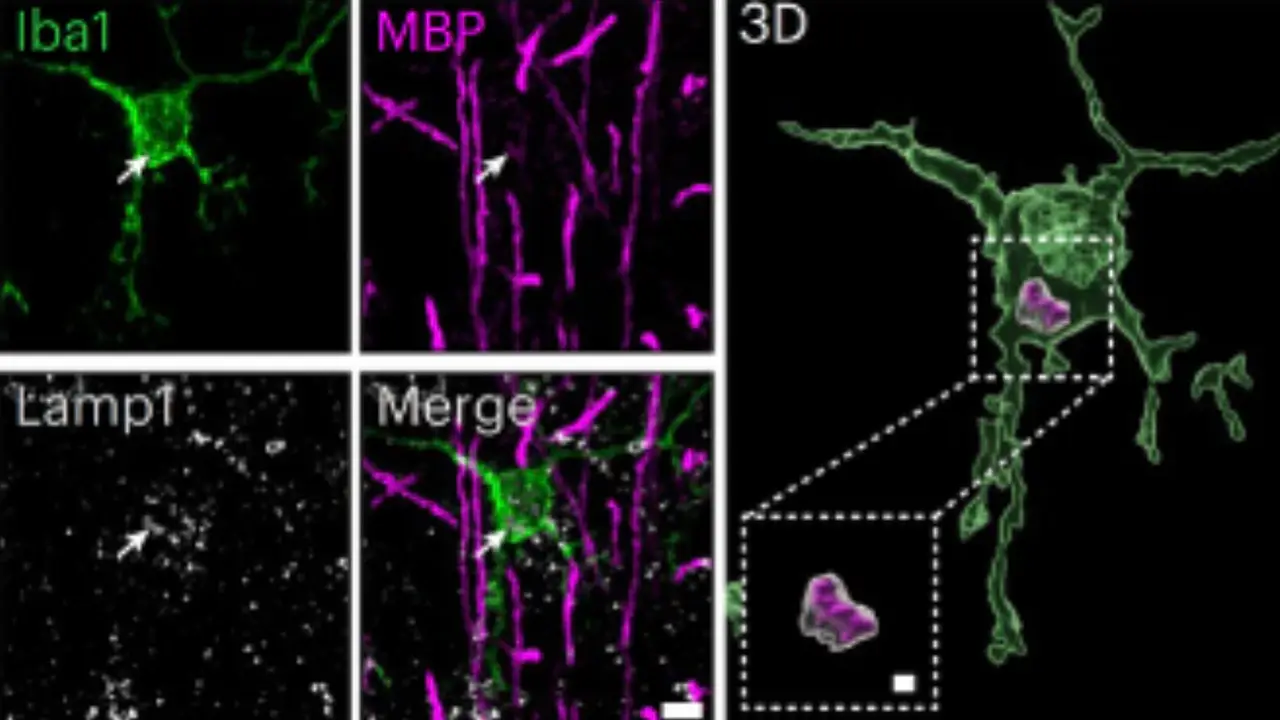
The team found that microglia engulfed and broke down myelin associated with the learned movement. Removing the protein CD47 from oligodendrocytes — the cells that produce myelin — associated with that memory increased myelin engulfment and accelerated memory decline. Increasing CD47 production had the opposite effect.
When activity in memory-associated nerve cells decreased, levels of CD47 also fell in the corresponding myelin-producing cells. The findings suggest this made the myelin more vulnerable to engulfment by microglia.
The authors note that they studied motor memory specifically. A similar process could affect other types of memory that depend on myelin formation, but this remains to be tested.
The researchers plan to study the molecular mechanisms behind microglia’s interactions with myelin and determine their role in motor disorders. Further research is needed to establish whether this mechanism is linked to forgetting in humans.