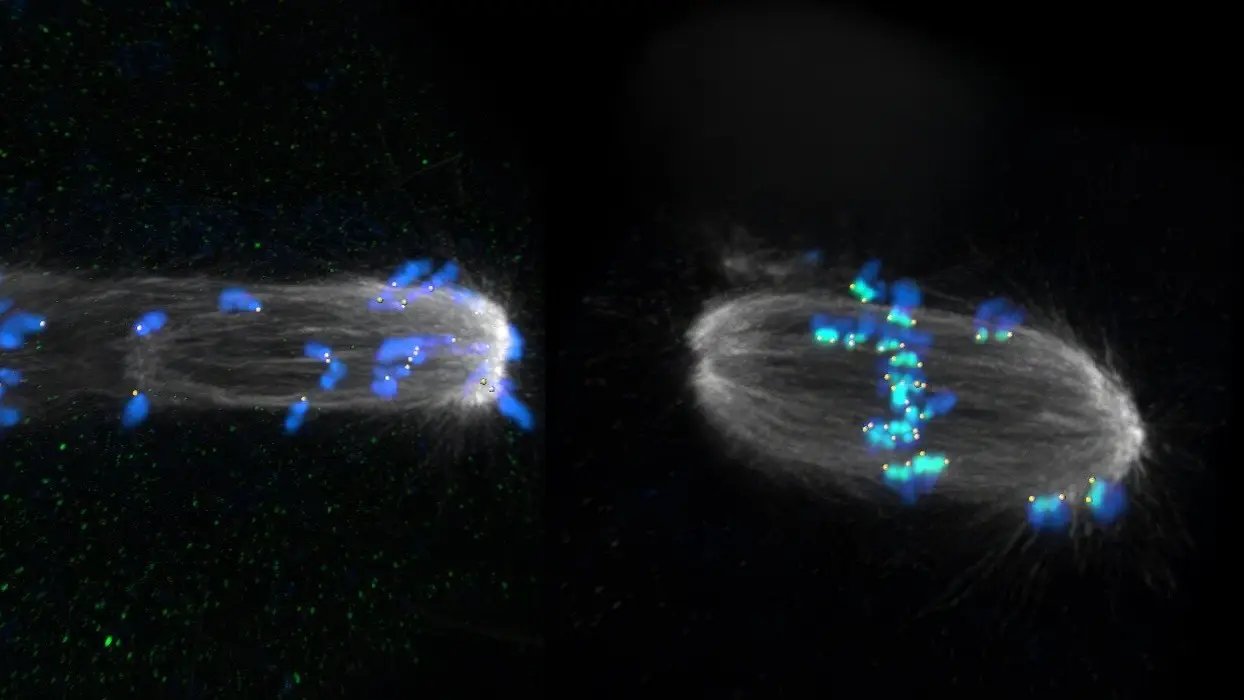
A study by a team led by biochemist Melina Schuh of the Max Planck Institute for Multidisciplinary Sciences in Göttingen was published in Science on November 26. In aged mice, TALhesin raised the share of eggs without prematurely separated chromosomes from 46.7% to 74.1%.
Medical Xpress published the report. Also reporting: STAT News.
For comparison, the share in young mice was 74.7%.
Chromatids, the identical halves of chromosomes, are normally held together by the protein complex cohesin. As eggs age, cohesin detaches from the chromatids and is not replaced. This increases the likelihood of premature chromosome separation and incorrect chromosome distribution as the egg matures.
TALhesin was developed from proteins that can be programmed to bind to a region near the centromere, where cohesin helps hold chromatids together. The researchers combined these proteins so the system could perform cohesin’s function.
In donated unfertilized human eggs, TALhesin bound to target chromosome regions without visibly disrupting the first meiotic division. Chromatids were closer together in chromosomes with more TALhesin.
The researchers added a site to the system that the enzyme separase can cleave. In experiments with human eggs, chromatids separated normally when separase cleaved this site.
Further research will determine whether TALhesin can reduce chromosome errors in eggs obtained from older women. Additional research and safety testing are needed before the system can be used clinically.