Technology

  1. Technology

    Pai Defence says it raised $5 million in pre-seed round

    The company aims to track drone flights over a strike zone in real time, from the moment they are launched.

    Pai Defence says it raised $5 million in pre-seed round
    Photo: Інтерфакс-Україна

    Ukrainian-British startup Pai Defence announced it raised $5 million in a pre-seed round. The company plans to use the funds to expand sensor coverage along the front line to detect drones and develop artificial intelligence (AI) algorithms.

    Details were published by Інтерфакс-Україна.

    The round included Scandinavian fund Gardar and funds UA1, D3, Green Flag, Defence Builder, 1991 Ventures, Motanka, WildField, TA Ventures and Angel One.

    The system collects electronic intelligence data in real time to detect drones, their activity and types without revealing its position. The company uses AI to analyze patterns in the behavior and tactics of enemy drones.

    Pai Defence CEO and co-founder Tonya Zakorchemna said the company had tracked more than 100,000 drone flights and turned them into behavioral data.

    Gardar invests in early-stage defense technology companies connected to Ukraine’s innovation ecosystem. Pai Defence was founded in 2025 by aerospace engineer Tonya Zakorchemna and serving military commander Dmytro Pulmanovskyi.

  2. Technology

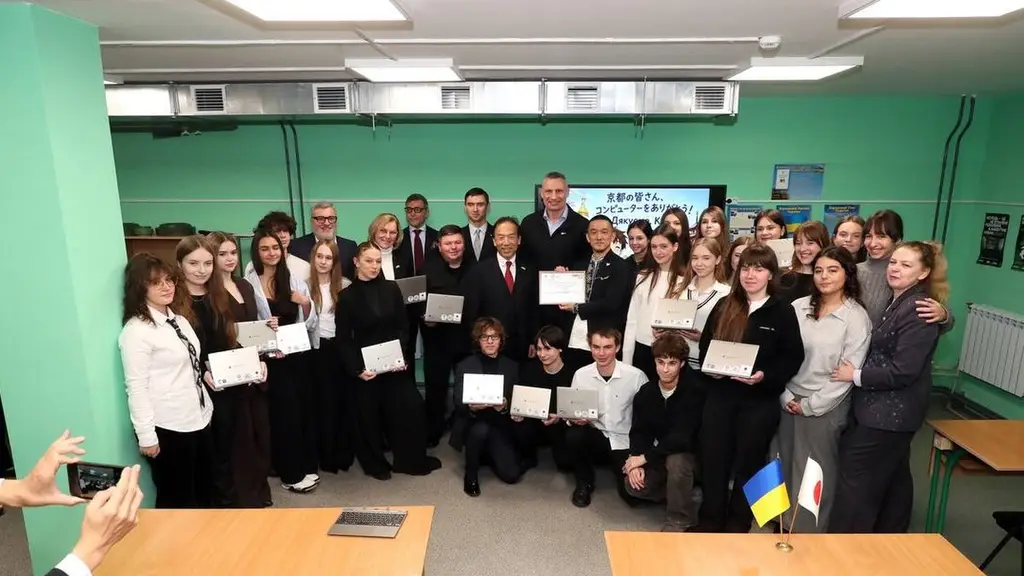
    Japanese representatives donate 1,399 laptops to Kyiv schools, Klitschko says

    Klitschko called the support important for strengthening the capital’s education sector.

    Japanese representatives donate 1,399 laptops to Kyiv schools, Klitschko says
    Photo: Інтерфакс-Україна

    Kyiv Mayor Vitali Klitschko said 1,399 laptops had been donated to schools in the capital. They were handed over by Osamu Hattori, head of the Japan International Cooperation Agency (JICA) office in Ukraine, and Japanese Ambassador to Ukraine Yo Osumi.

    More details are available from Інтерфакс-Україна.

    The computers have been distributed among educational institutions in all 10 districts of the capital according to their needs. This support is important because it is aimed at strengthening the capital’s education sector.

    Vitali Klitschko, Kyiv mayor

    In May 2025, Kyivzelenbud received excavators to support the city’s infrastructure with assistance from the Japanese government. In July 2025, 11 Kyiv social service institutions received modern rehabilitation equipment.

    In May, JICA provided Kyivvodokanal with state-of-the-art water purification systems.

  3. Technology

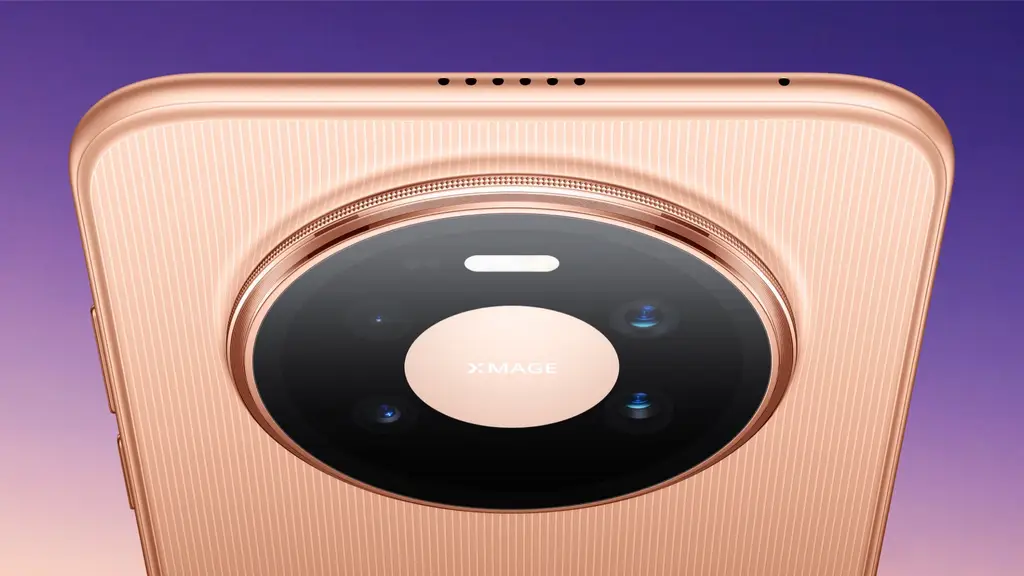
    Huawei unveils Mate 90 Air with 6,500 mAh battery

    The phone has a 7-inch display that supports a stylus, though one is not included. It is also IP68-rated for water resistance.

    Huawei unveils Mate 90 Air with 6,500 mAh battery
    Photo: Notebookcheck

    As of November 24, the Huawei Mate 90 Air is available in China in two configurations: one with 12 GB of RAM and 256 GB of storage, and another with 512 GB. The 6.58 mm-thick phone has a 6,500 mAh battery and a triple rear camera.

    Notebookcheck reported the news.

    The battery supports charging at up to 66 W via USB-C. The 50 MP main camera has an f/1.8 aperture, while the 8 MP ultrawide camera has an f/2.2 aperture. The 12 MP telephoto camera has an f/2.4 aperture, optical image stabilization and 3x zoom.

    The phone has a 7-inch OLED display with a peak HDR brightness of 4,000 nits. It supports a stylus, but one is not included.

    The fingerprint sensor is on the side, and Huawei says the stereo speakers reach a volume of 82 dB.

    The phone is powered by a HiSilicon Kirin 9020 processor with an ARM architecture. In China, the version with 12 GB of RAM and 256 GB of storage costs 4,999 yuan, or about $750. The version with 512 GB of storage costs 5,999 yuan, or about $900.

    Huawei has not yet confirmed whether or when the phone will launch in other countries.

  4. Technology updated 14:13

    Norway announces joint air defense system with Ukraine, DESNA

    The system combines Ukrainian missiles with Norwegian fire-control systems. Norway has already delivered several of them to Ukraine.

    Norway announces joint air defense system with Ukraine, DESNA
    Photo: Європейська правда

    Norwegian Defense Minister Tore O. Sandvik said Ukraine’s and Norway’s defense industries had jointly developed the DESNA air defense system. At a meeting with Ukrainian Defense Minister Yevhenii Khmara in Oslo, they discussed expanding cooperation; Norway has purchased and delivered several of the systems to Ukraine.

    Original source — Європейська правда. Also reporting: Українська правда.

    The system consists of Ukrainian air defense missiles and launchers connected to fire-control systems provided by Norway’s Kongsberg. Sandvik said the missiles are cheaper than conventional ones and help counter Russian attacks.

    These systems are already operational and are helping protect Ukraine from Russian drones. The government is now working to expand the project to provide air defense for larger areas of Ukraine.

    Tore O. Sandvik, Norwegian defense minister

    DESNA is named after a Ukrainian river. The system was developed in cooperation between Norway’s Kongsberg and a Ukrainian partner.

    During the visit to Oslo, Khmara and Sandvik signed a memorandum of intent on testing Ukraine’s DELTA combat digital ecosystem.

  5. Technology updated 11:58

    Researchers find more than 3.5 billion records in exposed databases

    The records include data on people in dozens of countries, including login credentials, national identity numbers and documents.

    Researchers find more than 3.5 billion records in exposed databases
    Photo: bsdrouin / Pixabay

    Researchers from UpGuard and Black Hills Information Security found two unrelated unsecured databases online containing more than 3.5 billion records. They included usernames, passwords, national identity numbers and documents belonging to people in dozens of countries.

    Source: Wired. Also reporting: ExpressVPN, Engadget.

    The database found by UpGuard Director of Research Greg Pollock contained 1.64 billion aggregated documents, mostly concerning Chinese individuals and businesses. His analysis found at least 840 million national identity numbers and 300 million phone numbers, as well as about 11 million student records and nearly 8 million business registrations.

    Pollock could not identify who owned the database. It became inaccessible while he was investigating it, which he said may have resulted from a ransomware attack or another destructive campaign.

    He tried to validate the data but could not confirm its accuracy or determine whether the same database had circulated before. It may also have contained duplicate records, though Pollock tried to check for them.

    The other database was found by Jeremiah Fowler, a researcher at Black Hills Information Security, who published his full findings in a report for ExpressVPN. He said it contained around 2 billion login credentials, including email addresses, usernames, passwords, cookies and session tokens.

    Fowler said the database appeared to contain data stolen by info-stealer malware. He found no indication that individual companies or institutions had been breached to gather the information.

    Fowler said the database held 8,471 folders of plaintext credentials and account information. He also found around 400,000 documents that appeared to come from more advanced malware that collected information about individual people.

    The data also included thousands of Tor .onion addresses alongside account names and passwords. Fowler said these could give access to private dark-web forums, marketplaces and communication platforms.

    Fowler reported the database to the hosting company, which took it offline.

    Both researchers said password managers and multi-factor authentication generally help protect accounts, although they do not prevent every type of attack.