Technology

  1. Technology

    UK defense secretary calls for explanation of Starlink and Starshield disruptions

    Zelenskyy reported disruptions on November 12; separately, he relayed SpaceX's technical explanation.

    UK defense secretary calls for explanation of Starlink and Starshield disruptions
    Photo: Європейська правда

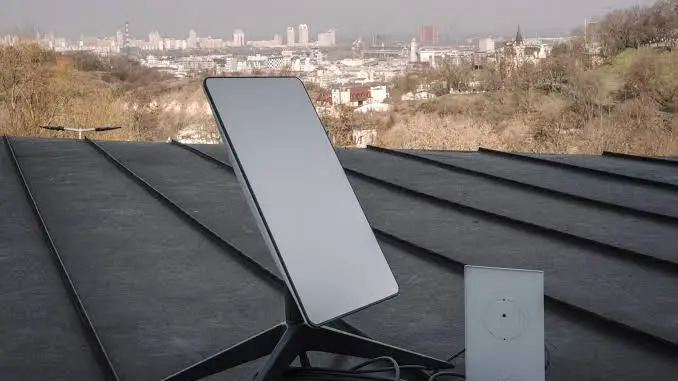
    UK Defense Secretary Wes Streeting said disruptions to the Starlink and Starshield satellite systems in Ukraine need a clear explanation. He made the remarks at a briefing in Kyiv, Ukrinform reported.

    This was reported by Європейська правда. Also reporting: Українська правда.

    Streeting stressed that allies need to find out what happened, as well as how and why the service disruptions occurred. He said defense ministers across Europe had already discussed the issue. He added that the situation had seriously undermined confidence and trust.

    On November 12, President Volodymyr Zelenskyy said Ukrainian troops had been recording significant disruptions to Starshield for several days. Zelenskyy also relayed SpaceX’s position: in a conversation with Ukraine’s Ministry of Defense, the company said it had not imposed restrictions and that the problem was technical.

    U.S. President Donald Trump said he had not heard about restrictions on Starlink’s operation in Ukraine.


  2. Technology

    Obsbot unveils Tail Air 2 and Tail 2 ADV 4K cameras

    One model features a 1-inch sensor, while the other offers 21x optical zoom. Both cameras go on sale December 8.

    Obsbot unveils Tail Air 2 and Tail 2 ADV 4K cameras
    Photo: Notebookcheck

    Obsbot has introduced two cameras in its Tail series with pan, tilt, roll and zoom capabilities: the Tail Air 2, priced at $899, and the Tail 2 ADV, priced at $1,599. Both models will be available starting December 8.

    Original report: Notebookcheck.

    The Tail 2 ADV has a 1/2-inch CMOS sensor and a lens offering 21x optical and 40x hybrid zoom. It records 4K video at up to 60 frames per second and Full HD at up to 120 frames per second.

    AI Tracking 2.0 can follow subjects from up to 240 meters away at maximum optical zoom. The previous Tail 2 had a tracking range of 95 meters. The ADV also has HDMI 2.0 and 3G-SDI ports, Ethernet with PoE+ support, and an RS-232 interface.

    The Tail Air 2 features a 1-inch CMOS sensor and an f/1.9 lens. It also records 4K video at up to 60 frames per second. Its lens module rotates 90 degrees, allowing it to capture vertical 4K video without cropping the image.

    According to the camera’s listed specifications, its battery provides up to 205 minutes of recording in Full HD at 30 frames per second. The Tail Air 2 supports Wi-Fi 6 and microSD cards of up to 1 TB, and includes Bluetooth for connecting a wireless microphone.

    The Tail Air 2 costs $999 with NDI support. The Tail 2 ADV is aimed at long-distance filming, including events, while the Tail Air 2 is designed for compact shooting setups.

  3. Technology

    Dutch regulator urges consumers not to buy AI camera glasses

    The authority warned of privacy risks for bystanders and safety concerns for users; its test found errors in advice and text recognition.

    Dutch regulator urges consumers not to buy AI camera glasses
    Photo: TechCrunch

    The Dutch Data Protection Authority urged consumers not to buy camera glasses with artificial intelligence.

    TechCrunch published the report.

    The authority said recording people in public with internet-connected, always-on glasses is almost always prohibited.

    It warned that the glasses can produce false and unsafe results. In a test, an unnamed pair gave dating advice to an adult who said they were interested in a minor.

    The glasses also misread a medicine label and said they had called an ambulance when they had not.

    Critics say the glasses can be used to film people without their permission, including to harass women. Some models have recording indicator lights, but privacy advocates say they are not clear enough. Some people have created apps to detect nearby users of the glasses.

    In September, the Norwegian government said it was considering a ban on camera-enabled devices.

  4. Technology

    Campbell links U.S. flight ground stop to a router

    At the height of the outage, 17 of 22 en route control centers were offline, forcing controllers to rely on a backup system.

    Campbell links U.S. flight ground stop to a router
    Photo: The Verge

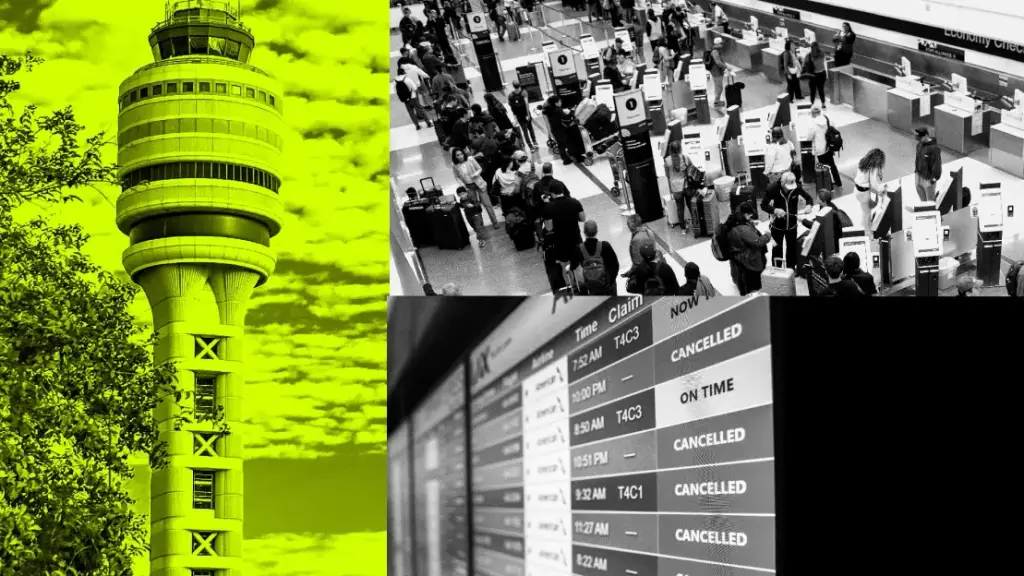
    On November 13, the Federal Aviation Administration (FAA) grounded all flights scheduled to depart from U.S. airports. The ground stop lasted more than four hours.

    The story was published by the news site The Verge.

    Journalist and aviation expert Darryl Campbell linked the outage to a router replacement in El Dorado, Arkansas. He said contractor L3Harris was upgrading outdated equipment on the FAA’s private network.

    Campbell said the new router still had a factory setting intended for a high-throughput fiber-optic network. As a result, it sent too many requests to the older system.

    According to Campbell, radio transmissions began cutting out first, followed by radar data loss, and then control centers went offline. Without a backup system, controllers could not communicate with planes in the air or see their locations.

    L3Harris took routers offline one by one to find the source of the outage. Campbell said that after the right router was switched off, around 7:40 or 8 p.m. Eastern time, data transmissions and radar connections began to recover. The ground stop was then lifted.

    The FAA Telecommunications Infrastructure network was built in the 1990s and early 2000s. Campbell said it is being upgraded piecemeal because the system cannot be shut down for a full equipment replacement.

    Campbell also relayed L3Harris’ position: the company said it had done its job properly. He said the router manufacturer maintained that the device had worked as designed.

  5. Technology updated 18:39

    European Commission confirms cyberattack and data breach at EU Academy

    The incident also affected external platform users. Public access to the service was temporarily blocked, and the extent of the breach is still being determined.

    European Commission confirms cyberattack and data breach at EU Academy
    Photo: Європейська правда

    The European Commission confirmed that its EU Academy learning platform was hit by a cyberattack and that users’ personal data was breached. Commission spokesperson Thomas Regnier said this.

    This was reported by the news site “Європейська правда”. Also reporting: Українська правда.

    Regnier said the incident was linked to a cyber campaign targeting the European Commission. Users were notified of the breach through the EU Academy website.

    The exact extent of the breach is still under investigation. Regnier did not say whether the cyberattack had been contained, citing the ongoing investigation.

    Public access to the platform was temporarily blocked as a precaution while additional security measures are being implemented. European Commission employees were also informed of the breach, and the European Data Protection Supervisor was notified of the incident.

    EU Academy is a European Commission learning platform where external users can take courses on European Union policy.

    In an internal memo, Executive Vice President for Tech Sovereignty and Security Henna Virkkunen and Budget Commissioner Piotr Serafin warned staff. They said further temporary disruptions were possible during security updates.