Technology

  1. Technology

    Ukraine plans to let foreigners log in to Diia

    The first step will be launching e-Resident status, which is intended to let users obtain a tax number online. The ministry also plans English-language services, a digital resident card and 24/7 support from Diia.AI.

    Ukraine plans to let foreigners log in to Diia
    Photo: Інтерфакс-Україна

    Ukraine’s Ministry of Digital Transformation has announced plans to let foreigners log in to the Diia app. First Deputy Minister of Digital Transformation Valeriia Koval announced the move at the Shaping the Digital State – Digital Summit 2026 in Geneva. It is intended to let foreigners access the Ukrainian services they need on their own smartphones.

    The information comes from Інтерфакс-Україна.

    The first step will be launching and developing a special e-Resident status. It is intended to let foreigners obtain a taxpayer registration number online, without visiting government offices or dealing with paperwork.

    The ministry plans to translate key services into English and introduce a digital resident card in the app. It also plans to provide round-the-clock support through the Diia.AI intelligent assistant.

    The ministry said it aims to make Ukrainian government services convenient and accessible from anywhere in the world — through a single smartphone screen.

    More than 24 million Ukrainians use the Diia app. Every day, 1.2 million people access digital government services, generating millions of interactions with the state.
  2. Technology updated 20:12

    NVIDIA board reinstates Jensen Huang as CEO

    He also returned to his roles as company president and board member.

    NVIDIA board reinstates Jensen Huang as CEO
    Photo: Anders Eidesvik / Wikimedia Commons, CC BY 4.0

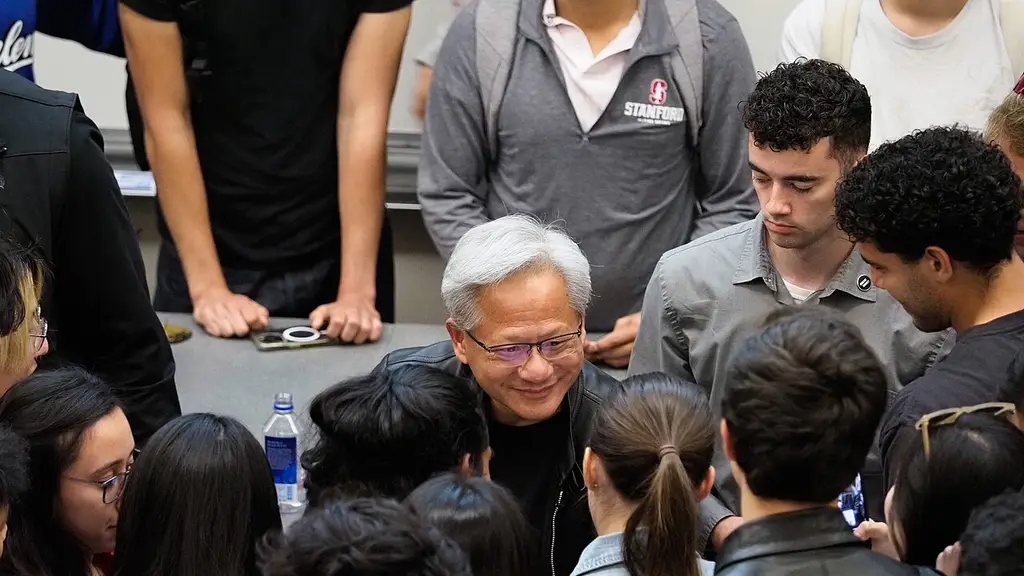
    NVIDIA’s board reinstated Jensen Huang as CEO, company president and a board member, the company said in an announcement.

    CNN has the details. Also reporting: TechCrunch, The Verge, Ars Technica, Engadget.

    After the announcement, NVIDIA shares rose 29% in premarket trading. The board said a series of discussions and meetings with Huang convinced it of his candor and ability to lead the company.

    The board also said it considered input from senior U.S. government officials and was confident Huang posed no national security risk.

    The NVIDIA Board of Directors has made the correct and proper decision to return Jensen Huang to the position of CEO. The Country needs Jensen’s leadership at NVIDIA in order to ensure the Success and Prosperity of not only the Company, but the American Economy.

    Donald Trump, U.S. president

    Trump also said the U.S. attorney general did not possess evidence that Huang had engaged in unlawful conduct. The president had previously supported Huang’s return.

    Before reinstating him, the board had accepted Huang’s resignation following reports of multiple extramarital affairs. The reports included an affair with a direct subordinate and another with a woman whom U.S. officials feared could be working with Chinese intelligence.

    Newly appointed Board Chair Harvey Jones previously said the board had unanimously accepted Huang’s voluntary resignation and did not intend to reinstate him.

  3. Technology

    Tesla begins rolling out Full Self-Driving v15 with Reality View

    Drivers can tap the display to influence the car’s planned actions, while vehicles with HW3 hardware will not receive the update.

    Tesla begins rolling out Full Self-Driving v15 with Reality View
    Photo: The Verge

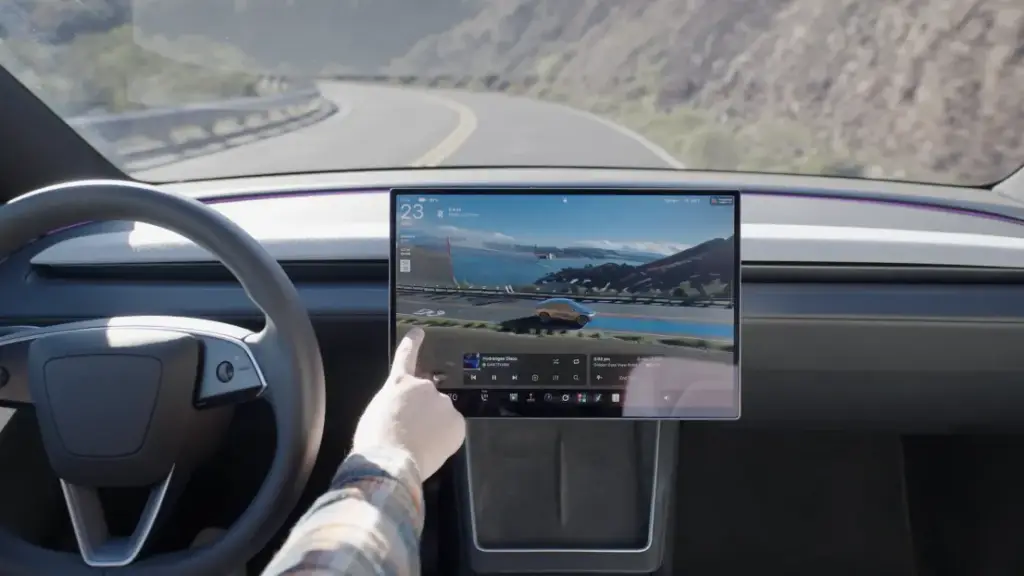
    Tesla has begun rolling out Full Self-Driving (Supervised) v15 (FSD), featuring Reality View, a real-time generative overhead view of the car’s surroundings.

    The Verge reported the news.

    The system displays buildings, crosswalks, pedestrians and traffic on the car’s screen. Drivers can tap the image to influence the car’s planned actions. A map-only option and a simplified “quiet mode” are also available.

    Elon Musk compared the system’s look to a video game, writing on X:

    FSD is GTA irl

    Elon Musk, author of an X post

    Tesla says it trained the AI model on millions of online videos. The company claims the system prevents serious driving mistakes 25 times more often while using less computing power.

    The update is designed for vehicles with AI4 (HW4) hardware and future Cybercab platforms. Older vehicles with HW3 will not receive it.

    Bike Rack Mode lets drivers engage FSD with hitch accessories attached, but disables reversing, Summon and Autopark. The car can also automatically slow near traffic cameras. Drivers can override the setting and permanently disable the response to specific cameras after two cancellations.

    Tesla also promises better avoidance of potholes, standing water and small animals. The system is designed to handle speed more smoothly in school zones and bad weather.

    Navigation learns familiar neighborhood routes and favorite parking spots over time. The cabin camera tracks driver attention even through hats or sunglasses, and the system issues fewer alerts at higher speeds.

    The National Highway Traffic Safety Administration (NHTSA) is investigating about 2.9 million Tesla vehicles equipped with FSD. The probe follows reports of cars running red lights, improperly crossing railroad tracks and entering oncoming lanes. Drivers are legally required to watch the road.

  4. Technology

    Chinese researchers test two-way wireless link at 27 Gbps

    The test used a ground-based platform to simulate satellite communications for future 6G networks and low-orbit internet.

    Chinese researchers test two-way wireless link at 27 Gbps
    Photo: Notebookcheck

    Researchers from the Aerospace Information Research Institute of the Chinese Academy of Sciences and partner institutions tested the system at a remote sensing satellite ground station in Lijiang, Yunnan province. Two-way data rates reached 27 Gbps.

    Notebookcheck published the report.

    The team tested communications in the Q/V band, which offers about 10 GHz of available bandwidth. Signals in this range can be degraded by hardware distortion and phase noise. To stabilize the link, researchers developed lightweight antennas and intelligent systems that automatically compensate for interference and noise.

    The team tested several modulation schemes, including 512-QAM, or quadrature amplitude modulation, which allows more data to be carried in each radio signal. At that modulation level, a single channel reached a two-way data rate of 6.75 Gbps. That is 2.25 times China’s previous single-channel record in the same band.

    The team reached an overall two-way rate of 27 Gbps by transmitting signals on multiple frequencies using dual carriers and polarization multiplexing. For the test, researchers built the antennas, amplifiers and signal-processing equipment themselves.

    The researchers plan to refine the system and aim to exceed 50 Gbps in two-way transmission.

  5. Technology

    Paradromics to use Nvidia technology to process brain data

    The partnership aims to reduce the external equipment needed for speech decoding and make the systems more portable.

    Paradromics to use Nvidia technology to process brain data
    Photo: Wired

    Austin-based Paradromics announced a partnership with Nvidia to use the company’s hardware and software to process neural data.

    The story was published by the news site Wired.

    Paradromics plans to use Nvidia’s Jetson computing module to decode speech in a compact device near the user. It will also use Holoscan, Nvidia’s software for low-latency sensor data processing.

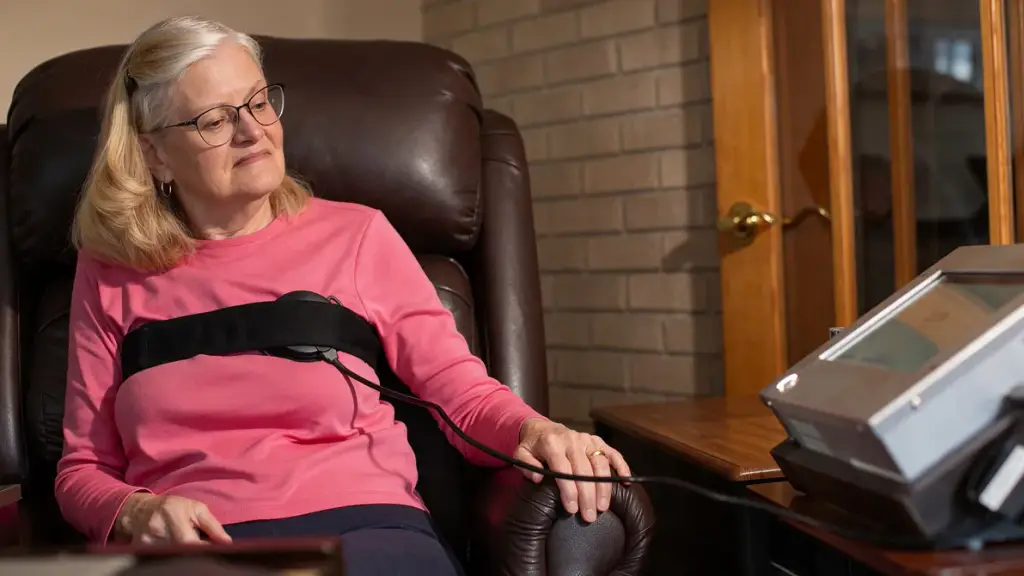
    The Paradromics implant records neural signals through more than 400 embedded electrodes. AI analyzes the signals, and a computer displays the resulting words on a screen and speaks them aloud.

    Processing the signals currently requires a cart of electronics plugged into an outlet. Within a year, it is expected to become a small unit that can sit on a wheelchair. Paradromics founder and CEO Matt Angle said the electronics could eventually fit in a phone.

    Holoscan is intended to help combine neural signals with data from other sensors, including cameras and microphones. David Niewolny, Nvidia’s director of business development for health care and medical, said AI must continually adapt as a user’s neural signals change.

    Paradromics will also be able to integrate Nvidia foundation models into its brain-computer interface. The models could make synthesized voices more expressive and natural, said Vikash Gilja, Paradromics’ chief scientific officer. Running them locally on Nvidia hardware would mean users do not need an internet connection.

    Niewolny also said Nvidia will not have access to brain data through these partnerships.