Technology

  1. Technology

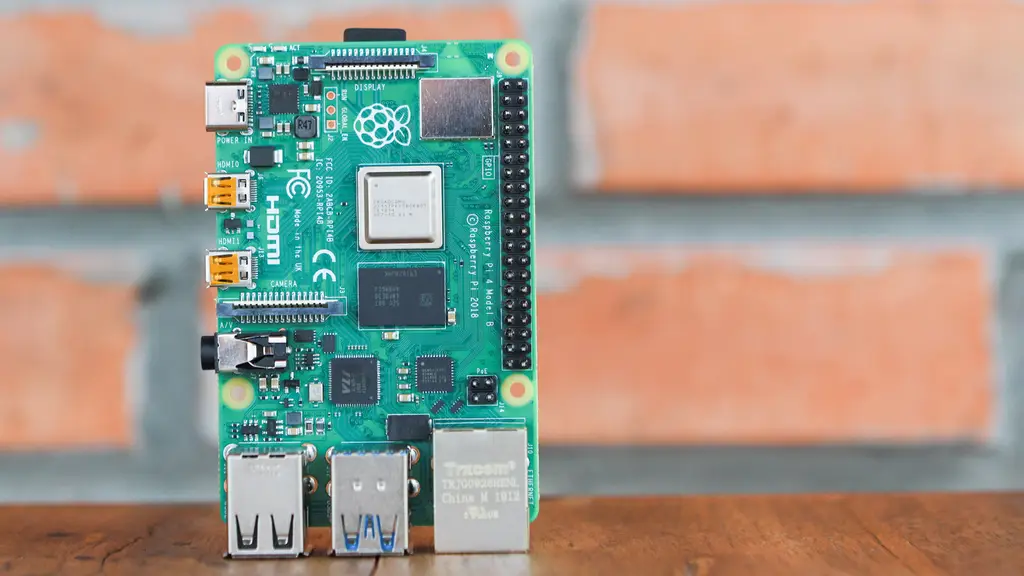
    Author says Raspberry Pi 4 is enough for many projects

    For home automation, robotics and self-hosting, the older board also needs a less powerful power adapter.

    Author says Raspberry Pi 4 is enough for many projects
    Photo: Engadget

    In early November, Raspberry Pi CEO Eben Upton announced an $80 price increase for the Raspberry Pi 5 with 16GB of memory, bringing its price to $385.

    This was reported by Engadget.

    The official starting price for the Raspberry Pi 4 with 1GB of memory is $35. The article’s author notes that higher-spec Pi 4 models have also become more expensive, but they remain slightly cheaper than the Pi 5 and more affordable.

    The Pi 4 needs a 15W USB adapter, while the Pi 5 requires a 27W USB-C adapter with Power Delivery (PD). The author estimates that a fan is unnecessary for most Pi 4 projects.

    Under a heavy workload, the Pi 5 can heat up to more than 80 degrees Celsius in about a minute. Without a fan, the board reduces its CPU speed to manage the temperature.

    The author estimates that the Pi 5 is more than twice as powerful as the Pi 4, but says the difference is more noticeable when the board serves as a primary computer. The Pi 4’s slower processor may limit web browsing and demanding tasks.

    The author says the Raspberry Pi 4 and 3B+ are easier to find for sale. On the secondhand market, used boards often cost less than retail, sometimes bundled with power supplies, cases and other accessories.

    Upton described the period of price increases as difficult but temporary, and pledged to lower prices when memory becomes cheaper. Memory manufacturers have warned that shortages could continue through 2028 and beyond.

  2. Technology

    Kausmedia opens preorders for Switch 2 mobile internet adapter

    The USB-C device draws power from the console and supports Wi-Fi 6. Shipping is scheduled to begin December 15.

    Kausmedia opens preorders for Switch 2 mobile internet adapter
    Photo: Notebookcheck

    Japanese company Kausmedia opened preorders November 20 for the Switch Direct Link adapter, which provides mobile internet access on the Nintendo Switch 2. Shipping is set to begin December 15.

    Original source — Notebookcheck.

    The adapter connects through USB-C and draws power from the console, so it does not need a separate battery. It weighs about 50 grams and measures 51 × 54 × 18 mm.

    According to the manufacturer, Switch Direct Link is also compatible with the original Nintendo Switch, Switch Lite, some smartphones and tablets, and Windows PCs and Macs. Theoretical 4G LTE download speeds reach 150 Mbps, with upload speeds of up to 50 Mbps.

    The adapter supports Wi-Fi 6 on the 2.4 GHz band and can share mobile internet with up to eight devices. It also allows users to connect an external power source to charge the console without interrupting the internet connection.

    In Japan, the service uses Docomo, au and SoftBank networks and automatically selects an available connection. It uses a prepaid model.

    The Japanese Amazon store lists prices of ¥16,980 for a 10 GB package and ¥19,980 for a 100 GB package. Both packages are valid for 365 days.

    The manufacturer confirms the adapter works in the United States, Canada and several European countries with a separately purchased international data package. The device is not officially licensed by Nintendo; gaming latency and power consumption have not yet been tested.

  3. Technology

    Phoenix rendered twice as many frames as the displays could show

    About half of the frames it created never appeared on screen, using GPU time and battery power.

    Phoenix rendered twice as many frames as the displays could show
    Photo: Notebookcheck

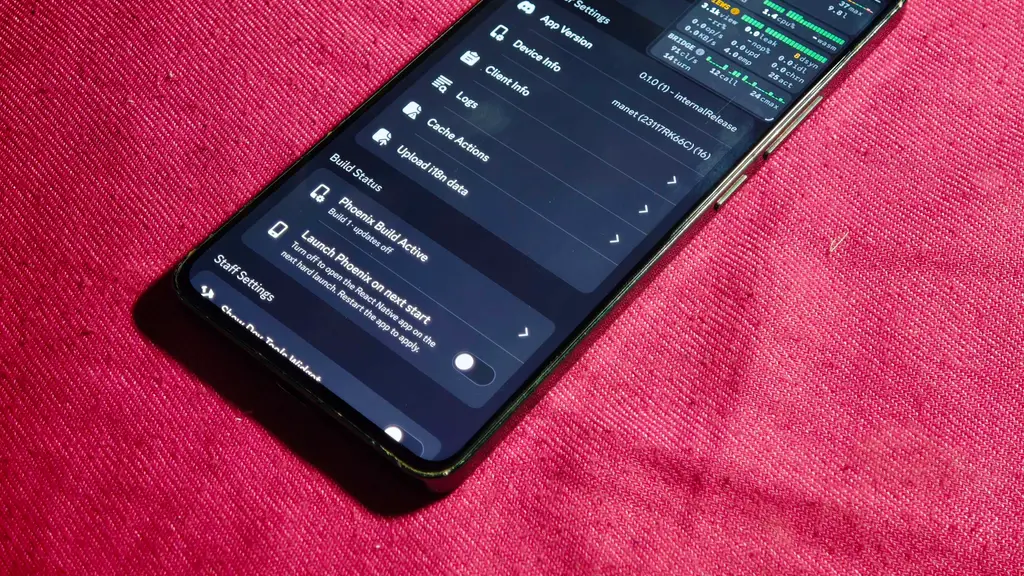
    The article’s authors tested a Discord Phoenix build on the Xiaomi 17 and Redmi K70 Pro. On both phones, the rendering rate was twice the displays’ refresh rate.

    Original report: Notebookcheck.

    Phoenix’s built-in overlay reported 240 frames per second at a 120 Hz refresh rate. When the display was set to 60 Hz, the counter showed 120 frames per second.

    Android’s statistics on the Xiaomi 17 recorded more than 5,500 frames during about 20 seconds of scrolling at 120 Hz. That is more than twice the number the display could show in that time.

    The Xiaomi 17 and Redmi K70 Pro have different chips and displays, but both run HyperOS 3 and Android 16. The authors said this may point to an interaction between Phoenix and HyperOS 3 or Android 16. Discord may fix the issue before release.

    On the Xiaomi Mi 10S, running HyperOS 1, and the Oppo Pad 5, running ColorOS 17 based on Android 17, the frame rate matched the displays’ refresh rates.

    In everyday use, the test build ran smoothly, including on the older Xiaomi Mi 10S. The authors measured memory use of 440 to 550 MB, depending on the screen, with brief spikes to about 690 MB.

    Those figures may be high: Frida, a plugin loader and a performance overlay were also running in the modified build.

    The app stopped responding once in an active channel under heavy load. Frida and the plugin loader were active in that code path, so the authors could not determine whether Phoenix itself caused the freeze.

    The build is not intended for public use, and the issue may be fixed before release.

  4. Technology

    Vivo’s budget smartphone specs leak ahead of launch

    All three models are rumored to feature 120 Hz displays and microSD card support.

    Vivo’s budget smartphone specs leak ahead of launch
    Photo: Notebookcheck

    Vivo is preparing to launch the Y21s, Y11s and Y05s 4G in India. Leaker Sudhanshu shared their purported specifications on X, including 6.74-inch displays with a resolution of 1,600 × 720 pixels and a 120 Hz refresh rate.

    Notebookcheck published the report.

    The least expensive model, the Y05s 4G, is said to use a Unisoc T7225 processor with 4 GB of RAM and 64 GB of storage. Other reported features include an 8 MP main camera, a 6,500 mAh battery with 15 W charging and an IP65 rating. The phone reportedly will not support 5G.

    The leak says the Y11s will have a Dimensity 6300 processor, 4 GB of RAM and 128 GB of storage. Its rear camera setup is said to include a 13 MP main camera and a 0.08 MP depth sensor.

    The higher-end Y21s is reportedly set to offer a 50 MP main camera, 44 W charging and up to 6 GB of RAM. The Y11s and Y21s are also said to support 5G. All three phones are reported to have side-mounted fingerprint scanners and microSD card slots.

    Vivo has not yet announced prices or when the models will go on sale.

  5. Technology

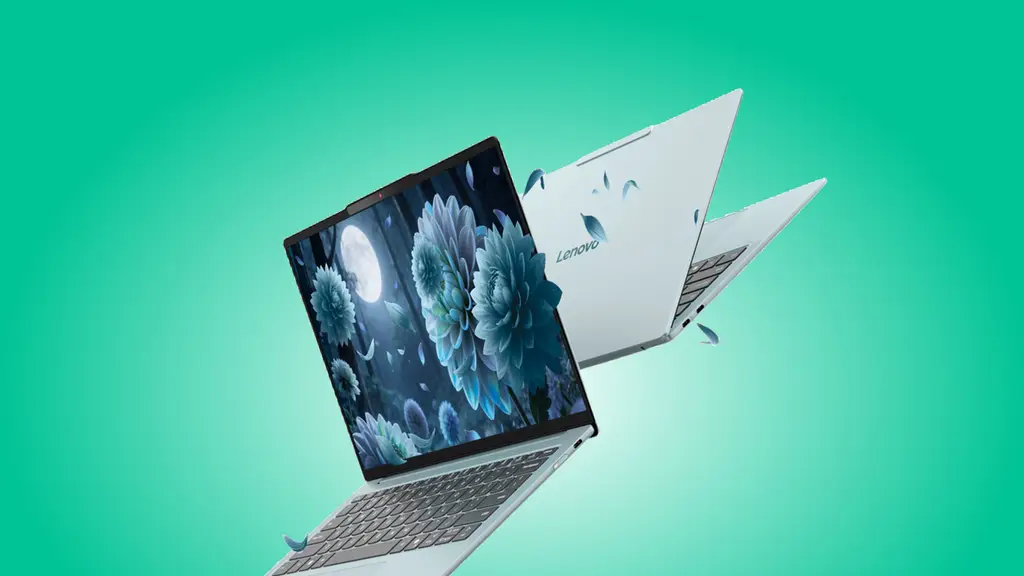
    Lenovo offers IdeaPad Slim 5 Ultra in more countries

    MobileMark 30 estimates battery life at 18.4 hours, while locally stored video can play for more than 30 hours.

    Lenovo offers IdeaPad Slim 5 Ultra in more countries
    Photo: Notebookcheck

    Lenovo is offering the IdeaPad Slim 5 Ultra 14IWC11 in more countries. The North American configuration has a Core 5 315 processor and 8 GB of RAM, along with a 512 GB SSD and a 1200p OLED display.

    The story was published by the news site Notebookcheck.

    Other countries also have versions with Core 5 320 and Core 7 350 processors. The North American display has a peak brightness of 300 nits and a 60 Hz refresh rate.

    The listed specifications show a 65 Wh battery with support for 65 W charging. MobileMark 30 battery life is estimated at 18.4 hours at 250 nits. Playing locally stored 1080p videos at 150 nits lasts more than 30 hours.

    The article’s author suggests Lenovo may not sell configurations with IPS displays and 120 Hz refresh rates in North America.