Medicine & Research

  1. Medicine & Research

    31 NHS trusts in England warn savings demands threaten operations

    Trusts are considering cuts to services and staff; six rated financial risk at 25, the highest score in their registers.

    31 NHS trusts in England warn savings demands threaten operations
    Photo: The Guardian

    Thirty-one National Health Service (NHS) trusts in England have listed this year’s savings demands as a risk that could prevent them from functioning normally.

    Source: The Guardian.

    Twenty-seven trusts identified lack of money as their biggest threat, and six gave it the highest possible score of 25. Many trusts plan to save up to £106 million each by restricting services and cutting staff, despite widespread NHS understaffing.

    Nottingham University Hospitals NHS Trust plans to cut 1,279 jobs to meet its £106 million savings target for 2026-27. The trust acknowledged that a third of its planned savings are high-risk. Barts Health NHS Trust in London aims to cut 1,100 posts.

    Torbay and South Devon NHS Foundation Trust is cutting 199 nonclinical posts and raising staff charges for parking and food. Its cost improvement plan target is £54.4 million, and its underlying deficit is £100 million.

    Trust leaders link their financial difficulties to rising drug prices, strikes, the cost of pay increases, summer heatwaves and the introduction of electronic health records. They also accuse NHS England of setting savings targets they consider excessive.

    An NHS England spokesperson said hospital boards were being transparent about financial risks and taking steps to mitigate them. Organizations were working to improve productivity while continuing to provide patients with the care they need, the spokesperson said.
  2. Medicine & Research updated 23:58

    Mouse study finds fasting boosts muscle regeneration

    Researchers injured the animals’ muscles with a toxin. The study did not establish whether the same approach could help people.

    Mouse study finds fasting boosts muscle regeneration
    Photo: Medical Xpress

    Researchers at Koç University in Istanbul published the findings in Cell Reports. They studied muscle recovery in young adult male mice after toxin-induced injury.

    This was reported by the news site Medical Xpress.

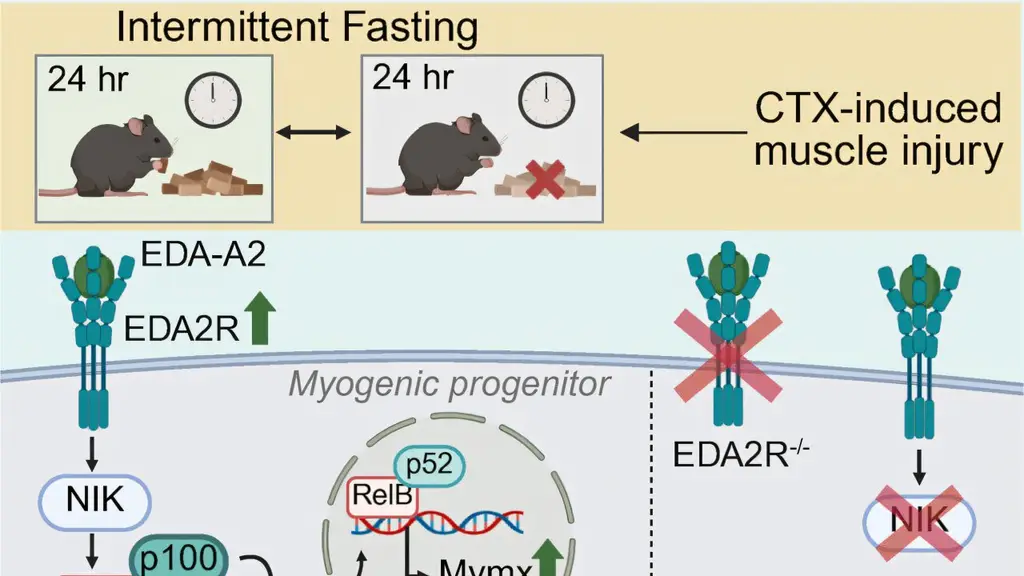
    The mice alternated 24 hours without food with 24 hours of unrestricted feeding; a control group had continuous access to food. After 10 days, injured muscles in the fasting group had gained more weight than those in the control group.

    The fasting mice also had larger regenerating muscle fibers. Researchers found that more nuclei from newly formed cells had become incorporated into the fibers.

    The additional benefit was linked to the EDA2R–NIK–Myomixer signaling pathway. Mice without EDA2R, or without NIK in satellite cells and their descendants, did not gain an extra benefit from intermittent fasting, although their muscles still regenerated.

    Earlier research by the same team found that this pathway contributed to muscle loss in mice with tumors. The authors suggest that brief activation of the pathway during recovery may have a different effect from prolonged activation.

    The authors suggest that short fasting cycles may encourage myogenic cells to fuse, while periods of refeeding provide the energy and nutrients needed for the process.

    In a separate experiment using a mouse model of Duchenne muscular dystrophy, results were mixed. Fasting increased signs of regeneration and improved grip strength relative to body weight in two of four weekly assessments. However, the mice ate less and grew more slowly, making the results harder to assess.

    The study did not establish whether the larger fibers produced greater strength, and it does not show that fasting improves muscle recovery in people.

    The authors suggest that it may be possible to activate repair signals without restricting food. Doing so would require a way to stimulate regeneration while avoiding muscle loss associated with prolonged activation of the same pathway.

  3. Medicine & Research updated 23:58

    FDA authorizes robotic system to remove bladder tumors

    The system enters through the urethra without external incisions, while a surgeon controls two miniature robotic arms.

    FDA authorizes robotic system to remove bladder tumors
    Photo: Fox News

    On October 30, the U.S. Food and Drug Administration (FDA) granted De Novo authorization to the Virtuoso Endoscopy System. The authorization covers removal of bladder lesions in adult patients and collection of tissue samples.

    The report comes from Fox News.

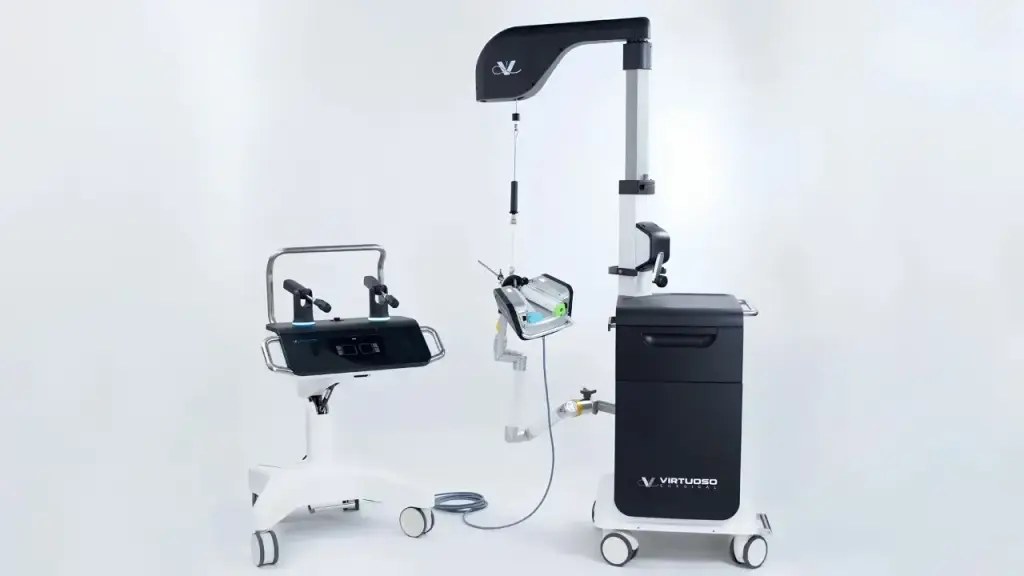
    The device enters the bladder through the urethra using an endoscope. A surgeon controls two miniature robotic arms: one holds the tumor while the other separates it from surrounding tissue. The system does not make decisions or operate independently.

    According to Virtuoso Surgical, the findings cover the first 20 patients in the VIABLE study. The company sponsored the study, which was conducted at The Chinese University of Hong Kong. Detrusor muscle was present in 94% of the removed lesions.

    That exceeded the study’s predefined goal of 60%. Surgical margins could be evaluated in 93% of malignant lesions.

    The findings remain limited: the study involved a small number of patients at one medical center and did not compare the robot with conventional instruments in a randomized trial. An earlier published first phase of the same study, involving six patients, recorded two postoperative adverse events.

    The FDA authorization covers removal of lesions and collection of samples, including bladder muscle, to help diagnose bladder cancer. It does not establish that the system improves survival or prevents cancer from returning. Virtuoso Surgical plans a limited U.S. launch in 2027, starting with leading urology centers.

  4. Medicine & Research

    Survey: 32% of postpartum women reported needing mental health care

    The survey covered women in 16 U.S. states. Among those who could not get the care they needed, three-quarters cited barriers to arranging access.

    Survey: 32% of postpartum women reported needing mental health care
    Photo: Medical Xpress

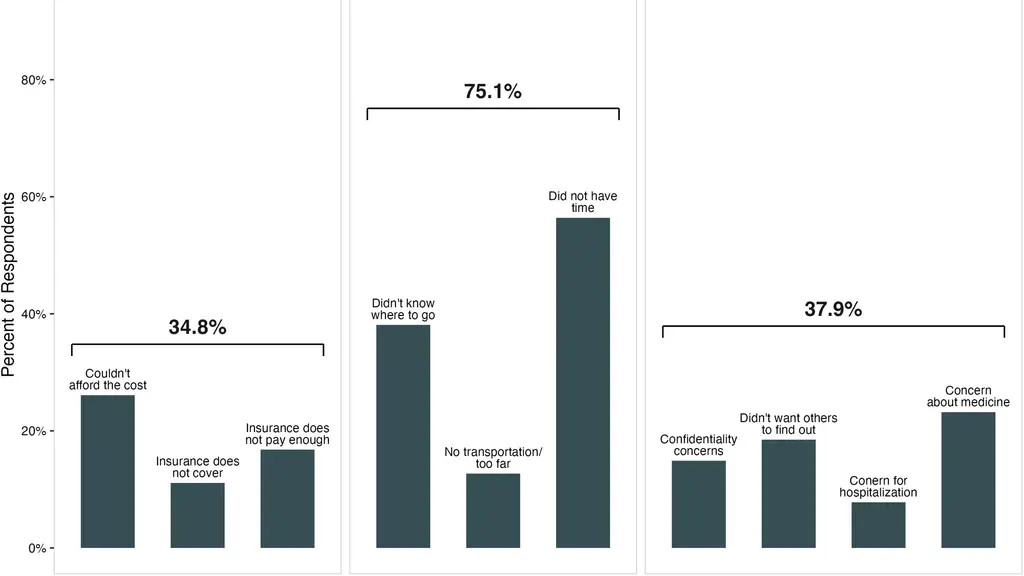
    A survey of more than 13,000 women in 16 U.S. states found that 32% said they needed mental health care after giving birth. The data were collected in 2022 through the Pregnancy Risk Assessment and Monitoring System.

    Medical Xpress reported the news.

    Among women who needed care but did not receive it, three-quarters reported logistical barriers. The most common was not having enough time; others included being unable to take time off work, find affordable child care or get information about where to seek help.

    Researchers published the findings in Women’s Health Issues. Participants were asked whether they needed care, whether they received it and what barriers they faced if they could not access the services they needed.

    Earlier studies using screenings and diagnoses to estimate postpartum mood and anxiety disorders put their prevalence at 10%–20%. Estimates varied by population and data source.

    Lead author Rebecca Gourevitch is an assistant professor in the University of Maryland School of Public Health’s Department of Health Policy and Management. She said asking women directly can identify those who do not meet clinical criteria for disorders or lack access to services for a diagnosis.

    Women with Medicaid, those without insurance, Hispanic women and Asian/Pacific Islander women were less likely to receive needed care. Gourevitch cautioned that the 32% estimate may be an undercount. Some women may not recognize symptoms, may not report a need because of stigma or may have had negative experiences in the health care system, including discrimination.

    Federal and state initiatives focus on expanding insurance coverage, lowering the cost of services and increasing screenings. Gourevitch called for stronger efforts to remove barriers, including paid family and sick leave, affordable child care and telemedicine.

  5. Medicine & Research updated 23:58

    Researchers identify 434 plasma cell groups in mouse intestines

    Some groups formed clusters along the intestine instead of being evenly distributed. The method can also measure gene activity in neighboring cells.

    Researchers identify 434 plasma cell groups in mouse intestines
    Photo: Medical Xpress

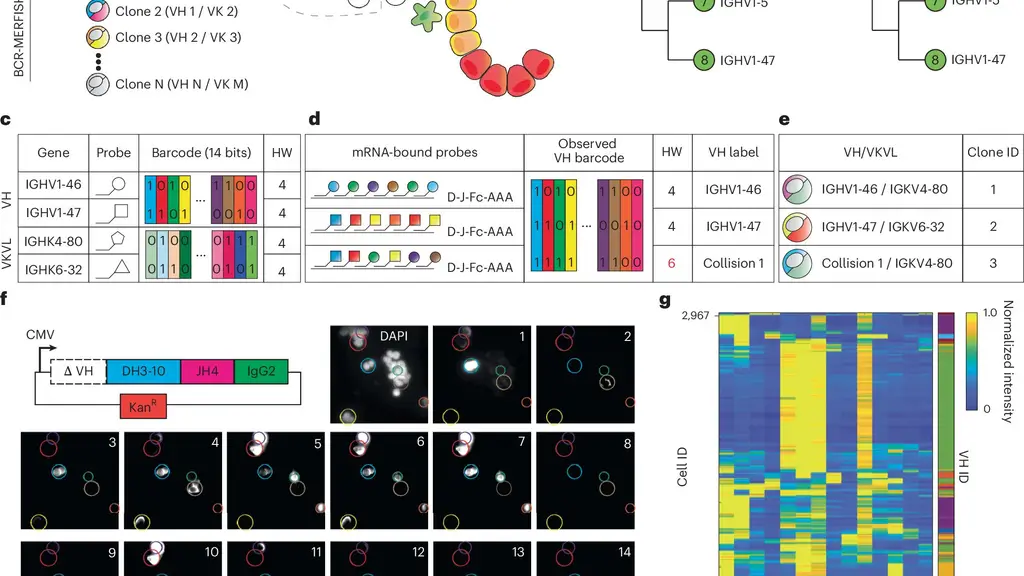
    In a study published in Nature Methods, researchers at Boston Children’s Hospital used BCR-MERFISH to study the small intestines of mice. Across two extended sections of tissue, they imaged more than 300,000 cells and identified 434 distinct plasma cell groups based on B cell receptor (BCR) gene usage.

    This was reported by the news site Medical Xpress.

    Maps showed that some plasma cell groups formed clusters along the intestine instead of being evenly distributed. Jeffrey R. Moffitt, the study’s senior author, said the team did not expect to see the clusters.

    Researchers do not yet know what caused the clusters or what they mean for immune function.

    MERFISH uses microscopy to measure RNA (ribonucleic acid) and show which genes are active in cells. BCR-MERFISH distinguishes plasma cell groups by features of B cell receptor genes while also measuring gene activity in neighboring cells.

    Mice raised without microorganisms had fewer plasma cells and less diversity among the identified groups than mice with typical gut microbes.

    The method could help researchers investigate immune activity in tumors, B-cell lymphomas and other conditions involving the adaptive immune system. The team is already studying human biopsies through clinical collaborations, including samples from patients with inflammatory bowel disease. BCR-MERFISH is not a diagnostic test or treatment; applying its findings in medicine will require further research.