Medicine & Research

  1. Medicine & Research

    SAG-AFTRA forms task force for universal health care access

    The union plans to engage with policymakers and allies and give members a formal way to participate. Its president says a substantial majority of members do not qualify for its health plan.

    SAG-AFTRA forms task force for universal health care access
    Photo: Deadline

    The SAG-AFTRA National Board voted unanimously Friday to form the President’s Healthcare Task Force. Union President Sean Astin announced the initiative, which aims to advance universal access to health care in the United States.

    Deadline has the details.

    In a statement, Astin said the SAG-AFTRA Health Plan is healthy and strong, but a substantial majority of union members do not qualify. The union has very little ability to provide coverage for members who are ineligible for the plan.

    This is a critical moment, where both our members and the public at large can no longer wait for relief from a broken healthcare system.

    Sean Astin, SAG-AFTRA president

    The task force plans to engage with policymakers, gather allies and create a structured way for union members to formally participate in the movement for universal health care access.

    The initiative was announced amid scrutiny of the union’s finances following the renewal of National Executive Director Duncan Crabtree-Ireland’s contract. His salary surpassed $1 million in 2023.
  2. Medicine & Research updated 23:58

    Researchers use 50 times fewer images to map brain tissue

    In mouse cerebellum samples, the method revealed electrical synapses and tiny protrusions between neurons and glial cells. Electrical synapses may be missing from conventional wiring maps.

    Researchers use 50 times fewer images to map brain tissue
    Photo: Medical Xpress

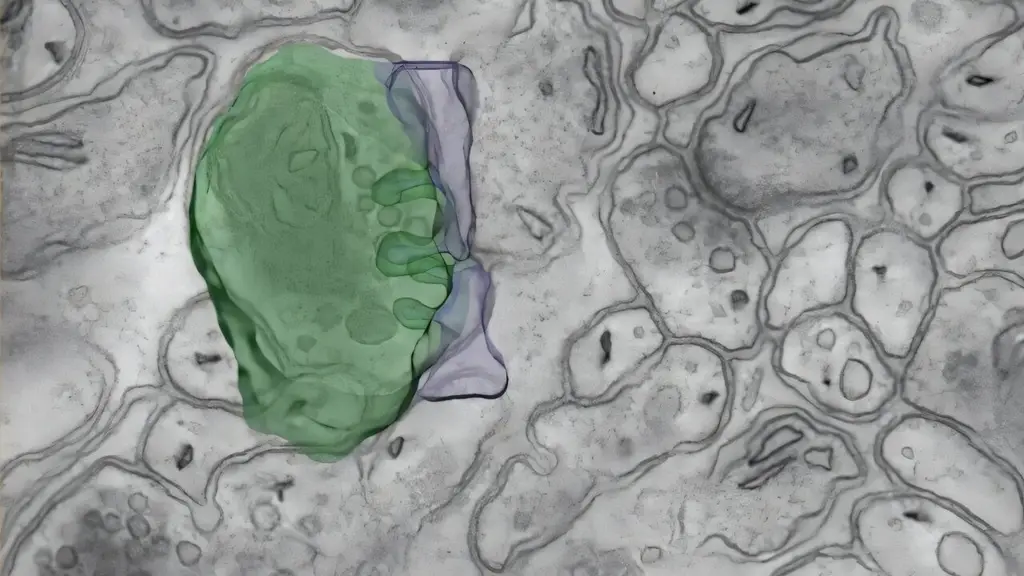
    Researchers at Harvard Medical School and the University of California San Diego sped up electron tomography to map large volumes of brain tissue at nanoscale detail for the first time. They used about 50 times fewer images than standard electron tomography. The team tested the method on mouse cerebellum samples and described the work in Nature Methods.

    The information comes from Medical Xpress.

    Connectomes, or maps of connections between brain cells, help researchers study how neurons work together. Even detailed maps can miss some structures, including electrical synapses, also known as gap junctions.

    In mouse cerebellum tissue, the researchers found electrical synapses. These allow signals to pass between neurons almost instantly and may help synchronize the activity of neural networks.

    The team also found tiny protrusions between neurons and neighboring glial cells, which support nervous tissue. The researchers said the structures appear to help transfer material from one cell to another.

    We’re seeing uncharacterized structures, suggesting that neurons are ‘nibbling’ their neighboring cells

    Wei-Chung Allen Lee, co-senior author of the study, associate professor of neurobiology at Harvard Medical School and associate professor of neurology at Boston Children’s Hospital

    Electron tomography creates 3D images by capturing views of a sample from different angles. The technique is usually slow because it requires hundreds of images of the same area.

    The tissue sections were roughly 20 times thicker than usual. The 3D resolution was about 15 nanometers or finer.

    The researchers also traced nerve fibers through a 3D block of tissue to where they connect with other neurons.

    Adapting the method to an entire mammalian brain will require more work, including automating the handling of tissue samples. The researchers described this as a long-term goal.

  3. Medicine & Research

    Lyra Health survey: One-third of workers say they are merely surviving

    Psychiatrist Asim Shah says it may be time to seek professional help if anxiety interferes with work and lasts more than six months.

    Lyra Health survey: One-third of workers say they are merely surviving
    Photo: Medical Xpress

    Lyra Health’s report on workers’ mental health draws on a survey of 7,500 workers in six countries, including the United States, conducted in late 2025. About one-third said they were merely surviving, while one-quarter reported that their mental health had worsened in the year before the survey.

    Medical Xpress reported the news.

    Half of respondents said they had trouble focusing or staying engaged at work.

    Financial problems were the most commonly cited source of ongoing stress in the report, at 57%. Another 35% pointed to heavy workloads, and 23% said they feared losing their jobs.

    According to the survey, 46% of workers said AI at work made them feel they had to be available all the time. Another 44% said they were anxious about job security.

    In a Baylor College of Medicine news release, Asim Shah, executive vice chair of psychiatry and behavioral sciences, explained that anxiety can make it harder to focus and carry out daily work tasks. He said that if this anxiety lasts more than six months, it may be time to seek professional help.

    Shah said employers may offer an employee assistance program (EAP); workers can also talk to a therapist or discuss medication management. However, 40% of respondents with more complex mental health needs had trouble getting care through an EAP, and more than half encountered long waitlists.

    To reduce stress, Shah suggests breaking tasks into smaller parts, setting small goals for the week and recognizing when they are achieved. He also recommends talking about feelings with someone you trust, building healthy habits, doing enjoyable activities and setting boundaries around workload.

  4. Medicine & Research updated 23:59

    Alcohol cut immunotherapy effectiveness nearly in half in mice

    Patient records also linked drinking more than one alcoholic drink a week with smaller survival benefits from lung cancer treatment.

    Researchers found that moderate-to-heavy alcohol consumption reduced immunotherapy effectiveness by about 50% in mice with lung and bladder cancer. They also examined records of lung cancer patients treated at UNC Chapel Hill Cancer Hospital from 2014 to 2018 with therapy targeting programmed cell death protein 1 (PD-1). The findings were published November 21 in Science Signaling.

    Medical Xpress has the details.

    Among patients who drank more than one alcoholic drink a week, researchers found an association with smaller survival benefits after starting the therapy.

    For five weeks before introducing cancer cells, researchers gave mice moderate or heavy amounts of alcohol. They then treated the animals with immunotherapy and tracked tumor growth, survival and recurrence. Alcohol consumption also increased the likelihood that tumors would return.

    Alcohol reduced the number of CD4+ and CD8+ T cells entering tumors and impaired CD8+ T cell activation. This reduced their ability to produce interferon-gamma and kill cancer cells. Alcohol also increased expression of another inhibitory receptor, TIGIT, on T cells.

    In mice given alcohol, combining anti-PD-1 therapy with an anti-TIGIT antibody restored the rate of complete tumor response. It came close to the rate in mice that had not consumed alcohol.

    The authors said future studies need more precise data on the amount of alcohol consumed. They suggest adding information about alcohol use to patient databases.

  5. Medicine & Research updated 11:56

    Neural activity records were worse at predicting AI models’ internal features

    The finding challenges the idea that models that predict brain activity necessarily share the brain’s internal mechanisms.

    Neural activity records were worse at predicting AI models’ internal features
    Photo: Mitrey / Pixabay

    Researchers at York University tested whether recordings of neural activity could predict the internal features of artificial intelligence (AI) models. The tests used 1,320 natural photographs and realistic synthetic images featuring 10 familiar subjects, along with 300 images of the same subjects in different styles. The study was published in Nature Machine Intelligence.

    Original report: ScienceDaily.

    Conventional tests assessed how well AI models predict brain activity. The team used a reverse predictivity testing method to see whether recordings of neural activity could predict the models’ own internal features.

    The models generally predicted the responses of the recorded neurons well. But those responses were much less effective at predicting many of the models’ internal features. The researchers did not find the same disconnect when comparing neuronal activity across different brains.

    The researchers say models may reproduce brain responses using different internal mechanisms. So AI’s ability to predict neural activity does not, by itself, prove that its mechanisms are similar to those of the brain.

    The team cautions that this matters for research into human behavior and neurological conditions: models that seem accurate could lead to mistaken conclusions about how the brain works.

    The team released a publicly available toolkit for testing models. It is intended to help developers identify which features of their models align with real neural activity.