Medicine & Research

  1. Medicine & Research

    Princess of Wales discusses cancer diagnosis in Heal

    Catherine takes on the Three Peaks challenge and meets people undergoing cancer treatment in the documentary.

    Princess of Wales discusses cancer diagnosis in Heal
    Photo: The Guardian

    The BBC will air the 30-minute documentary Heal on BBC One on November 29. In the film, the Princess of Wales, Catherine, discusses the impact of her cancer diagnosis.

    The story was published by the news site The Guardian.

    The Three Peaks challenge involves climbing the three highest mountains in England, Scotland and Wales within 24 hours. In the film, Catherine takes part and meets people undergoing cancer treatment.

    The BBC described the film as a “highly personal film”.

    Cancer does change you. It changes your body. It changes you physically, but there’s a much, much deeper part to what a cancer diagnosis shifts in you.

    Catherine, Princess of Wales

    Catherine says that during her recovery she learned to find hope and joy alongside uncertainty. In the trailer, she tells her brother, James Middleton, that she did not ring the hospital bell after treatment. He suggests the Three Peaks challenge could be her way of ringing it.

    Catherine was diagnosed with an undisclosed form of cancer in early 2024 and received chemotherapy. In January 2025, she announced that she was in remission. She was treated at the Royal Marsden hospital in London.

    The programme will be introduced by presenter Kirsty Young. Proceeds from distribution of the film, which will also be shown in other countries, will go to the Royal Marsden cancer charity.

  2. Medicine & Research

    Missouri court approves Bayer payments of up to $7.25 billion

    The payments will cover people already diagnosed with non-Hodgkin lymphoma and cases diagnosed in the future.

    Missouri court approves Bayer payments of up to $7.25 billion
    Photo: Інтерфакс-Україна

    A Missouri court approved a compensation program worth up to $7.25 billion for plaintiffs who link non-Hodgkin lymphoma to Bayer’s Roundup herbicide.

    This was reported by the news site “Інтерфакс-Україна”.

    Payments to each plaintiff will depend on their history of herbicide use, when they were diagnosed and the severity of their illness. Average payments will range from $10,000 to $165,000. The total also includes $600 million in attorneys’ fees.

    Some attorneys say the proposed payments are insufficient. Others consider the outcome better than no compensation at all, especially in light of a June U.S. Supreme Court ruling.

    The U.S. Supreme Court ruled then that federal regulations, which take precedence over state laws, do not require Bayer to warn about the risk of cancer.

    The judge warned that an alternative ruling could push Bayer into bankruptcy.

    Bayer disputes a causal link between Roundup and cancer and says it has already changed the formula of the product it sells at retail.

    Roundup was first sold by U.S. company Monsanto, which introduced the product in 1974. When Bayer acquired Monsanto in 2018, it also took on lawsuits over glyphosate, which is used in the herbicide.

    A causal link between glyphosate and non-Hodgkin lymphoma has not been definitively established. In 2015, the World Health Organization’s International Agency for Research on Cancer classified the substance as "probably carcinogenic."

    The U.S. Environmental Protection Agency says Roundup is unlikely to cause cancer when used according to directions.

  3. Medicine & Research updated 11:56

    Study: 16.6% of eligible patients received GLP-1 prescriptions in 2025

    Men, Black and Hispanic patients, and people whose providers practiced in lower-SES neighborhoods were less likely to receive prescriptions.

    Study: 16.6% of eligible patients received GLP-1 prescriptions in 2025
    Photo: fernandozhiminaicela / Pixabay

    Researchers at Boston University School of Public Health analyzed U.S. prescriptions for semaglutide and tirzepatide for weight management from 2021 to 2025. The study included 512,389 commercially insured patients ages 18–64 with overweight or obesity but without type 2 diabetes. Within six months of becoming eligible, the share who received a prescription rose from 1.9% in 2021 to 16.6% in 2025.

    Details were published by Medical Xpress.

    Prescriptions were less common among men, Black or Hispanic patients, people ages 18–34 or 55–64, and patients in lower BMI categories. They were also less common among patients whose providers practiced in lower-SES neighborhoods.

    The findings were reported by study lead author Minh Trung Le, who was a research data analyst in the Department of Global Health at Boston University at the time. In 2024–2025, patients in lower-SES neighborhoods had about 35% lower odds of receiving a prescription than those in higher-SES neighborhoods. Early in the study, the gap was about 15%.

    The study was published in Health Affairs Scholar. The authors used a national database of closed medical claims for more than 175 million patients.

    The analysis excluded patients covered by Medicaid or Medicare, people without insurance, and prescriptions obtained through direct-to-consumer channels. The authors noted that most eligible patients did not receive prescriptions for weight management.

    The authors highlighted the need to train and support health care providers in prescribing these medications. Le also called for changes to insurance benefit design, including prior authorization requirements, step therapy and patients’ out-of-pocket costs.

    Semaglutide is sold as Ozempic and Wegovy, while tirzepatide is sold as Mounjaro and Zepbound. The U.S. Food and Drug Administration approved semaglutide for chronic weight management in 2021 and tirzepatide in 2023.

  4. Medicine & Research updated 23:59

    Researchers tested 14 cards to guide conversations about type 2 diabetes

    The cards prompted discussions about treatment challenges. Lipska said visits did not run longer, and attention to blood sugar control was maintained.

    Researchers tested 14 cards to guide conversations about type 2 diabetes
    Photo: Medical Xpress

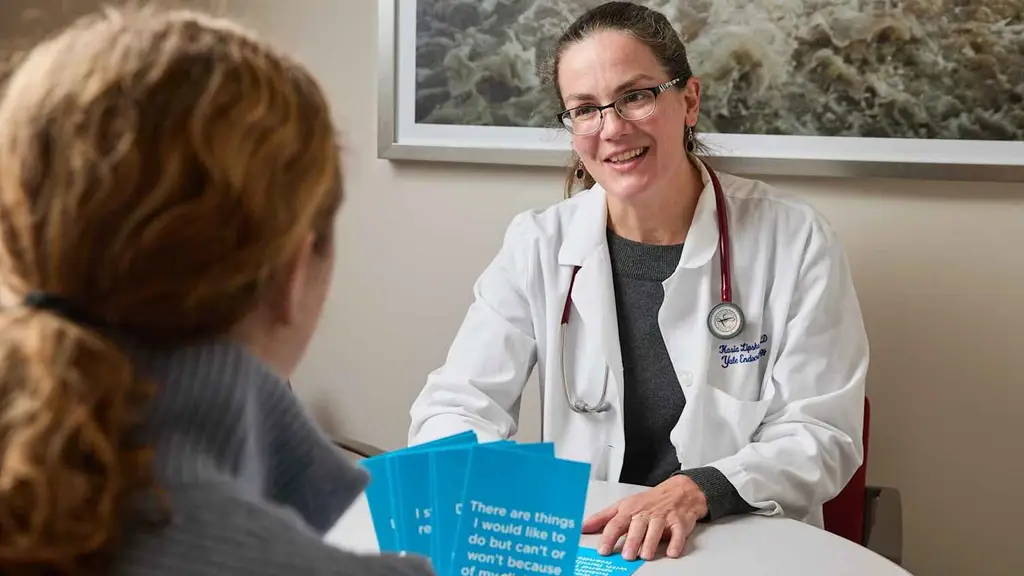
    Kasia Lipska’s team tested QBSAFE, a set of 14 cards for people with type 2 diabetes. Lipska is an associate professor of medicine (endocrinology) at Yale School of Medicine. The results were described in two papers in JAMA Network Open and the Journal of General Internal Medicine.

    The report comes from Medical Xpress.

    Before a visit, patients chose up to three cards with topics they wanted to discuss. These covered quality of life, the demands of treatment, concerns about its safety and possible complications.

    In a randomized trial, researchers compared conversations during visits and patient outcomes among those who used the cards with those receiving usual care. The cards prompted more discussion of challenges with medication, diet and physical activity, as well as life circumstances that could make it harder to follow a care plan.

    Lipska said these conversations did not make visits longer or distract from blood sugar control.

    After six months, clinician satisfaction and patient medication adherence were higher in the QBSAFE group. The cards alone did not significantly improve blood sugar control, treatment burden, diabetes distress or the impact of illness on daily life.

    The team hopes to develop tools and training to help clinicians respond to patients’ needs and simplify care. Lipska called this the next step.

  5. Medicine & Research

    47% of TikTok videos on RSV prevention rated high quality

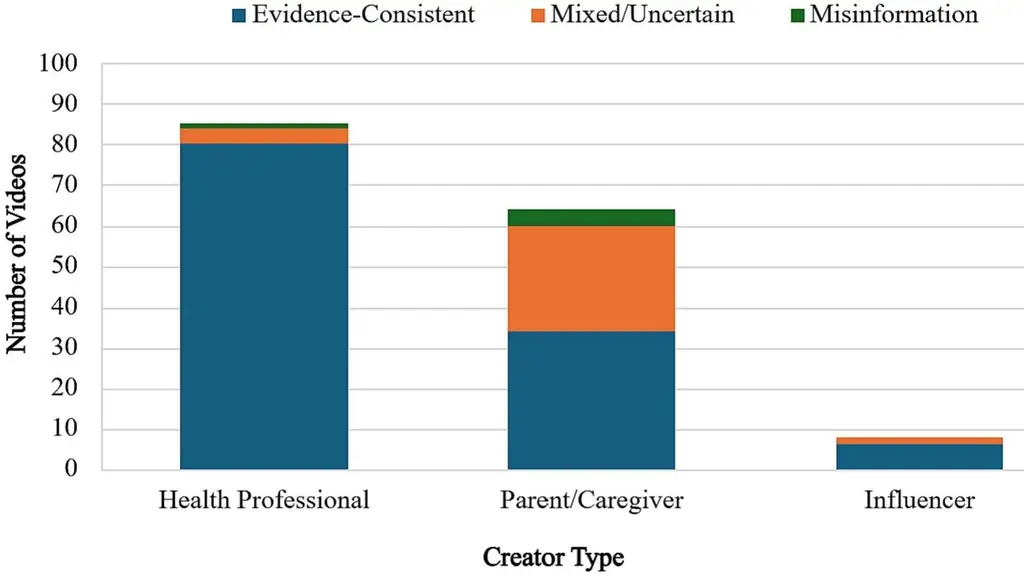
    Videos made by health professionals scored higher than those made by parents and caregivers. About 20% contained mixed or uncertain information.

    47% of TikTok videos on RSV prevention rated high quality
    Photo: Medical Xpress

    Researchers from Rutgers New Jersey Medical School analyzed 169 TikTok videos about immunization against respiratory syncytial virus (RSV) in a study published in Vaccine. The videos were posted from July 17, 2023, to November 14, 2025. Researchers rated 79 videos as high quality, or 47%.

    This was reported by Medical Xpress.

    The researchers used the 5-point Global Quality Scale, classifying scores above 4 as high quality. The median video score was 3.

    Health professionals made 50.3% of the videos about RSV prevention, while parents and caregivers made 37.9%. Videos from health professionals scored higher in quality than those from parents and caregivers.

    About 20% of the videos contained mixed or uncertain information. These videos were six times as common as videos with misinformation, which accounted for 3%.

    The authors said families may encounter mixed or uncertain information online because recommendations are complex. These include RSV vaccination during pregnancy and nirsevimab, a long-acting antibody given to infants. The authors advised clinicians to direct families to evidence-based resources.