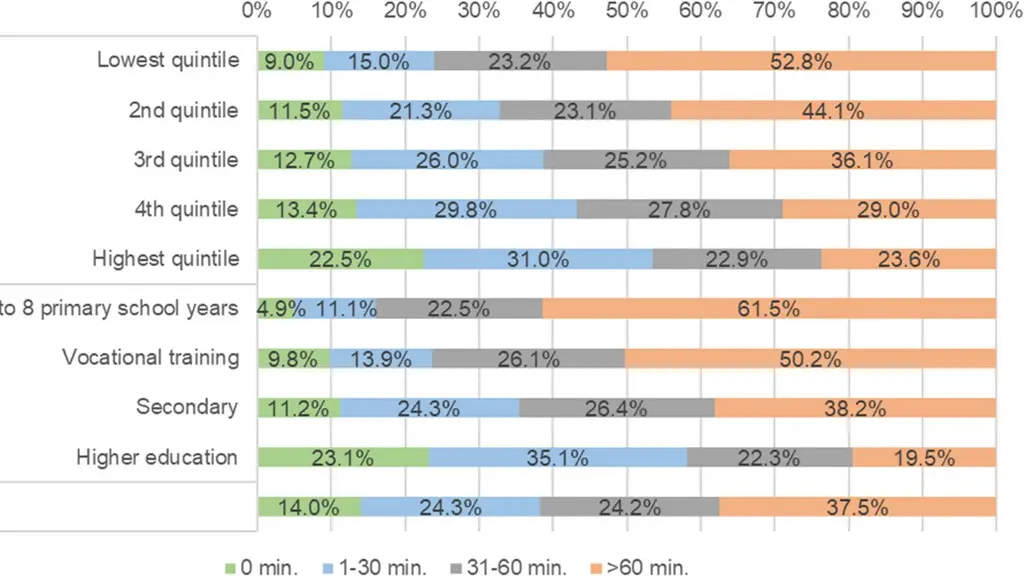
A Hungarian cohort study found that 49% of 18-month-old children saw screens daily. It used representative data from 2,569 children collected in 2019–2020; 37.5% spent more than an hour in front of screens on a typical day.
Details were published by Medical Xpress.
The study was published in Biologia Futura with contributions from researchers at Eötvös Loránd University. It draws on data from the Cohort ’18—Growing Up in Hungary birth cohort study.
Among children who saw screens daily, average screen time exceeded two hours. Television was the most common activity, but smartphone and tablet use was also widespread at this age.
Longer screen time was associated with less frequent shared play and reading. Previous research has also linked early, intensive screen use with difficulties in language and cognitive development and emotion regulation.
Young children learn primarily through actively exploring the world and interacting with others, rather than through screens. One of the greatest risks of introducing digital devices too early is that their use takes time away from precisely these essential experiences.
Ákos Pogány, researcher at the Department of Ethology at ELTE
The study’s authors also write that parents’ smartphone use can interrupt shared play and face-to-face communication with children.
The researchers advise parents to prioritize shared play, conversation and screen-free daily routines, and to be mindful of their own use of digital devices. They stress that what matters is not only how much time children spend in front of screens, but also which activities that time displaces.