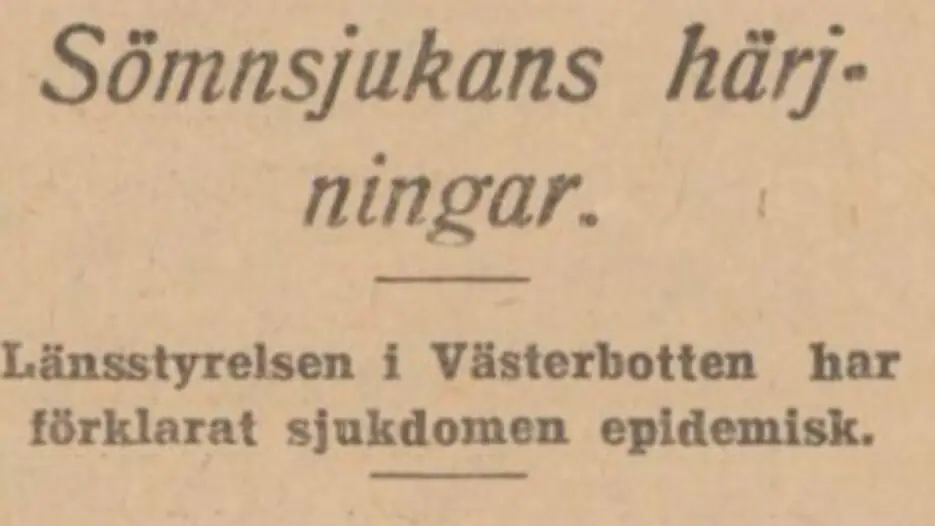
Researchers at the Centre of Demographic and Ageing Research (CEDAR) at Umeå University found that Vilhelmina accounted for nearly 80% of reported encephalitis lethargica cases in Västerbotten in 1921. Their findings were published in Epidemiology and Infection.
This was reported by the news site Medical Xpress.
The team analyzed national statistics from historical health care reports and medical reports from Västerbotten. Their analysis indicates that the disease first spread in the Stockholm area before quickly reaching northern Sweden.
The finding surprised the researchers: epidemics usually hit densely populated cities hardest, while Vilhelmina was sparsely populated. Erling Häggström Gunfridsson suggested the disease may have spread through cities before case reporting became mandatory.
Researchers also found severe outbreaks of Spanish flu and mumps in Vilhelmina before the encephalitis lethargica outbreak. They said the combination of infections may have affected the disease’s development and spread, but the study does not establish a causal link.
Encephalitis lethargica, known as sleepy sickness, was a mysterious epidemic of the early 20th century. Its cause remains unknown; the authors say historical population and health data may help researchers investigate infections and their long-term effects.