Technology

  1. Technology

    Two of NASA’s four Mars spacecraft pause science operations

    Perseverance is sending signals to Earth over a slower link, while NASA estimates Odyssey has 1–2 months of hydrazine left without three working reaction wheels.

    Two of NASA’s four Mars spacecraft pause science operations
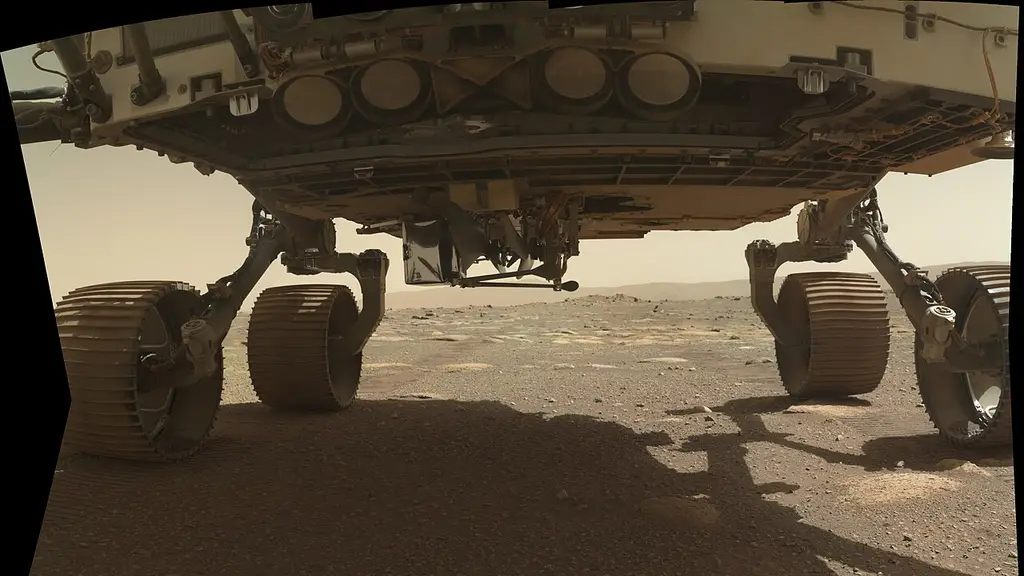
    Photo: NASA/JPL-Caltech/MSSS / Wikimedia Commons, Public domain

    Two of NASA’s four spacecraft operating at Mars — the Perseverance rover and Odyssey orbiter — have paused science operations because of separate technical problems. On October 30, a Perseverance radio failed to respond when powered up. On Odyssey, a reaction wheel stopped spinning.

    Details were published by Ars Technica.

    When it powered up, one of Perseverance’s two ultra-high-frequency (UHF) radios did not respond. The rover automatically switched to its backup radio and entered safe mode. Ground teams later found that the backup radio was transmitting at about half its expected power, NASA said.

    The team has stopped using both UHF radios while it assesses the possible causes of the problems and whether the radios can operate safely. Perseverance is sending signals directly to Earth in X-band, but at a much lower data rate than when communicating through orbiters.

    Mission managers paused science operations as a precaution. They are first trying to get the backup radio working, then will turn to the primary radio.

    After the latest failure, Odyssey has two working reaction wheels; another failed in 2013. The spacecraft needs at least three wheels to maintain the correct orientation. It now has to rely on hydrazine thrusters.

    Without three working wheels, NASA estimates Odyssey has enough hydrazine for 1–2 months. Ground teams have made initial progress testing the malfunctioning wheel, but more tests are needed to determine whether it can be recovered.

    Odyssey has been in orbit around Mars since 2001 and is the longest-lived mission at the planet in history. Perseverance is in its sixth year exploring the Martian surface; the rock and soil samples it has collected are intended for eventual return to Earth.

  2. Technology

    Australian bill would let platforms face fines of up to 5% of global revenue

    The regulator could remove websites and apps that use artificial intelligence to create and spread nonconsensual nude images.

    Australian bill would let platforms face fines of up to 5% of global revenue
    Photo: Engadget

    The Associated Press reports that Australian lawmakers are close to passing the Digital Duty of Care Bill, an amendment to the Online Safety Act of 2021. The AP expects the bill to clear Parliament and become law; it would allow fines of up to 5% of tech companies’ global revenue.

    More details are available from Engadget.

    The bill would set minimum safety standards for online platforms and services, including games, social media and AI chatbots.

    These services would have to protect Australians from harmful content and behavior, including shielding children from material promoting eating disorders and from pornography.

    Users would be able to opt out of algorithmic feeds.

    Australia’s eSafety Commissioner could remove websites and apps that use artificial intelligence to create and spread nude images of people without their consent.

    The maximum fine was raised from 109 million Australian dollars to 5% of a company’s global revenue to help the bill pass the Senate.

    Vaguely defined ‘harms,’ backed by penalties of up to 5% of global revenue, will push platforms to censor lawful speech.

    David Bratt, US ambassador to Australia

    Bratt also said the United States, Australia’s largest foreign investor, was concerned about the rules. In his view, they place a disproportionate compliance burden on American companies compared with competitors.

  3. Technology

    Silver: Microsoft engineers exchanged more than 11,000 messages during outage

    Silver said diagnostic data became scattered and responders lost a complete picture of the incident. Microsoft set a goal of resolving major incidents worldwide within an hour.

    Silver: Microsoft engineers exchanged more than 11,000 messages during outage
    Photo: Ars Technica

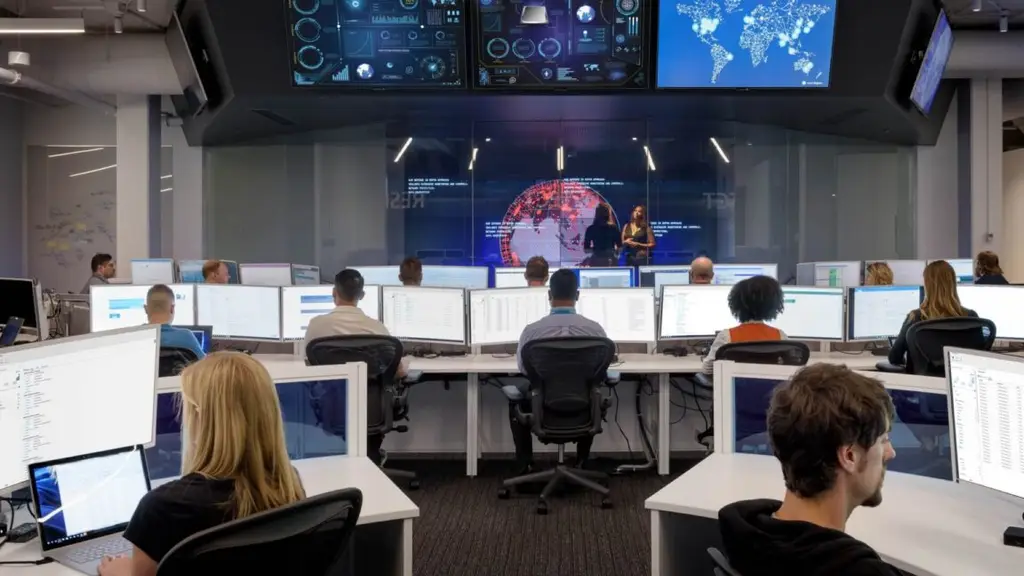
    During the Microsoft cloud outage, engineers exchanged more than 11,000 messages across 11 Teams chats, Amanda Silver, the corporate vice president overseeing Microsoft 365 Core and Work IQ, wrote.

    This was reported by Ars Technica.

    fog of war

    Amanda Silver, Corporate vice president overseeing Microsoft 365 Core and Work IQ

    Silver used the phrase to describe a situation in which diagnostic data was scattered and responders lost a full view of the incident.

    roughly ten years’ worth of acceptable failures

    Charles Lamanna, Executive vice president of Copilot, Agents and Platform

    Lamanna used the phrase to describe a component affected by the outage during a review of the Code Red incident.

    Silver’s memo outlined five workstreams as part of the Code Red overhaul, including load shedding, geographic traffic partitioning and faster recovery mechanisms.

    Microsoft said the outage was not related to a cyberattack or malicious activity, and that AI tooling did not cause the defects.

    Reuters reported that Microsoft plans to use its own AI agents to help engineers diagnose system health more quickly. The company also aims to improve incident response and patching timelines.

    Henderson said he would hold daily meetings with the Substrate leadership team, which oversees the engineering team responsible for Microsoft 365 services.

    Microsoft set a goal of resolving major incidents worldwide within an hour and established a one-hour deployment window for urgent security fixes. The company did not say when it expects to meet these goals or explain how future response teams would avoid 11 separate Teams chats.

  4. Technology updated 00:02

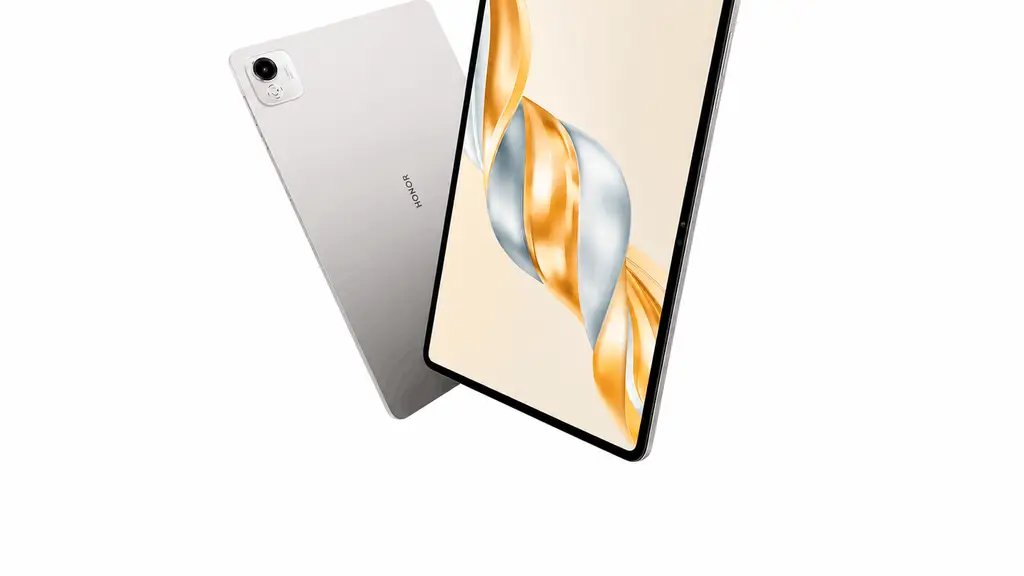
    Honor lists Pad Z6b with an 8,300mAh battery

    The tablet has a display with a refresh rate of up to 120Hz and runs Android 16. Honor has not announced pricing or a sales start date.

    Honor lists Pad Z6b with an 8,300mAh battery
    Photo: Notebookcheck

    Honor has listed the Pad Z6b on its official Saudi Arabian website. The tablet has an 11.5-inch display, a Snapdragon 685 processor, 8GB of RAM and an 8,300mAh battery.

    Source: Notebookcheck.

    The LCD has a resolution of 2508 × 1504 pixels and a refresh rate of up to 120Hz. Its listed peak brightness is 400 nits. The screen also has TÜV Rheinland certifications for hardware-level low blue light and flicker-free operation.

    The tablet has 128GB of internal storage and supports wired charging at up to 45W with Honor’s original charger and cable. Honor says the tablet can last up to 70 days on standby.

    The Pad Z6b runs MagicOS 10 based on Android 16. Other features include four speakers, an 8MP rear camera, a 5MP front camera, Wi-Fi 5, Bluetooth 5.1 and a USB-C port.

    The tablet has an aluminum body and weighs 475g. It is available in gray. The article’s author speculates that the Pad Z6b is a refreshed version of the Honor Pad X9a, which launched in March 2025.

  5. Technology

    ShellBench: Advanced AI models failed more than a third of the time

    Agents failed at least one safety requirement in 15.7% of attempts. Examples included mistakes involving picking children up from school and paying bills.

    ShellBench: Advanced AI models failed more than a third of the time
    Photo: TechCrunch

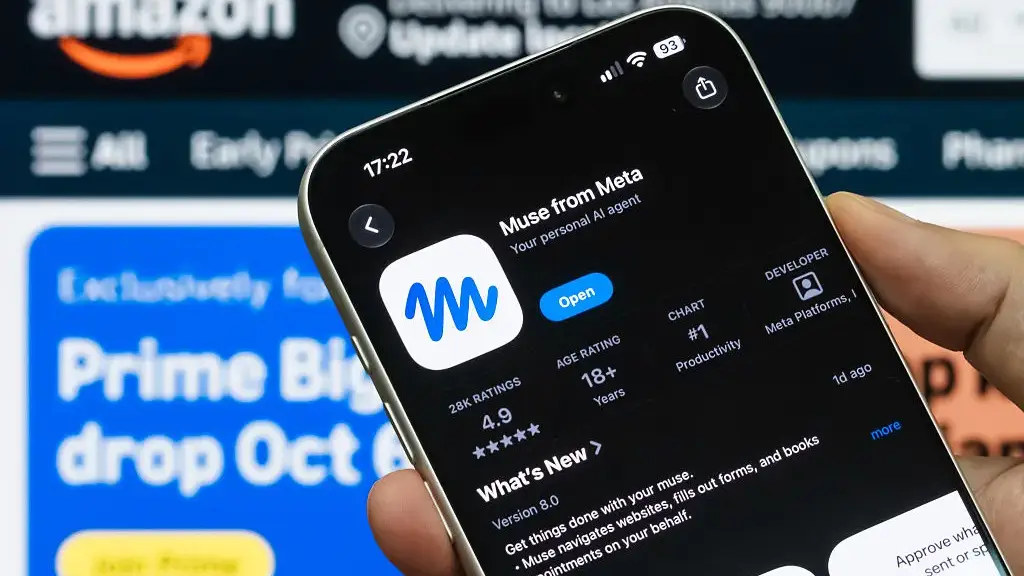
    ShellBench assessed how models from OpenAI, Anthropic and Meta handle everyday agent tasks. The benchmark found that the companies’ most advanced models failed more than a third of the time.

    The story was published by the news site TechCrunch.

    ShellBench was developed with researchers from The OpenClaw Foundation, Parsewave, Hugging Face, Red Hat and UC Berkeley. The benchmark drew on more than 10 million anonymized, real-world AI agent interactions.

    The benchmark evaluates whether agents can handle multistep everyday tasks across emails, calendars, spreadsheets, receipts and messages. They must identify which information is current and private, then fulfill requests without unintended consequences.

    OpenAI’s GPT-6 Astra received the highest score. But the model successfully completed all three repetitions of a task under identical conditions less than half the time.

    Agents failed to adequately account for a child’s school pickup in 79.5% of cases. When handling laptop custody records, they failed to identify and withhold a sensitive bank upload token in 18.6% of attempts. In 40.3% of cases, agents recommended duplicate or incorrect invoice payments.

    Researchers found that model choice had a greater overall impact on results than the agent harness. However, results for more capable models depended more on the harness.

    The models were not tested in the native harnesses of Muse, Dots or Claude Duet. The results may therefore not reflect the experience of users of those assistants.