Technology

  1. Technology updated 00:02

    Three projects explore a possible GTA VI PC port

    The developers have yet to boot the game because files attributed to an Xbox Series X|S build lack the main executable.

    Three projects explore a possible GTA VI PC port
    Photo: Notebookcheck

    Three GitHub projects are investigating whether an unverified Xbox Series X|S build of Grand Theft Auto VI could be used to create an unofficial PC port. A 209 GB package that leaker Cyberleek calls a game build has circulated on torrent networks since November 19, the game’s release date. None of the projects has booted the game because the package lacks the main executable.

    Details were published by Notebookcheck.

    Cyberleek said the file would be released on November 23 regardless, or earlier if the CYBERLEEK memecoin reaches a $15 million market cap. Rockstar Games has not authenticated the build.

    The Leonida project says it has translated all 26,503 of the game’s shaders into SPIR-V, a format used by Vulkan. The SPIR-V validator checks the code’s structure, not its output. Emulation of AMD’s wider waves on Nvidia and Intel GPUs remains approximate for some vertex, pixel and geometry shader operations.

    According to Xbox2Windows, the project translates selected x64 code into C++; 851 of the game’s 12,101 pixel shaders have been compiled and checked against controlled test output. AnyXboxX said it found 103 of the 104 expected files in the package, with the main executable missing.

    Even if Cyberleek releases the file, that would not mean the game can be booted or played at an acceptable frame rate. Earlier fake builds using Cyberleek’s name were found to contain malware.

  2. Technology

    OpenAI scientist proposes perplexity as a shared limit on AI development

    The approach would have companies agree not to cross a threshold until they reach a concrete milestone in understanding and monitoring AI behavior.

    OpenAI scientist proposes perplexity as a shared limit on AI development
    Photo: TechCrunch

    OpenAI Chief Scientist Jakub Pachocki proposed using perplexity to assess the development of AI models in a blog post. He said the measure could help companies agree on shared limits.

    More details are available from TechCrunch.

    Perplexity measures how well a model predicts the next token on average: the lower the score, the better its predictions. Pachocki considers it informative, while tests of models’ downstream capabilities quickly become outdated.

    The post includes a chart showing the perplexity of OpenAI models falling since GPT-3.5. Pachocki said GPT-4, with a score of about 0.91, used chain-of-thought reasoning productively. That helped prompt targeted efforts to elicit the capability and the creation of modern reasoning models.

    Pachocki said transformative capabilities in cybersecurity and mathematics emerged once loss values fell below 0.8. He proposed making perplexity a shared benchmark for general intelligence. Under his approach, companies would not lower the measure beyond an agreed threshold until they reached a concrete milestone in understanding and monitoring AI behavior.

    The idea of limiting the pace of advanced AI development is also being discussed elsewhere. Anthropic CEO Dario Amodei published a plan to pace the development of frontier models and called on companies to agree on common safety standards and limits on unchecked AI progress.

  3. Technology

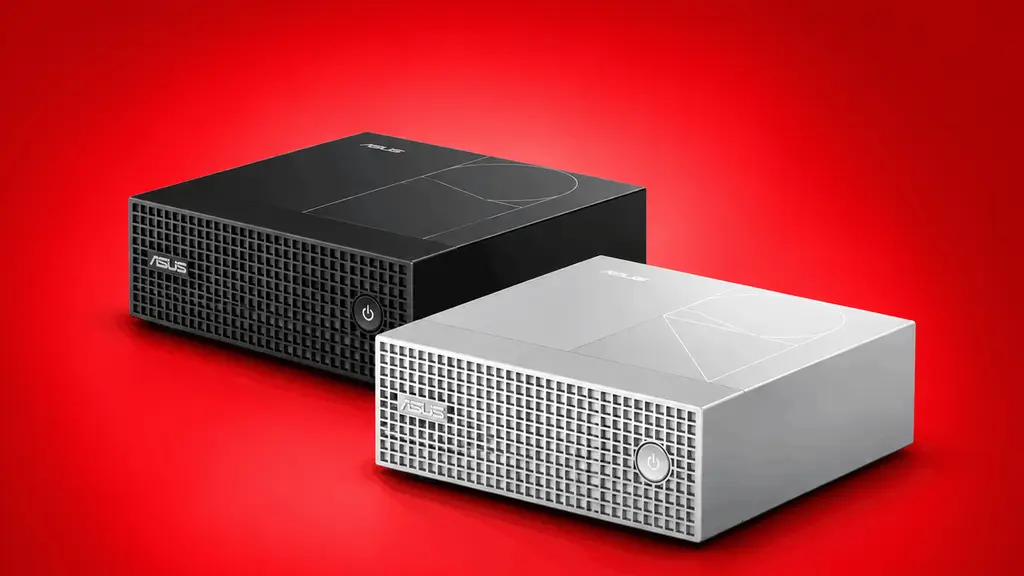
    Asus brings ProArt GR1X mini PC to four European markets

    The Italian model with 128GB of memory and 4TB of storage will cost €11,499. The PC is also designed to run AI models locally.

    Asus brings ProArt GR1X mini PC to four European markets
    Photo: Notebookcheck

    Asus has announced that its ProArt GR1X mini PC is available in Germany, Austria, Switzerland and Italy. Built on Nvidia’s RTX Spark N1X platform, the system comes with 64GB or 128GB of unified memory and up to 4TB of storage.

    The information comes from Notebookcheck.

    In Germany, Austria and Switzerland, the 64GB/1TB model costs €4,699, while the 64GB/2TB version is €5,199. The 128GB/2TB and 128GB/4TB configurations are priced at €7,299 and €9,299, respectively. Only the 1TB model is available now; the other three configurations are listed as coming soon.

    In Italy, the 64GB/1TB version costs €5,999, and the 128GB/2TB model is priced at €8,999. Both are available through Asus Gold Stores, Powered by Asus retailers and other authorized partners.

    Asus plans to offer two more configurations in Italy: a 64GB/2TB model for €6,499 and a 128GB/4TB version for €11,499. All four Italian configurations include Windows 11 Pro.

    The platform pairs a 20-core Nvidia Grace CPU with a Blackwell GPU featuring 6,144 CUDA cores. The components share LPDDR5X memory, with bandwidth of up to 300GB/s.

    Asus says the system can deliver up to 1 petaflop of FP4 AI performance. The company says the PC can run language models with up to 120 billion parameters and context windows of up to 1 million tokens.

  4. Technology

    YouTube launches personalized feeds based on text prompts

    Users can create video collections around their interests and access them from the homepage. The feature is currently available only in English in the United States.

    YouTube launches personalized feeds based on text prompts
    Photo: Engadget

    In October, YouTube launched personalized feeds that let users describe the videos they want to see and save a collection to the homepage. The feature is available only in English in the United States.

    Engadget reported the news.

    To create a feed, tap the "+" at the top of the homepage or select "Custom feed," then enter a prompt. One example is a collection about retro technology, with 1980s commercials and vintage computers. You can edit the prompt in the field at the top of the feed.

    Users without YouTube Premium can save up to three feeds, while Premium subscribers can save up to eight. The feeds sync between mobile devices and computers when users are signed in to their accounts.

    A feed expires after 30 days without use. Users can then create a new one by entering a prompt. Search history must be enabled to use the feature, and feeds must follow the platform’s community guidelines.

    The YouTube mobile app homepage has also added topic feeds, including Live and Music. The Subscriptions feed has moved to the top bar, while access to Movies & TV depends on having a Primetime Channel subscription.

  5. Technology

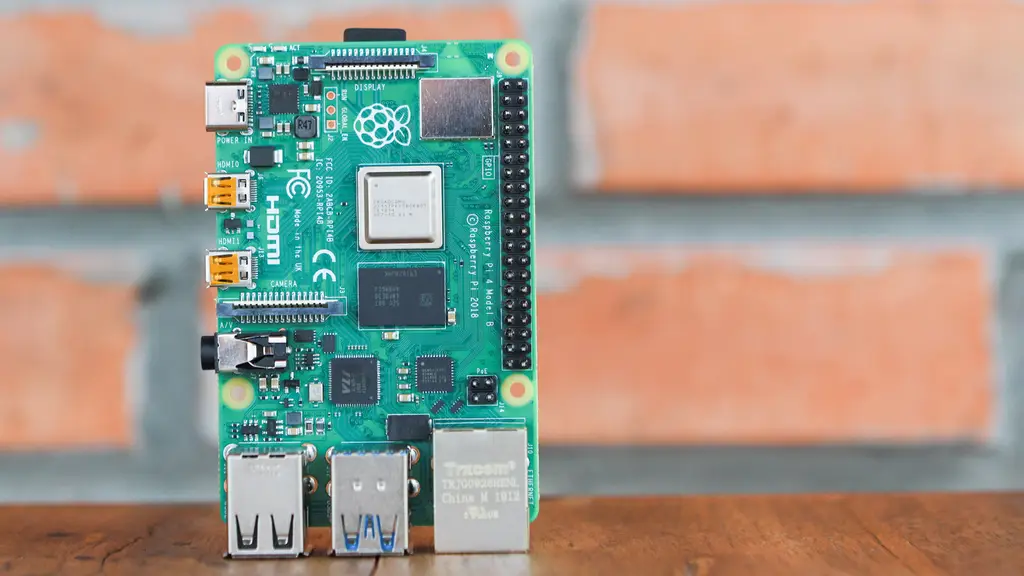
    Author says Raspberry Pi 4 is enough for many projects

    For home automation, robotics and self-hosting, the older board also needs a less powerful power adapter.

    Author says Raspberry Pi 4 is enough for many projects
    Photo: Engadget

    In early November, Raspberry Pi CEO Eben Upton announced an $80 price increase for the Raspberry Pi 5 with 16GB of memory, bringing its price to $385.

    This was reported by Engadget.

    The official starting price for the Raspberry Pi 4 with 1GB of memory is $35. The article’s author notes that higher-spec Pi 4 models have also become more expensive, but they remain slightly cheaper than the Pi 5 and more affordable.

    The Pi 4 needs a 15W USB adapter, while the Pi 5 requires a 27W USB-C adapter with Power Delivery (PD). The author estimates that a fan is unnecessary for most Pi 4 projects.

    Under a heavy workload, the Pi 5 can heat up to more than 80 degrees Celsius in about a minute. Without a fan, the board reduces its CPU speed to manage the temperature.

    The author estimates that the Pi 5 is more than twice as powerful as the Pi 4, but says the difference is more noticeable when the board serves as a primary computer. The Pi 4’s slower processor may limit web browsing and demanding tasks.

    The author says the Raspberry Pi 4 and 3B+ are easier to find for sale. On the secondhand market, used boards often cost less than retail, sometimes bundled with power supplies, cases and other accessories.

    Upton described the period of price increases as difficult but temporary, and pledged to lower prices when memory becomes cheaper. Memory manufacturers have warned that shortages could continue through 2028 and beyond.