Medicine & Research

  1. Medicine & Research updated 11:57

    Study links lung cancer subtype to response to tarlatamab

    Tumors showed two possible ways to resist treatment: losing the DLL3 target or exhausting nearby T cells.

    Study links lung cancer subtype to response to tarlatamab
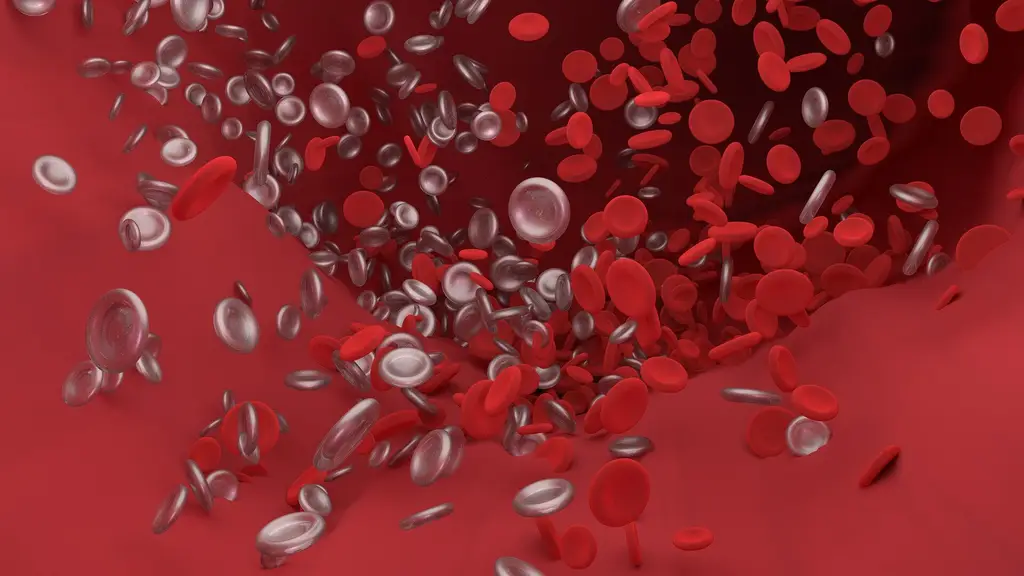
    Photo: Kost9n4 / Pixabay

    Researchers at Dana-Farber Cancer Institute analyzed 167 blood samples from 46 patients with lung neuroendocrine cancers treated with tarlatamab at the institute. Among 34 patients with small cell lung cancer whose outcomes were known, the ASCL1 subtype was associated with more frequent clinical benefit than the NEUROD1 and POU2F3 subtypes.

    This was reported by the news site Medical Xpress.

    Clinical benefit was seen in 16 of 20 patients with the ASCL1 profile. Among patients with NEUROD1 and POU2F3 profiles, benefit was seen in two of 10 and none of four, respectively. Median time before disease progression was 9.6 months for the ASCL1 group and about two months for the other groups.

    Researchers also identified two possible paths to acquired resistance. In some tumors, the ASCL1 profile shifted toward NEUROD1 and the tarlatamab target protein DLL3 disappeared. In others, DLL3 remained, but nearby T cells showed signs of exhaustion and dysfunction.

    Blood tests detected early changes: by day 15 of treatment, tumor-related material in the blood had fallen more sharply in patients who responded. Those with larger declines had a median 11.7 months before disease progression, compared with 1.9 months for those with smaller declines.

    The findings were published in Cancer Cell. The team also developed preclinical mouse models of small cell lung cancer with an intact immune system. The authors said larger studies are needed to determine whether tumor subtype, DLL3 levels and changes in the blood can help predict who will benefit from treatment.

    The study was published Nov. 24 in Cancer Cell.

  2. Medicine & Research

    UKHSA reports norovirus cases in England rose more than 35%

    Norovirus causes nausea, diarrhea and vomiting. Most healthy adults recover within one to three days.

    UKHSA reports norovirus cases in England rose more than 35%
    Photo: Medical Xpress

    In the two weeks to November 24, norovirus cases in England rose more than 35% compared with the previous two-week period.

    Details were published by Medical Xpress.

    Overall, case numbers are about 5% above the usual level for this time of year. Cases fell in Scotland and rose in Wales.

    Other norovirus symptoms include fever, stomach and body aches, and headaches. People with weakened immune systems, older adults and young children may become more seriously ill. Severe cases can last longer, and dehydration may require hospital treatment.

    The virus spreads when particles from vomit or feces get onto food, hands or surfaces and are then transferred to the mouth. Close contact between people can also spread it.

    To help protect against norovirus, wash your hands often with soap and hot water; alcohol-based sanitizers are not effective enough against it. If someone in your household becomes ill, bleach-based products can be used to clean surfaces.

    There are no approved vaccines or specific treatments for norovirus. It is important to replace lost fluids while ill, and to clean areas contaminated by vomit or feces immediately.

  3. Medicine & Research updated 23:55

    Trial compares three drugs to prevent clots after joint replacement

    The findings point to a trade-off: aspirin was slightly less effective at preventing clots, while rivaroxaban and warfarin were linked to a modestly higher bleeding risk.

    Trial compares three drugs to prevent clots after joint replacement
    Photo: Medical Xpress

    The trial compared aspirin, warfarin and rivaroxaban in 18,883 patients at 34 medical centers in the United States and Canada after elective hip or knee replacement. Participants were followed for six months.

    The report comes from Medical Xpress.

    After surgery, participants were randomly assigned to receive one of the three drugs. The study was published in the New England Journal of Medicine.

    Aspirin was slightly less effective at preventing blood clots than warfarin or rivaroxaban. Treatment with warfarin and rivaroxaban was associated with a small increase in bleeding risk.

    Venous thromboembolism includes deep vein thrombosis, which usually occurs in the leg, and pulmonary embolism. The latter occurs when a clot reaches the lungs and can be life-threatening.

    Researchers from the University of Maryland School of Medicine took part in the trial. Jay S. Magaziner, professor of epidemiology and public health, said medication choices should weigh the risks of blood clots, bleeding and other complications.

  4. Medicine & Research updated 23:55

    Three-mRNA cocktail strengthens antitumor T-cell response in mice

    Combining two versions of the cocktail led to complete tumor regression in several mice. The animals also resisted a subsequent tumor challenge.

    Three-mRNA cocktail strengthens antitumor T-cell response in mice
    Photo: Medical Xpress

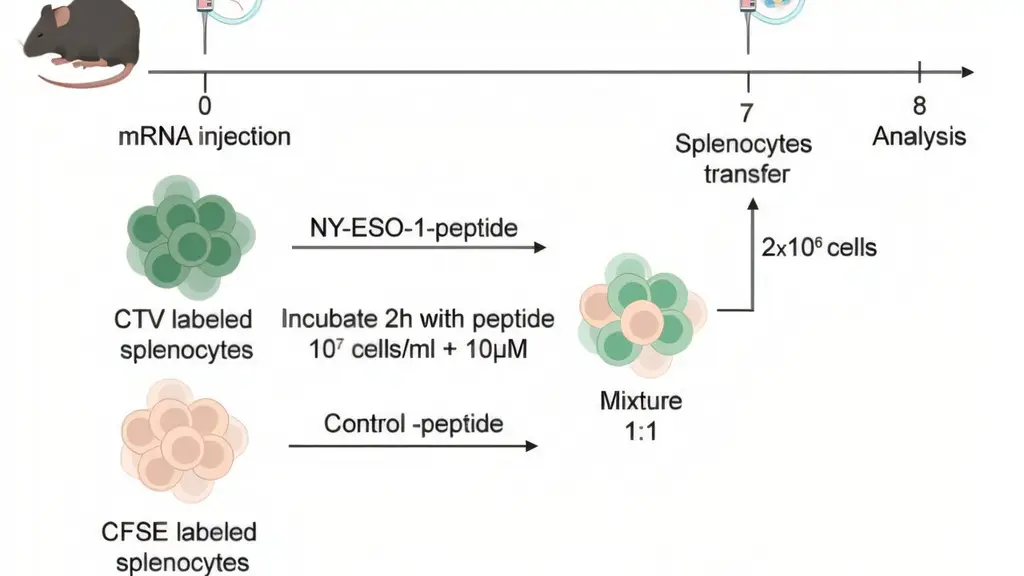
    Researchers at Kanazawa University tested a cocktail of three types of messenger RNA (mRNA) in mice. In a study published November 24 in OncoImmunology, the number of tumor-antigen-specific cytotoxic CD8+ T cells more than doubled compared with using antigen mRNA alone. The cocktail also slowed tumor growth and extended the mice’s survival.

    Medical Xpress has the details.

    One component encodes a tumor antigen, another encodes CD80, a molecule that provides T cells with an additional activation signal. The third encodes a cytokine anchored to the cell surface.

    In another version, the researchers replaced interleukin-2 with interleukin-12 and redesigned the tumor antigen to be presented through major histocompatibility complex class II molecules. This promoted the differentiation of CD4+ helper T cells into Th1 cells. When both versions were administered together, several mice had complete tumor regression and resisted a subsequent tumor challenge.

    The team also showed that the platform could induce cytotoxic T cells targeting the NY-ESO-1 antigen in transgenic mice expressing the human HLA-A*02:01 molecule.

    The researchers say the findings could support future clinical use of the platform and the development of “programmable cancer vaccines” whose composition can be adapted to a patient’s tumor.

  5. Medicine & Research

    FDA approves amivantamab for metastatic HPV-negative head and neck cancer

    In a phase Ib/II trial, 42% of patients had an objective response to treatment. The drug is intended for patients whose cancer is not related to human papillomavirus (HPV).

    FDA approves amivantamab for metastatic HPV-negative head and neck cancer
    Photo: Medical Xpress

    On November 5, the U.S. Food and Drug Administration (FDA) granted accelerated approval to amivantamab for metastatic HPV-negative head and neck squamous cell carcinoma. It is the first new drug approved for this type of cancer in seven years.

    Medical Xpress reported the news.

    Amivantamab targets both the epidermal growth factor receptor (EGFR) and the mesenchymal-epithelial transition (MET) receptor. The approach is designed to limit adaptive resistance, in which cancer cells compensate for the blocking of one signaling pathway by increasing activity in another.

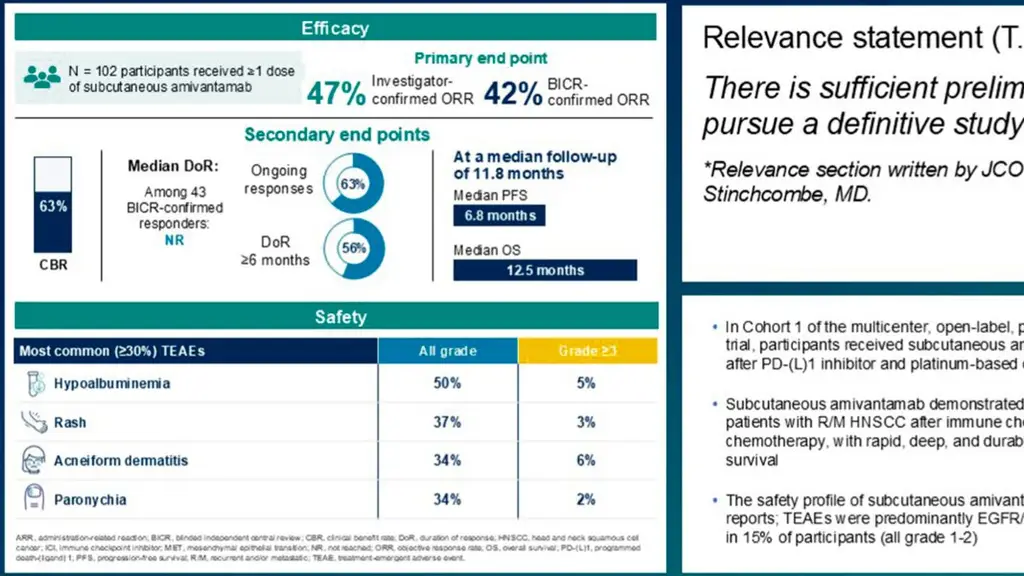
    The phase Ib/II trial included 102 patients with HPV-unrelated head and neck cancer. All had previously received chemotherapy and immunotherapy. According to the trial’s lead investigator, Barbara Burtness of Yale School of Medicine, 42% of participants had an objective response to treatment, and median survival was 12.5 months.

    The drug is given as a subcutaneous injection. The main side effects included rash and reduced albumin levels, the investigator said. Infusion reactions occurred in 15% of participants and were mild, she said.

    The trial results were published in the Journal of Clinical Oncology. A study testing amivantamab in combination with chemotherapy and immunotherapy is ongoing.