Medicine & Research

  1. Medicine & Research updated 23:55

    Warmer nights linked to poorer associative memory test results

    The link appeared in only one of 12 cognitive tests; the study included 1,873 people ages 42 to 75.

    Warmer nights linked to poorer associative memory test results
    Photo: Medical Xpress

    An Australian study led by the University of Newcastle and QIMR Berghofer Medical Research Institute linked warmer nights to lower scores on an associative memory test. The analysis included 1,873 participants ages 42 to 75. The study was published in Environment International.

    This was reported by Medical Xpress.

    Participants took 12 online tests covering memory, language, attention, reasoning and problem-solving. A statistically significant link with overnight temperature appeared only in the associative memory task, which measures the ability to remember and recall connections between unrelated items.

    Lead author Dr. Anna Behler said the results point to a link between climate, aging and brain health that warrants further study.

    Co-author Dr. Renate Thienel suggested that heat’s possible effect on sleep quality could help explain the finding. Sleep is important for memory consolidation.

    The study is part of the Prospective Imaging Study of Ageing (PISA), an Australian project led by QIMR Berghofer Medical Research Institute. It examines how genetics, lifestyle and environmental factors affect brain health and cognitive aging.

    Associate Professor Lupton said the next step is to determine whether the effects are temporary or whether repeated exposure to warmer nights could have lasting consequences. He also advised keeping bedrooms cool and getting good-quality sleep, staying physically active, stimulating the mind, maintaining social connections and looking after cardiovascular health.

  2. Medicine & Research

    FDA approves giredestrant for early-stage breast cancer

    The drug is intended as adjuvant treatment after primary therapy for stage 1–3 hormone receptor-positive, HER2-negative breast cancer, with the aim of lowering the risk of recurrence.

    FDA approves giredestrant for early-stage breast cancer
    Photo: Medical Xpress

    On November 23, the U.S. Food and Drug Administration (FDA) approved giredestrant for adjuvant treatment of stage 1–3 hormone receptor-positive, HER2-negative breast cancer.

    Original source — Medical Xpress.

    The decision was based on the international Phase III lidERA trial, which included 4,170 people. Participants were randomly assigned to receive giredestrant or one of the standard endocrine therapies for up to five years.

    After a median follow-up of about 32 months, the giredestrant group had a lower risk of invasive disease recurrence or progression. The risk was 30% lower than in the standard endocrine therapy group. The risk of distant disease was 31% lower.

    The two treatment options had broadly similar safety profiles in the trial. Common side effects included joint aches, hot flashes and headaches; most were low grade. Fewer participants in the giredestrant group stopped treatment because of side effects than in the standard therapy group.

    Giredestrant belongs to a class of drugs called selective estrogen receptor degraders. It binds to the receptor and promotes its breakdown, rather than simply blocking estrogen from interacting with it. About 70% of breast cancers are hormone receptor-positive.

  3. Medicine & Research updated 23:55

    Aerosolized antibiotics boost immunotherapy in mice

    Across several mouse models, the combination produced more complete remissions than immunotherapy alone. DNA sequences consistent with tumor-associated bacteria were found in about 35% of 95 human lung cancer samples.

    Aerosolized antibiotics boost immunotherapy in mice
    Photo: Medical Xpress

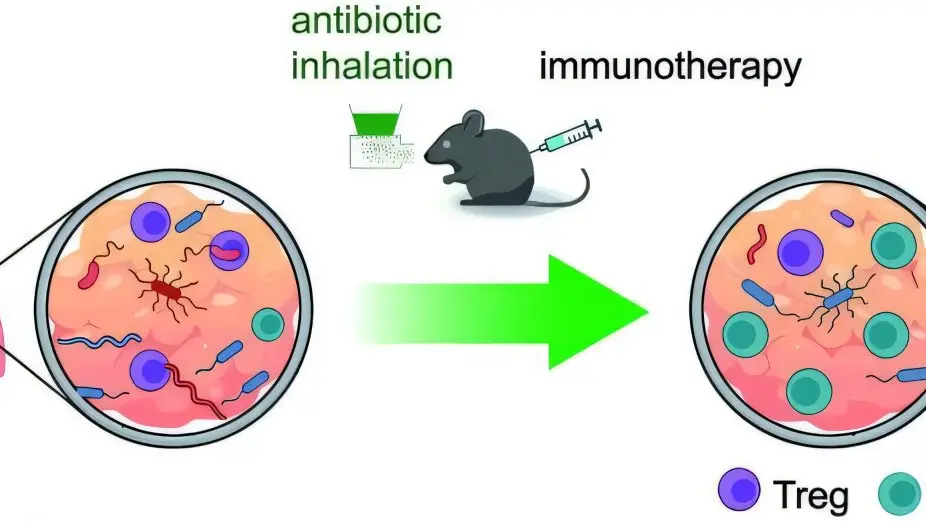
    Researchers at the Leibniz Institute for Immunotherapy in Regensburg, Germany, the University of Milan and the National Cancer Institute in Milan, Italy, studied the approach in mice. In several models, aerosolized antibiotics combined with immunotherapy produced more complete remissions than immunotherapy alone. The study was published in Cancer Immunology Research.

    Original report: Medical Xpress.

    In mouse models, tumor-associated bacteria promoted the accumulation of regulatory T cells, which can suppress antitumor immune responses. The bacteria supported this response through metabolites, including the amino acid valine.

    Researchers administered antibiotics as an aerosol rather than orally to direct their effects to the airways. The approach restored a healthy lung microbiome: the proportion of regulatory T cells fell, while the proportion and diversity of effective T cells increased.

    Among 95 human lung cancer samples, about 35% contained DNA sequences consistent with tumor-associated bacteria. Samples with these sequences also had more regulatory T cells. The analysis of human samples does not establish a causal relationship.

    The researchers are preparing clinical studies to further evaluate the approach in patients.

  4. Medicine & Research updated 23:56

    Researchers develop questionnaire on diabetic retinal disease’s impact

    It covers everyday challenges, emotional well-being and treatment burden—areas that standard visual acuity tests do not measure.

    Researchers develop questionnaire on diabetic retinal disease’s impact
    Photo: Medical Xpress

    Researchers from the University of California, Davis, and the University of Michigan developed a validated questionnaire to assess how diabetic retinal disease affects patients’ lives. They presented it at the Retina Society’s 59th Annual Scientific Meeting in Los Angeles.

    Source: Medical Xpress.

    The Mary Tyler Moore Diabetic Retinal Disease Questionnaire covers functional vision, quality of life, emotional well-being, treatment burden and barriers to care. Patients rate how difficult everyday tasks are, such as reading small print in low light or seeing pedestrians at night.

    Some questions address anxiety about possible vision loss, the risk of injury and how vision problems affect patients’ ability to care for loved ones. Patients also rate the stress of eye injections and how recovery afterward limits their usual activities.

    Diabetic retinopathy develops when high blood sugar damages blood vessels in the retina. It often has no symptoms in its early stages.

    The U.S. Centers for Disease Control and Prevention (CDC) estimates that 9.6 million people in the United States were diagnosed with diabetic retinopathy in 2021. Of those, 1.84 million had a more advanced, vision-threatening form of the disease. Thiran Jayasundera, one of the questionnaire’s developers, hopes it will be used in clinical trials and routine care nationwide.

  5. Medicine & Research updated 23:55

    Nasal flu vaccine protected mice against three influenza A subtypes

    The experimental vaccine did not protect against H3N2. Researchers plan to add hemagglutinin stalks from group 2 and influenza B viruses.

    Nasal flu vaccine protected mice against three influenza A subtypes
    Photo: Medical Xpress

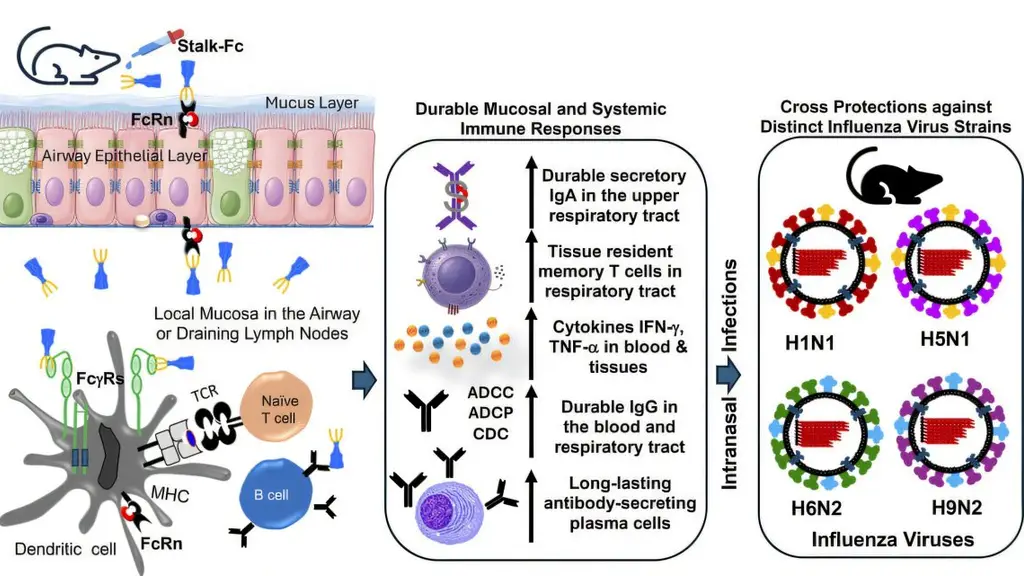
    Researchers at the University of Maryland tested an experimental flu vaccine delivered as a nasal spray in mice. In a study published Nov. 16 in The Journal of Clinical Investigation, the vaccine protected the animals against three influenza A subtypes.

    Medical Xpress published the report.

    In laboratory tests, the vaccine protected against H5N1 with 90% efficacy, H1N1 with 91% and H6N2 with 80%. Protection in groups of unvaccinated mice ranged from 0% to 27.3%.

    Antibodies remained detectable 16 months after the final dose. Six months after vaccination, 80% of the mice were still protected against H5N1.

    The vaccine did not protect against H3N2, a group 2 influenza A subtype. Researchers plan to add hemagglutinin stalks from group 2 and influenza B viruses and explore developing a multivalent nasal vaccine.

    The researchers used the hemagglutinin protein’s stalk, a part that changes less often than other sections. They fused it with an antibody fragment to strengthen the immune response and used the neonatal Fc receptor (FcRn) to carry it into cells lining the nasal passages.

    Xiaoping Zhu, a professor and chair of the University of Maryland’s Department of Veterinary Medicine, hopes to move on to clinical trials to test the vaccine’s safety and effectiveness in people.