Medicine & Research

  1. Medicine & Research updated 00:02

    Huawei launches Sense G1 glucose sensor with minute-by-minute readings

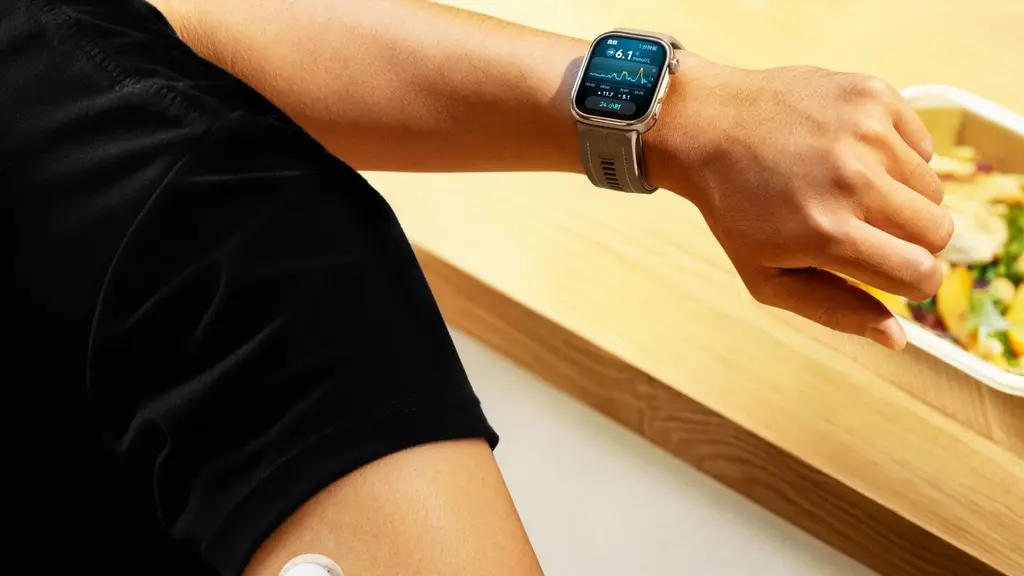
    The device sends readings to a smartphone or smartwatch and can warn users when glucose levels are too high or low.

    Huawei launches Sense G1 glucose sensor with minute-by-minute readings
    Photo: Notebookcheck

    As of November 24, Huawei’s Sense G1 continuous glucose monitor is available in China. It sends readings every minute and works for up to 16 days before it needs to be replaced.

    The report comes from Notebookcheck.

    An applicator attaches the sensor to the upper arm. A microneedle collects glucose data, which the sensor sends via Bluetooth 5.3 to an iPhone, an Android or Huawei smartphone running HarmonyOS, or a Huawei smartwatch.

    Huawei says the sensor’s readings differ from actual glucose levels by an average of no more than 7.06%. Its app can alert users to high or low readings, assess diabetes risk and analyze glucose levels after meals. It also includes food lists and recipes with information about sugar content.

    The sensor measures 20.8 × 2.9 mm and weighs 1.5 g. Huawei says it has an IP28 water-resistance rating and can be worn while swimming.

    The sensor costs ¥299 in China. An unopened device can be stored for up to 12 months. Huawei has not announced plans to launch it in other countries.

  2. Medicine & Research updated 23:56

    Study finds potentially targetable changes in 19% of primary tumors

    More than half of these changes occurred in cancer types other than those for which the U.S. Food and Drug Administration has approved the corresponding drugs.

    Study finds potentially targetable changes in 19% of primary tumors
    Photo: Medical Xpress

    In 2026, University of Cambridge researchers analyzed genomic data from more than 17,000 tumors from British and Dutch projects. They found DNA changes that could be targeted by already approved therapies in 19% of primary tumors and 26% of metastatic tumors. The results were published in The Lancet Oncology.

    The information comes from Medical Xpress.

    More than half of these changes occurred in cancer types other than those for which the FDA has approved the corresponding drugs.

    The sample included 11,000 primary tumors from the U.K.-based 100,000 Genomes Project. The researchers also used data from 6,000 metastatic tumors held by the Netherlands-based Hartwig Medical Foundation.

    Genetic tests typically look for individual mutations that existing drugs can target. In this retrospective analysis, the team searched for patterns of DNA damage across the entire genome.

    These patterns can point to defects in important biological processes. One example is homologous recombination deficiency, a failure of one of the most accurate DNA repair systems in cells.

    Serena Nik-Zainal, the study’s senior author and a research professor in the Department of Genomic Medicine at the University of Cambridge, said not every drug would be suitable for treating a different cancer type. New clinical trials are needed to test these possibilities.

    The authors also said studies should determine whether whole-genome sequencing improves treatment outcomes and whether the approach is cost-effective.

  3. Medicine & Research updated 23:56

    Cannabis use linked to psychosis onset 2.5 years earlier

    The gap widened among older age groups, reaching 6.3 years for people whose psychosis began at age 30 or later.

    Cannabis use linked to psychosis onset 2.5 years earlier
    Photo: ScienceDaily

    Researchers at UNSW Sydney analyzed 149 studies involving more than 71,000 participants, most conducted since 2011 in Europe, North America and Australia. The analysis found that people who used cannabis experienced their first episode of psychosis an average of 2.5 years earlier than those who did not. The findings were published in the journal Biological Psychiatry.

    ScienceDaily has the details.

    In studies where the average age of psychosis onset was 20 to 24, the difference was about 1.6 years. Psychosis began earlier among cannabis users than among nonusers in these studies.

    In studies involving people whose psychosis began at ages 25 to 29, the difference was 4.43 years. In the group whose psychosis developed at age 30 or older, it reached 6.3 years.

    The analysis found no statistically significant difference among teenagers. The authors cautioned that this does not mean there is no risk: psychosis rarely begins before the middle teenage years, limiting the ability to detect an even earlier onset.

    Because the researchers analyzed existing observational studies, the findings do not prove that cannabis causes psychosis or makes it begin sooner.

    The authors said further research is needed on long-term cannabis use, along with more precise and consistent ways to record consumption.

  4. Medicine & Research updated 23:56

    Researchers identify depression subtype linked to the biological clock

    A study of more than 10,000 Australians found the subtype in nearly a quarter of participants. They also responded less well to common antidepressants, researchers found.

    Researchers identify depression subtype linked to the biological clock
    Photo: ScienceDaily

    In the nationwide Australian Genetics of Depression Study, University of Sydney researchers analyzed clinical and genetic data from more than 10,000 people with depression. The analysis included people with severe, recurrent or persistent depression; 2,604 participants were identified as having the circadian subtype.

    This was reported by ScienceDaily.

    Participants with this subtype were more likely to have seasonal changes in symptoms, sleep longer during depressive episodes and wake up feeling exhausted. They also more often preferred going to bed and waking up later.

    Depression more often began earlier in these participants, and symptoms were more severe, including mania and stronger suicidal thoughts. Genetic analysis also found a predisposition to inflammatory and cardiovascular problems and major neurodevelopmental disorders, including attention-deficit/hyperactivity disorder (ADHD).

    Researchers found that common antidepressants, including selective serotonin reuptake inhibitors (SSRIs), were less effective for people with this subtype. These participants also experienced side effects more often.

    Researchers said light therapy, melatonin and antidepressants targeting melatonin pathways may be appropriate options for this group. The findings were published in the British Journal of Psychiatry.

    Depression is not a uniform illness, and understanding the characteristics of different subtypes means that we can give people earlier access to treatments that will be most effective for them.

    Emiliana Tonini, First author of the study, University of Sydney
  5. Medicine & Research updated 14:43

    UKHSA records about 5,258 heat-related deaths in England

    That is the highest figure since records began in 2016. The most deaths were recorded in late June.

    UKHSA records about 5,258 heat-related deaths in England
    Photo: Європейська правда

    About 5,258 heat-related deaths were recorded in England in 2026, according to the UK Health Security Agency (UKHSA).

    Original report: Європейська правда. Also reporting: The Guardian.

    That is the highest figure since records began in 2016. The previous record was set in the summer of 2022, when 2,985 deaths were linked to heat. The current figure is 76% higher.

    The most deaths were recorded from June 21 to 28, during the second heat period.

    Preliminary data from the UK Met Office showed that the summer of 2026 was the hottest since records began in 1884. It was the first year for which such data were available.

    According to the EU’s monitoring center for global warming, Western Europe had its hottest June and July on record. The center links this to climate change and says the summer in the region was also marked by drought and wildfires.