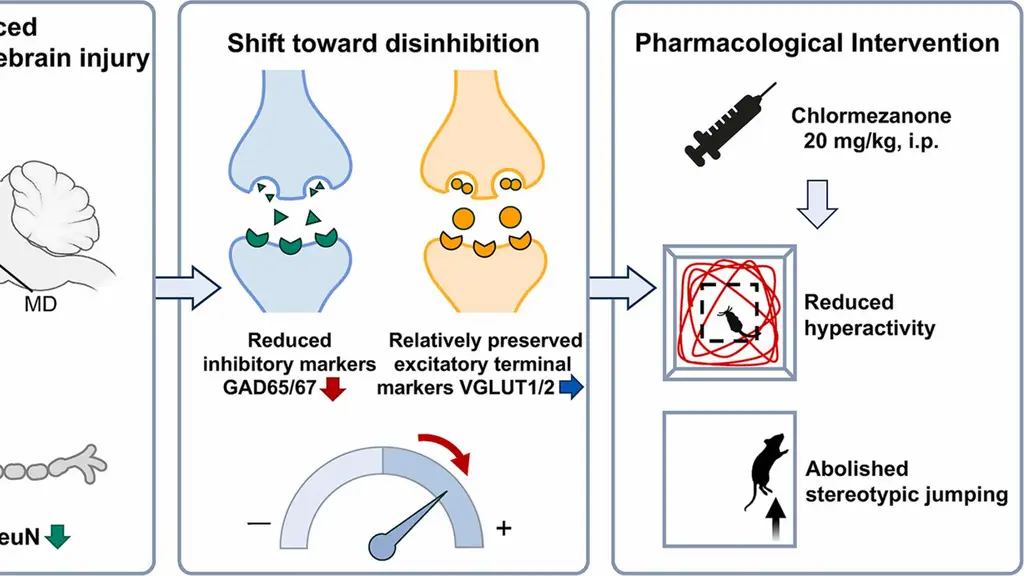
A Japanese research group studied male mice in a model of severe subchronic methylmercury intoxication. The mice received the substance in drinking water, and the findings were published in Environmental Pollution.
Medical Xpress reported the news.
Levels of the GABAergic neuronal markers GAD65/67 fell in five forebrain regions involved in behavioral regulation, while markers of excitatory presynaptic terminals were mostly preserved. Histological findings also indicated neuronal injury.
The mice showed hyperactivity and stereotypic jumping. Chlormezanone treatment reduced the hyperactivity and abolished the jumping.
A reduction in GAD65/67 levels alone does not prove selective loss of GABAergic neurons. The findings point to a functional link between disrupted inhibitory signaling and behavioral changes. Chlormezanone’s precise mechanism of action remains unknown, and its effectiveness in humans has not been established.
Methylmercury remains a persistent environmental hazard. It accumulates in aquatic food chains, and people are exposed to it primarily through contaminated seafood.
Professor Takashi Uehara of Okayama University said assessments of methylmercury neurotoxicity should consider forebrain circuit function and behavioral outcomes. He also said that studying why inhibitory neurons are vulnerable could help identify ways to prevent or mitigate neurological dysfunction.