Medicine & Research

  1. Medicine & Research

    Liverpool researchers develop prototype game on oral health inequalities

    The game lets students, health professionals and others discuss social factors affecting oral health and access to dental care.

    Liverpool researchers develop prototype game on oral health inequalities
    Photo: Medical Xpress

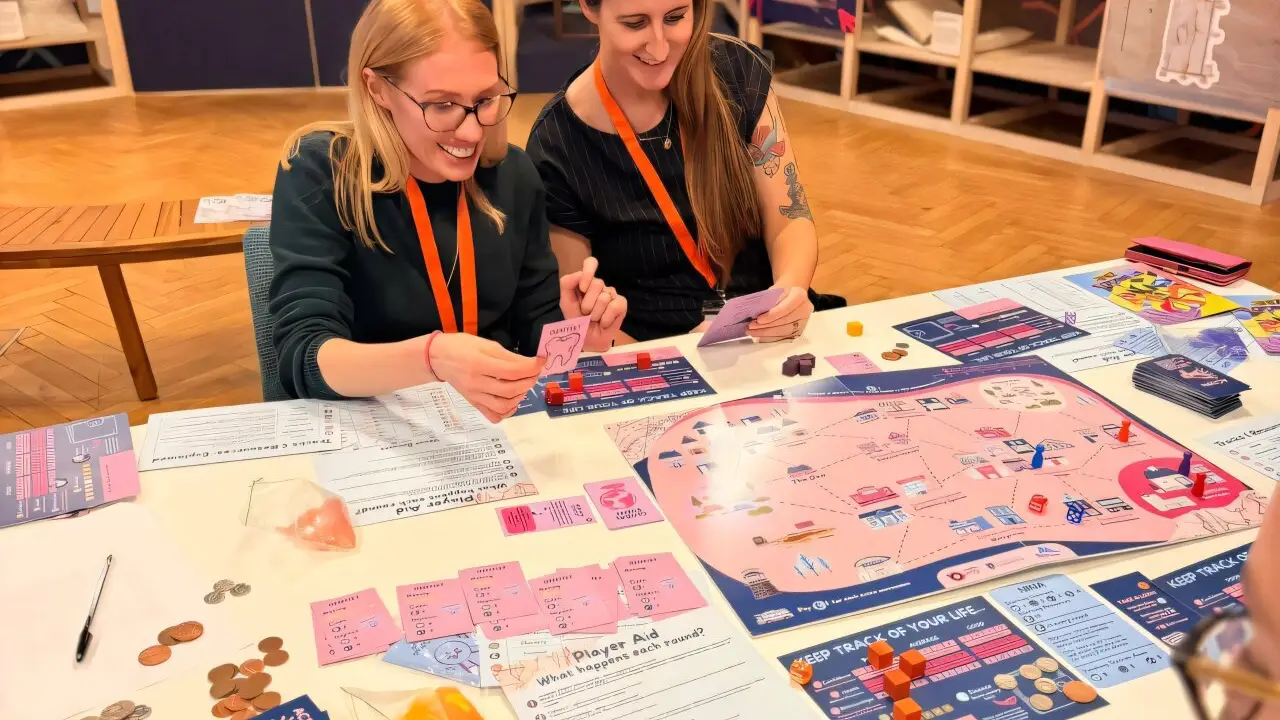
    Researchers at the University of Liverpool developed a prototype board game about inequalities in oral health and access to dental care. It was showcased at three venues in Liverpool as part of the Festival of Social Science.

    Details were published by Medical Xpress.

    The game was developed using findings from more than 70 in-depth interviews. It shows how occupation, poverty, the cost-of-living crisis and global events, including the COVID-19 pandemic, affect oral health and access to dental care.

    The game draws on two national projects: research into the oral health needs of sex workers and work on stigma and shame in this area.

    The team sees potential for the game in teaching and training in dentistry, criminology, biomedical sciences, public health and planning.

    The project is led by clinical lecturer in dentistry Dr. Janine Yazdi-Doughty and senior lecturer in criminology Dr. Gemma Ahearne. The game builds on an art exhibition about sex workers’ experiences, which is set to tour U.K. dental schools.

    The team is continuing to refine the game and hopes to expand it to other research.
  2. Medicine & Research

    England urges at-risk groups to get flu vaccine before peak

    Vaccination does not rule out infection, but it lowers the risk of severe illness and hospitalization. Flu activity may peak in December or early January.

    England urges at-risk groups to get flu vaccine before peak
    Photo: BBC News

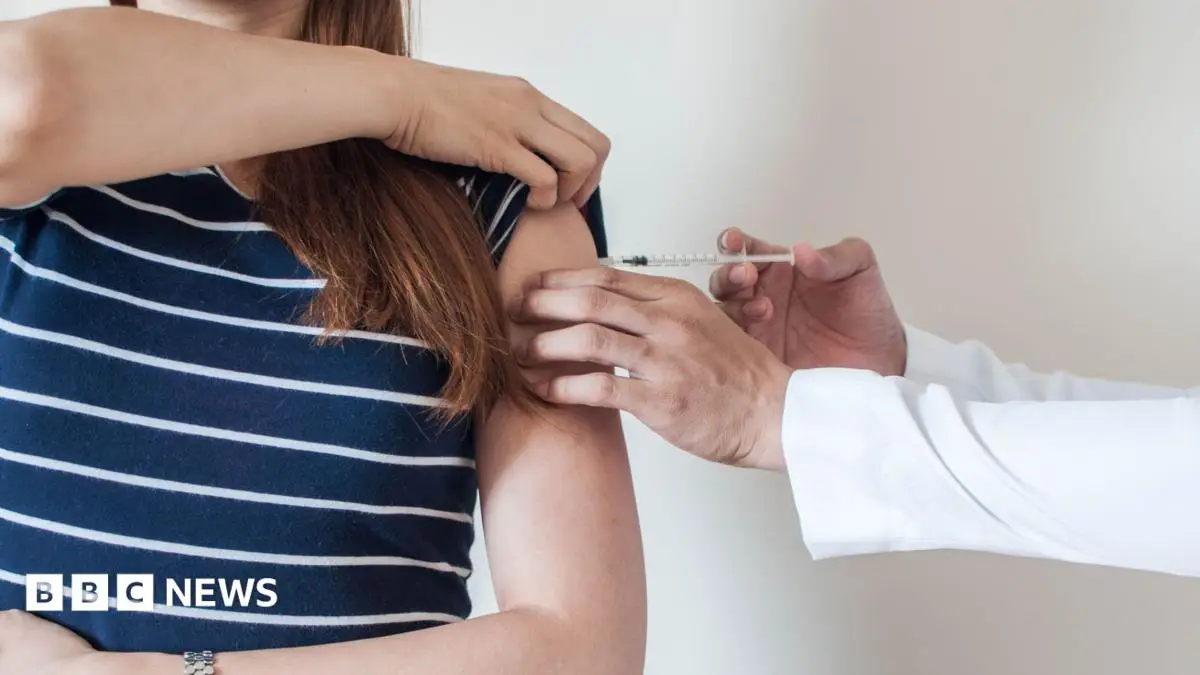
    Health officials in England are urging people in at-risk groups to get a free flu vaccine after the number of hospital patients seriously ill with flu rose sharply in the past week.

    More details are available from BBC News.

    Those eligible for a free vaccine include children, pregnant women, care home residents, people with lung conditions and everyone aged 65 and older. So far this winter, around a third of people under 65 in at-risk groups and two-thirds of those aged 65 and older have been vaccinated. Health officials say around 7 million people remain unprotected.

    The vaccine cannot prevent all infections, but it reduces the risk of severe illness and hospitalization. It takes about two weeks after vaccination for immunity to build.

    The UK Health Security Agency (UKHSA) estimated that flu was linked to 3,798 deaths in England last winter. Vaccine makers prepare each year’s vaccine based on forecasts of which strains will circulate in winter; the current vaccine protects against three strains — two influenza A strains and one influenza B strain.

    Prof. Nick Hopkinson, professor of respiratory medicine at Imperial College London, estimates that vaccination reduces the risk of serious flu complications by 50%. People who are not eligible for a free vaccine can buy one at most pharmacies for £15 to £25.

  3. Medicine & Research

    Analysis estimates Swedish aid prevented about 1,500 maternal deaths

    The report also models how a potential cut in annual aid could affect access to contraception.

    Analysis estimates Swedish aid prevented about 1,500 maternal deaths
    Photo: Medical Xpress

    An analysis by Karolinska Institutet, the ONE Campaign and the Guttmacher Institute estimates the impact of Swedish aid in 2024 in low- and middle-income countries. The support provided 3.6 million women and couples with access to modern contraceptives, the analysis estimates. It also prevented 1.3 million unintended pregnancies and about 1,500 maternal deaths.

    The information comes from Medical Xpress.

    The report says aid amounted to about 458 million Swedish kronor in 2024. The authors estimate it also helped prevent 388,000 unsafe abortions.

    Swedish support is estimated to have saved the lives of around four women a day, gains that are now at risk of being lost as funding has decreased.

    Anna Mia Ekström, professor at the Department of Global Public Health and one of the report’s authors

    The analysis is based on OECD development assistance data for 2024 and modeling estimates from the Guttmacher Institute. Its findings cover only support for modern contraceptives, part of Sweden’s broader sexual and reproductive health assistance.

    The authors modeled the effects of cutting annual aid by 100 million Swedish kronor, or about 20%. Under that scenario, 789,000 fewer women and couples could gain access to modern contraceptives. The authors estimate this would lead to 277,000 additional unintended pregnancies and 85,000 unsafe abortions each year.

  4. Medicine & Research

    Johns Hopkins study links low vitamin D levels to shorter sleep

    Researchers measured sleep with wrist-worn sensors rather than relying on participants’ estimates; the study did not test the effects of supplements.

    Johns Hopkins study links low vitamin D levels to shorter sleep
    Photo: Fox News

    Researchers at the Johns Hopkins Bloomberg School of Public Health and the National Institute on Aging analyzed data from 460 adults. The data were collected from 2012 to 2019 as part of the Baltimore Longitudinal Study of Aging. Participants with low vitamin D levels slept about 23 minutes less per night than people with normal levels.

    Fox News has the details.

    Participants had an average age of 71. Researchers assessed sleep using actigraphs, watch-like motion sensors that record periods of sleep and wakefulness.

    Researchers divided participants into three groups based on vitamin D levels. The group with the highest levels slept nearly 20 minutes longer per night than the group with the lowest levels. People with lower levels also stayed awake longer after waking during the night.

    The link between vitamin D levels and sleep was strongest among Black participants, who made up about 22% of the group. Longer wakefulness after nighttime awakenings among people with low vitamin D levels was observed regardless of age, gender or race.

    The study analyzed snapshots of data rather than testing a treatment in a clinical trial. It found an association but does not prove that low vitamin D levels cause shorter sleep or that supplements would improve it.

    Blood tests could not determine whether vitamin D came from sunlight, food or supplements. Researchers also did not track whether sleep changed as vitamin D levels changed over several years.

    Participants did not have cognitive impairment, so the findings may not apply to younger people or adults with such impairment. The results were published in The Journal of Gerontology: Medical Sciences.

    Senior study author Adam Spira, a mental health professor at the Bloomberg School, said further research is needed to determine whether raising vitamin D levels can improve sleep.

  5. Medicine & Research

    Monash researchers describe how tumors can disrupt immune cell communication

    A review highlights a trial in people with advanced melanoma combining local IL-12 gene therapy with an immune checkpoint inhibitor. The response rate was 41%, including complete responses in 36% of patients.

    Monash researchers describe how tumors can disrupt immune cell communication
    Photo: Medical Xpress

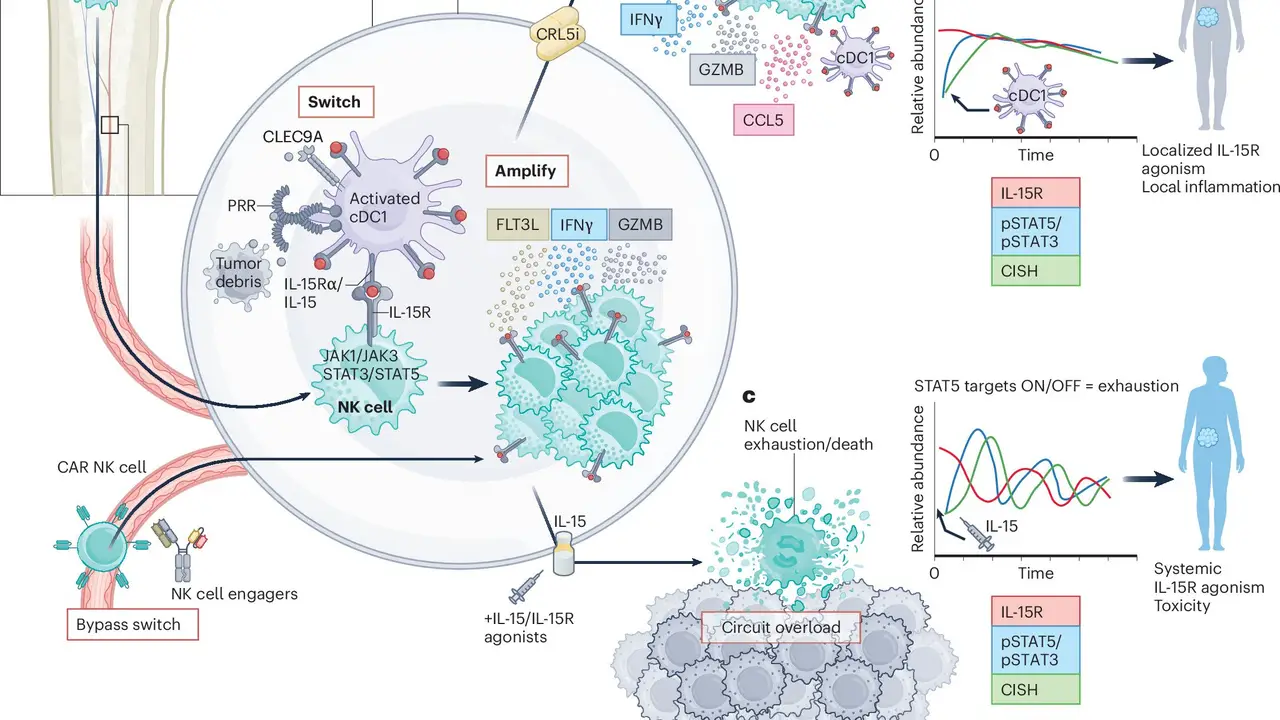
    A review by researchers at Monash University and the University of Melbourne in Australia was published Nov. 27 in Nature Cancer. It describes how tumors can disrupt communication between natural killer cells and dendritic cells.

    Original source — Medical Xpress.

    The review was led by Nicholas D. Huntington. The authors examined the role of natural killer (NK) cells in the early antitumor response. NK cells can kill tumor cells and recruit dendritic cells, which help activate T cells.

    The authors say that in established tumors, communication between these cells can be disrupted by metabolic stress and immunosuppressive pathways. Tumors consume much of the available glucose and oxygen and accumulate metabolic byproducts. These conditions can weaken NK cells’ ability to kill tumor cells.

    One signal involved in this communication is interleukin-12, produced by activated dendritic cells. It stimulates NK cells to release interferon-gamma. This molecule can strengthen dendritic cell activity and help recruit other immune cells to the tumor.

    The review also describes a clinical trial involving patients with advanced melanoma. It combined local delivery of IL-12 gene therapy with an immune checkpoint inhibitor.

    The response rate was 41%, with complete responses in 36% of patients. The review described the combination as well tolerated.

    The authors suggest that future treatments may coordinate the activity of NK cells, dendritic cells and T cells, rather than targeting each cell type separately.