Medicine & Research

  1. Medicine & Research

    RF-409 protein lowered blood sugar in mice with faulty insulin receptors

    The protein activated the receptor in a different way than natural insulin, bypassing a damaged binding site. So far, it has been tested only in cells and mice.

    RF-409 protein lowered blood sugar in mice with faulty insulin receptors
    Photo: Medical Xpress

    Researchers developed the protein RF-409 and tested it in mice with insulin receptor mutations linked to Donohue syndrome. Blood sugar levels fell during treatment. The findings were published in Science Translational Medicine.

    This was reported by the news site Medical Xpress.

    Donohue syndrome is a rare genetic disorder in which mutations disrupt insulin receptor function. As a result, the hormone cannot bind to the receptors properly, and standard insulin therapy often does not work.

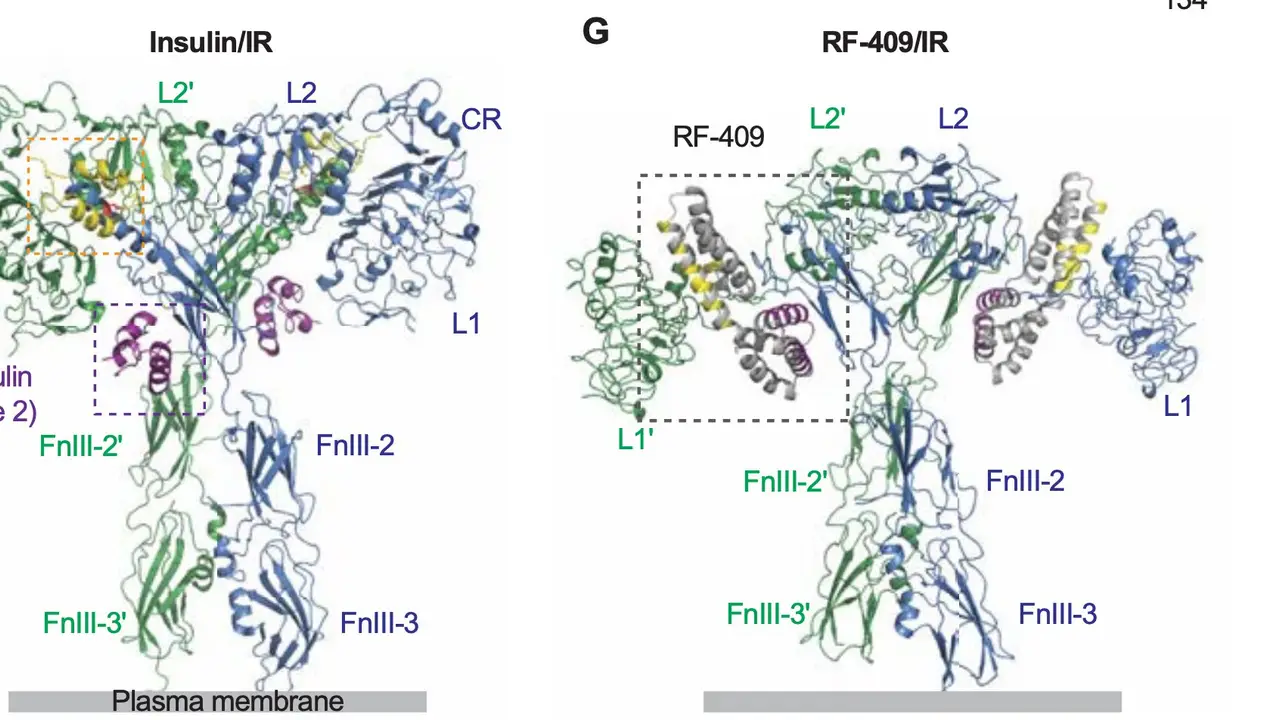
    Researchers designed RF-409 using computer modeling and artificial intelligence tools. The protein activated the receptor by binding to it differently than natural insulin does, bypassing the damaged binding site.

    Researchers first tested the protein in fat and liver cells, then in a genetically modified mouse model. In animals with severe insulin resistance, long-term RF-409 treatment lowered high blood sugar, while excess insulin in the blood moved closer to normal levels.

    The researchers also reported that the protein helped preserve muscle and fat tissue in mice with severe insulin resistance. In healthy animals, repeated RF-409 injections over 14 days lowered blood sugar without liver damage or changes in body composition. In diabetic and insulin-resistant mice, the protein did not cause progressive or severe drops in glucose.

    The findings are based on preclinical studies. Further tests will need to examine the protein’s effects on other receptor mutations and determine whether it is safe and effective in people.

  2. Medicine & Research

    Uganda institute announces Africa’s first mRNA Ebola vaccine trial

    The trial will involve 224 healthy volunteers ages 1 to 65. Researchers will assess the vaccine’s safety and its ability to trigger an immune response.

    Uganda institute announces Africa’s first mRNA Ebola vaccine trial
    Photo: Medical Xpress

    The Uganda Virus Research Institute announced Nov. 27 that a Phase 1 clinical trial of an experimental vaccine against the Bundibugyo strain of Ebola has begun in the country. The vaccine uses messenger RNA (mRNA), and the study is expected to involve 224 healthy volunteers ages 1 to 65.

    Details were published by Medical Xpress.

    The institute said it is conducting the study in collaboration with the U.S.-based Moderna. It described the trial as Africa’s first clinical trial of an mRNA vaccine against Bundibugyo virus.

    The Bundibugyo strain is linked to an outbreak in the Democratic Republic of Congo (DRC). The World Health Organization (WHO) says more than 11,000 cases and more than 5,700 deaths have been confirmed there since the outbreak was declared in May.

    Two experimental vaccines are also planned for testing in eastern DRC. The trials are expected to involve people who have been in contact with patients and others at high risk of infection.

    Uganda recorded imported Ebola cases earlier this year but contained the spread of the virus. In August, it was declared Ebola-free after recording 20 cases, including two deaths.

  3. Medicine & Research

    IBS and KAIST link mouse hypersensitivity to the anterior cingulate cortex

    In mice with one working copy of the Adnp gene, selectively suppressing neurons in the anterior cingulate cortex reduced excessive responses to touch and heat. The findings may guide the development of more targeted treatments.

    IBS and KAIST link mouse hypersensitivity to the anterior cingulate cortex
    Photo: Medical Xpress

    A joint team from the Institute for Basic Science (IBS) and KAIST found excessive activity in the anterior cingulate cortex in mice missing one of their two functional copies of the Adnp gene. The results were published in Molecular Psychiatry.

    More details are available from Medical Xpress.

    Mutations in the ADNP gene cause a rare neurodevelopmental disorder associated with autism and heightened sensitivity to touch and pain. Mice with one functional copy of Adnp responded more strongly to mechanical stimuli, heat and electric shocks.

    Using neuronal activity mapping and ultrahigh-field functional magnetic resonance imaging, researchers found excessive activity in several brain regions, including the anterior cingulate cortex. This region helps process the emotional aspects of pain.

    Broadly suppressing excitatory neurons in the anterior cingulate cortex reduced excessive responses to touch and heat, but increased freezing during electric shocks. The researchers then suppressed only neurons in the region that had previously been activated by electric shocks. This normalized responses to mechanical stimuli and paw heat, and reduced some defensive responses to shocks.

    The findings suggest that targeting specific groups of neurons may hold more promise than suppressing activity across an entire brain region. Further research is needed to understand why the two approaches had different effects.

  4. Medicine & Research

    WHO added gaming disorder to disease classification in 2019

    For a diagnosis, the behavior must seriously affect everyday life, usually for at least 12 months.

    WHO added gaming disorder to disease classification in 2019
    Photo: Medical Xpress

    The World Health Organization (WHO) added gaming disorder to its International Classification of Diseases in 2019. For a diagnosis, the behavior must seriously affect everyday life, usually for at least 12 months.

    This was reported by Medical Xpress.

    Under WHO criteria, a person loses control over gaming, gives it priority over other activities and continues playing despite harmful consequences. Spending a long time gaming does not, by itself, indicate a disorder.

    Possible warning signs include repeated unsuccessful attempts to cut back, withdrawing from relationships or losing interest in other activities, and problems at school or work. Some people conceal how much they play or become irritable and anxious when they cannot play. No single sign is enough to establish a diagnosis.

    Studies have linked gaming disorder with anxiety, depression, attention-deficit/hyperactivity disorder and autism. These associations do not prove that gaming causes those conditions. Many studies assessed gaming habits and mental health at one point in time, so the direction of the relationship is unknown.

    A game’s genre alone does not determine whether gaming will become problematic for someone.

    If gaming begins to crowd out other areas of life, people can seek help from a general practitioner or mental health professional. In England, the National Centre for Gaming Disorders provides specialist support for people aged 13 and older.

  5. Medicine & Research

    Cilostazol aided recovery in mice after brain hemorrhage

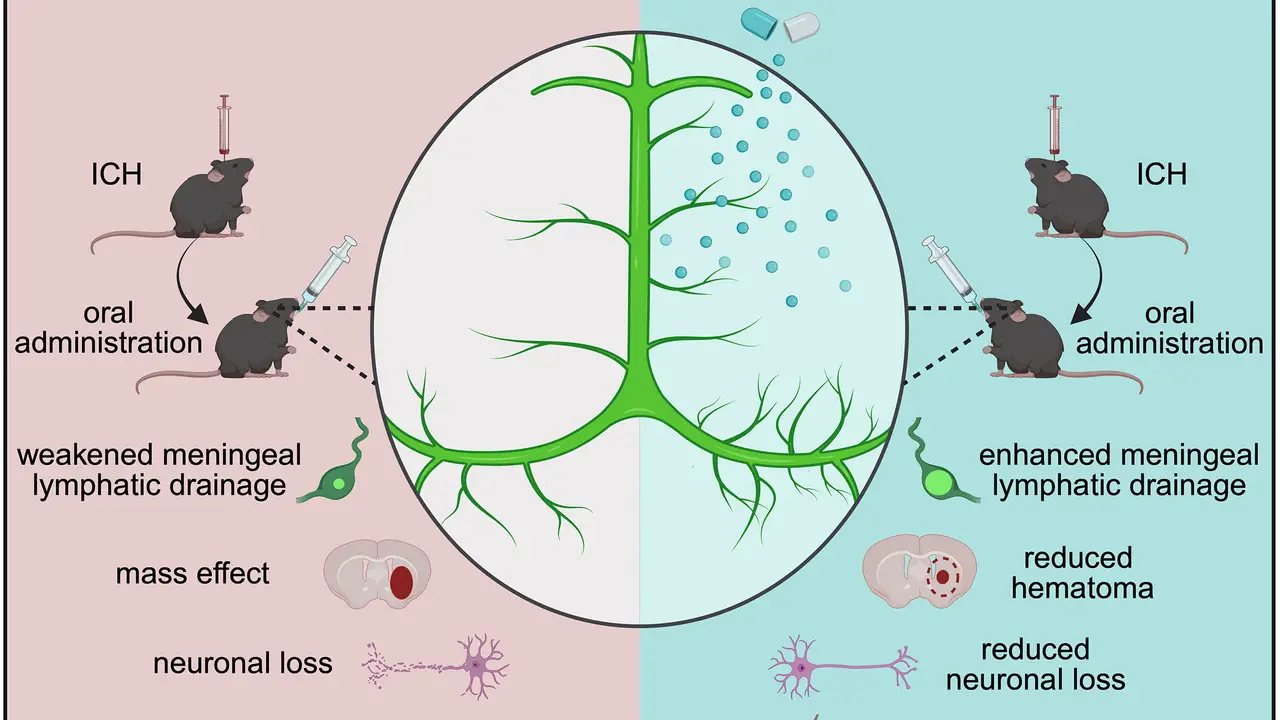
    The drug boosted drainage of blood and its breakdown products through lymphatic vessels in the brain’s protective membranes. The findings do not yet show whether it will work in people.

    Cilostazol aided recovery in mice after brain hemorrhage
    Photo: Medical Xpress

    A team led by researchers at National Taiwan University found that cilostazol helped male mice recover from intracerebral hemorrhage. Treatment began three hours after the hemorrhage. The results were published in Stroke.

    Original source — Medical Xpress.

    The mice received the drug orally. Treatment promoted the growth and branching of lymphatic vessels in the membranes surrounding the brain, which drain fluid and waste to lymph nodes in the neck.

    Mice given cilostazol had smaller hematomas and less damage to nerve cells and their connections. They also showed improved motor and neurological function. After a week of treatment, several measures of memory improved nearly a month after the hemorrhage.

    Cilostazol reduces the tendency of platelets to clump together, so researchers tested whether it increased bleeding. Under the experimental conditions, mice given the drug before a hemorrhage or starting three days afterward did not develop larger hematomas.

    The findings provide a scientific foundation for an ongoing phase 2 randomized clinical trial (NCT06504576) investigating cilostazol for hematoma clearance in patients with intracerebral hemorrhage. The drug’s safety and effectiveness in people have yet to be established.