Medicine & Research

  1. Medicine & Research updated 21:31

    TALhesin raises share of aged mouse eggs without premature chromosome separation to 74.1%

    In donated human eggs, TALhesin bound to target chromosome regions. Researchers still need to test the system in eggs from older women.

    TALhesin raises share of aged mouse eggs without premature chromosome separation to 74.1%
    Photo: Medical Xpress

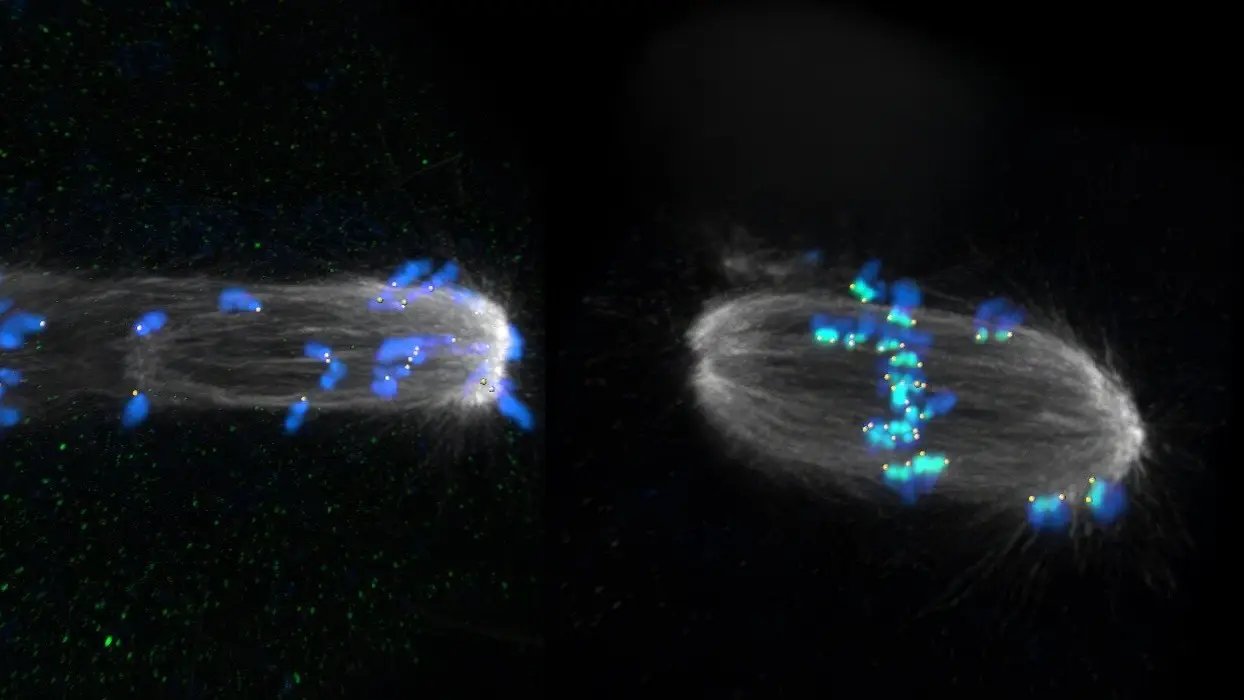
    A study by a team led by biochemist Melina Schuh of the Max Planck Institute for Multidisciplinary Sciences in Göttingen was published in Science on November 26. In aged mice, TALhesin raised the share of eggs without prematurely separated chromosomes from 46.7% to 74.1%.

    Medical Xpress published the report. Also reporting: STAT News.

    For comparison, the share in young mice was 74.7%.

    Chromatids, the identical halves of chromosomes, are normally held together by the protein complex cohesin. As eggs age, cohesin detaches from the chromatids and is not replaced. This increases the likelihood of premature chromosome separation and incorrect chromosome distribution as the egg matures.

    TALhesin was developed from proteins that can be programmed to bind to a region near the centromere, where cohesin helps hold chromatids together. The researchers combined these proteins so the system could perform cohesin’s function.

    In donated unfertilized human eggs, TALhesin bound to target chromosome regions without visibly disrupting the first meiotic division. Chromatids were closer together in chromosomes with more TALhesin.

    The researchers added a site to the system that the enzyme separase can cleave. In experiments with human eggs, chromatids separated normally when separase cleaved this site.

    Further research will determine whether TALhesin can reduce chromosome errors in eggs obtained from older women. Additional research and safety testing are needed before the system can be used clinically.

  2. Medicine & Research updated 00:31

    Flu hospital admissions in England reach decade high for November

    The head of NHS England expects cases to rise further in the coming days. He urged hospitals to consider masks for staff and visitors.

    Flu hospital admissions in England reach decade high for November
    Photo: The Guardian

    Flu hospital admissions in England rose from 5 to almost 9 per 100,000 people, according to the UK Health Security Agency (UKHSA). That is the highest rate for this period in November in the past decade.

    The story was published by the news site The Guardian. Also reporting: BBC News.

    NHS England chief executive Jim Mackey said more hospital beds are occupied by patients with flu than at the same time last year. He expects the situation to worsen over the next 5 to 10 days.

    Mackey urged hospital leaders to consider asking staff and visitors to wear masks because of flu and other winter viruses. COVID and respiratory syncytial virus levels have also risen, but remain low.

    The agency said only a small proportion of people have received a flu vaccine so far, including just a third of those with long-term health conditions. It urged everyone eligible for a free vaccine to get one.

    Several NHS England trusts have declared critical incidents because of winter pressures. That means they acknowledge they cannot meet demand for care.

  3. Medicine & Research

    Researchers identify two origins of granulosa cells

    One source is the cells that develop into the rete ovarii, a small network of ducts near the ovary.

    Researchers identify two origins of granulosa cells
    Photo: Medical Xpress

    A team at the University of Geneva in Switzerland found that ovarian granulosa cells have two origins. The study analyzed nearly 200,000 human and mouse cells, and its findings were published November 26 in the Proceedings of the National Academy of Sciences (PNAS).

    Medical Xpress has the details.

    The researchers found that cells that develop into the rete ovarii also contribute to the formation of follicular cells. They used cell tracing, microscopy and bioinformatics to reach the finding.

    The ovarian surface was previously known as a source of granulosa cells. Its cells form several regions and already show signs of specialization: some give rise to granulosa cells, while others form the stroma, the ovary’s supporting tissue. Granulosa cells surround oocytes in follicles and support their development.

    The researchers found a similar early organization of cells in humans. They say this suggests that the mechanisms behind the formation of different ovarian cell types are similar in mice and humans.

    The rete ovarii was described in 1870, but later came to be regarded mainly as a remnant of embryonic development. Its male counterpart, the rete testis, has a known role in transporting sperm.

    Study leader Serge Nef said some ovarian cancer cells express the PAX8 gene, which is also expressed in cells of the rete ovarii. The team plans to study the structure in adult women and investigate its possible link to ovarian cancer in a project with Professor Intidhar Labidi-Galy.

    The authors say the discovery could open new avenues for research into fertility, ovarian developmental disorders and some gynecological cancers.

  4. Medicine & Research

    Zhejiang University study links microglia to fading motor memories in mice

    The brain’s immune cells engulfed myelin associated with learned movements. Researchers say the mechanism could affect other types of memory, but its role in humans remains to be studied.

    Zhejiang University study links microglia to fading motor memories in mice
    Photo: Medical Xpress

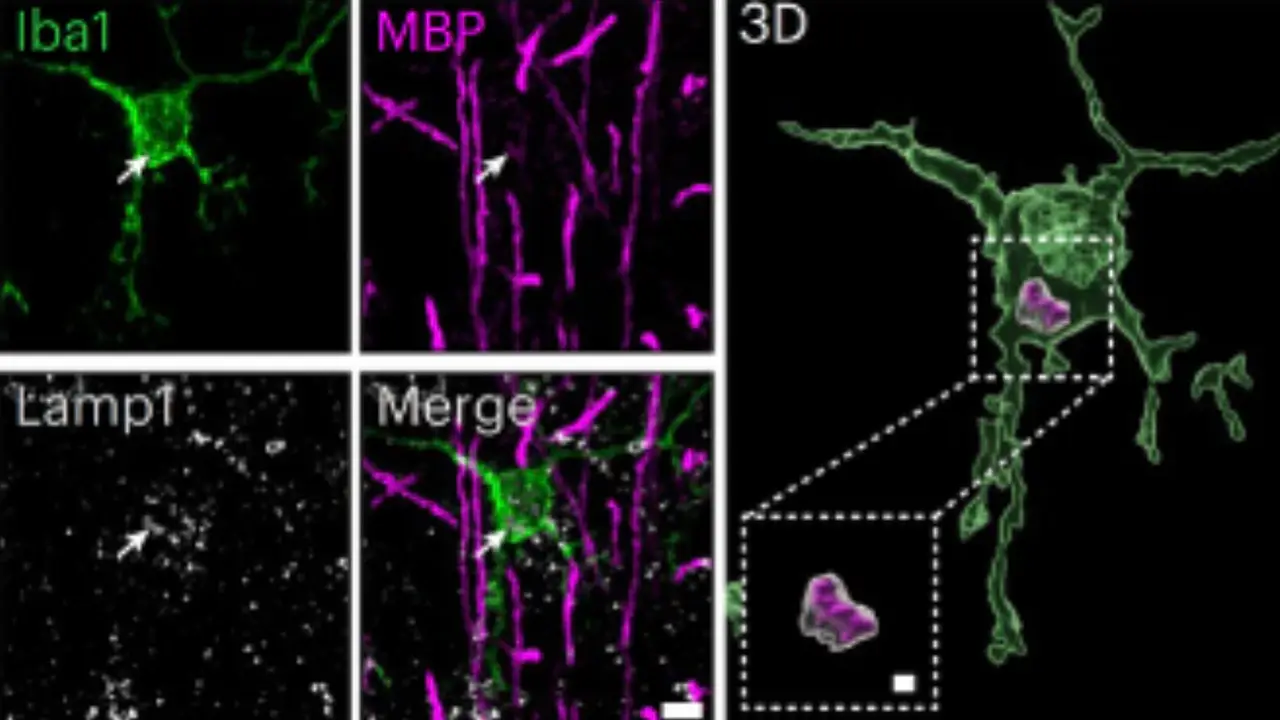
    Researchers at Zhejiang University investigated the role of microglia in the fading of motor memories in mice. They trained the animals for a week to run on an accelerating, rotating rod. The results were published in Nature Neuroscience.

    Medical Xpress reported the news.

    At different times after training, the researchers placed the mice on the rod again and measured how long they could stay on it. The team also analyzed myelin, the sheath around nerve fibers.

    The team found that microglia engulfed and broke down myelin associated with the learned movement. Removing the protein CD47 from oligodendrocytes — the cells that produce myelin — associated with that memory increased myelin engulfment and accelerated memory decline. Increasing CD47 production had the opposite effect.

    When activity in memory-associated nerve cells decreased, levels of CD47 also fell in the corresponding myelin-producing cells. The findings suggest this made the myelin more vulnerable to engulfment by microglia.

    The authors note that they studied motor memory specifically. A similar process could affect other types of memory that depend on myelin formation, but this remains to be tested.

    The researchers plan to study the molecular mechanisms behind microglia’s interactions with myelin and determine their role in motor disorders. Further research is needed to establish whether this mechanism is linked to forgetting in humans.

  5. Medicine & Research

    Osaka researchers say protein binds SN-38 four times more strongly

    The modified variant also increased the drug’s solubility about 3.3-fold and markedly reduced its premature release, study leader Takashi Inui said.

    Osaka researchers say protein binds SN-38 four times more strongly
    Photo: Medical Xpress

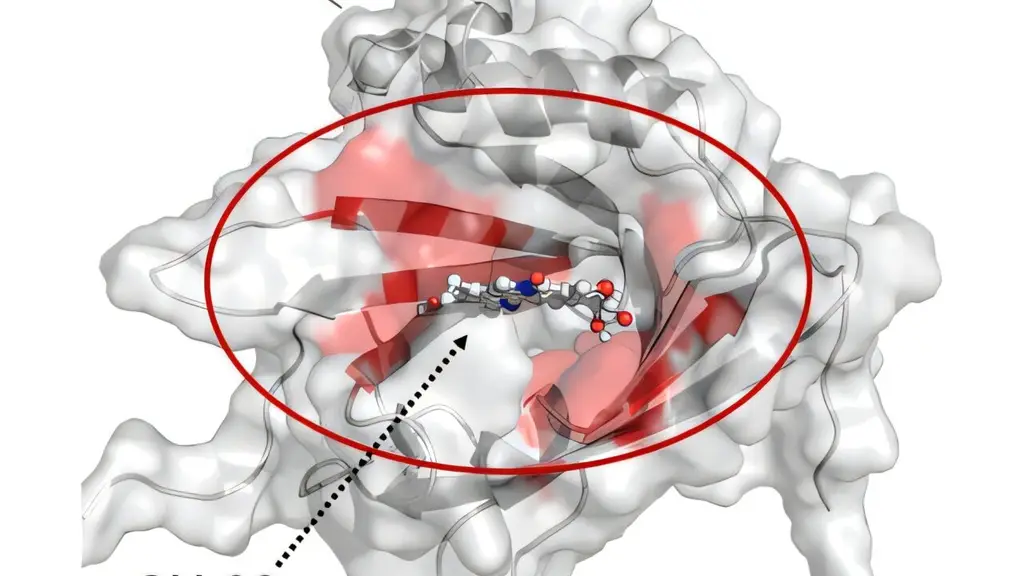
    Researchers at Osaka Metropolitan University modified the L-PGDS protein to use it as a carrier for the anticancer drug SN-38. The M94W-M145W variant had about fourfold higher binding affinity for SN-38 than conventional L-PGDS, Professor Takashi Inui said.

    This was reported by the news site Medical Xpress.

    Computer simulations helped the team identify two amino acids in the protein’s binding pocket that could be changed to improve drug retention. The researchers suggest that keeping SN-38 bound for longer could increase the likelihood of its accumulating in tumors.

    SN-38 is a metabolite used in chemotherapy for breast and colorectal tumors. It targets topoisomerase I, an enzyme that temporarily cuts DNA during replication and then repairs it. SN-38 disrupts this process and causes DNA damage.

    This approach may also contribute to the development of new drug delivery systems for other poorly water-soluble drugs, not just SN-38.

    Takashi Inui, Professor at Osaka Metropolitan University

    The findings were published in the journal International Journal of Biological Macromolecules.